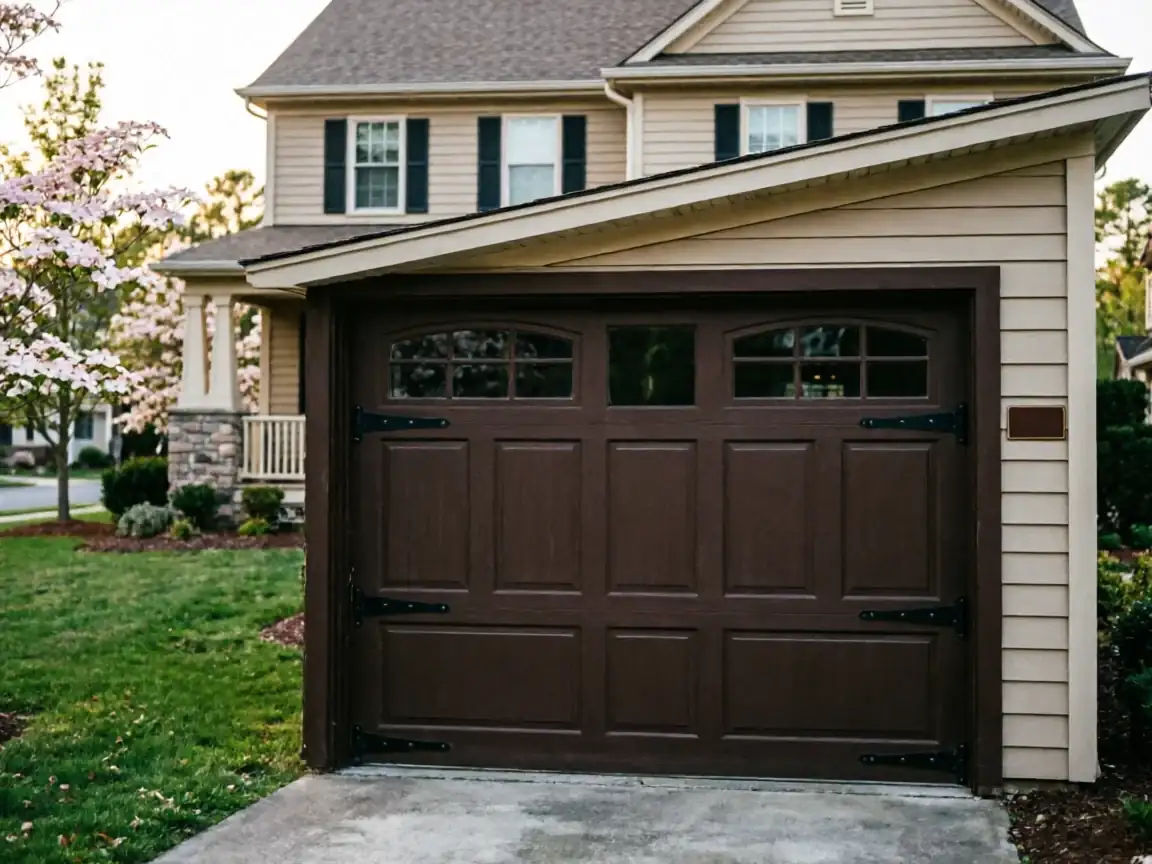
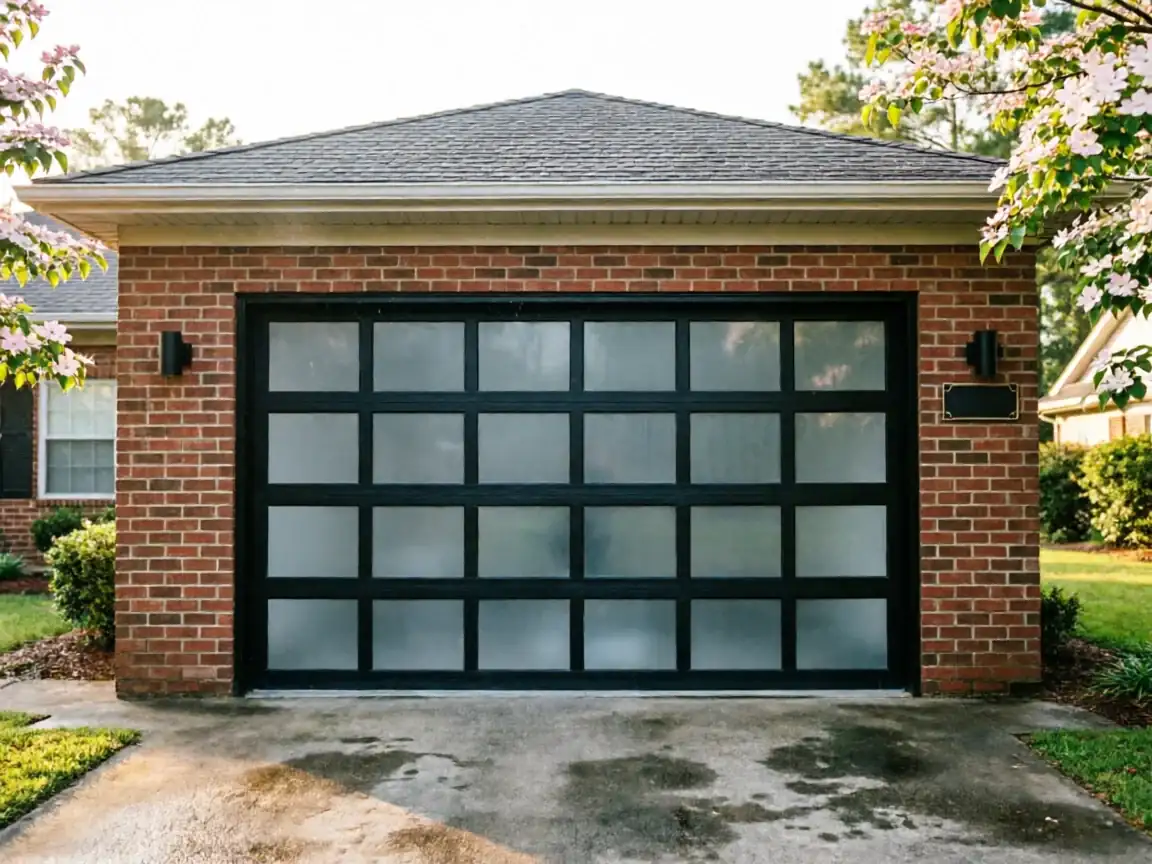
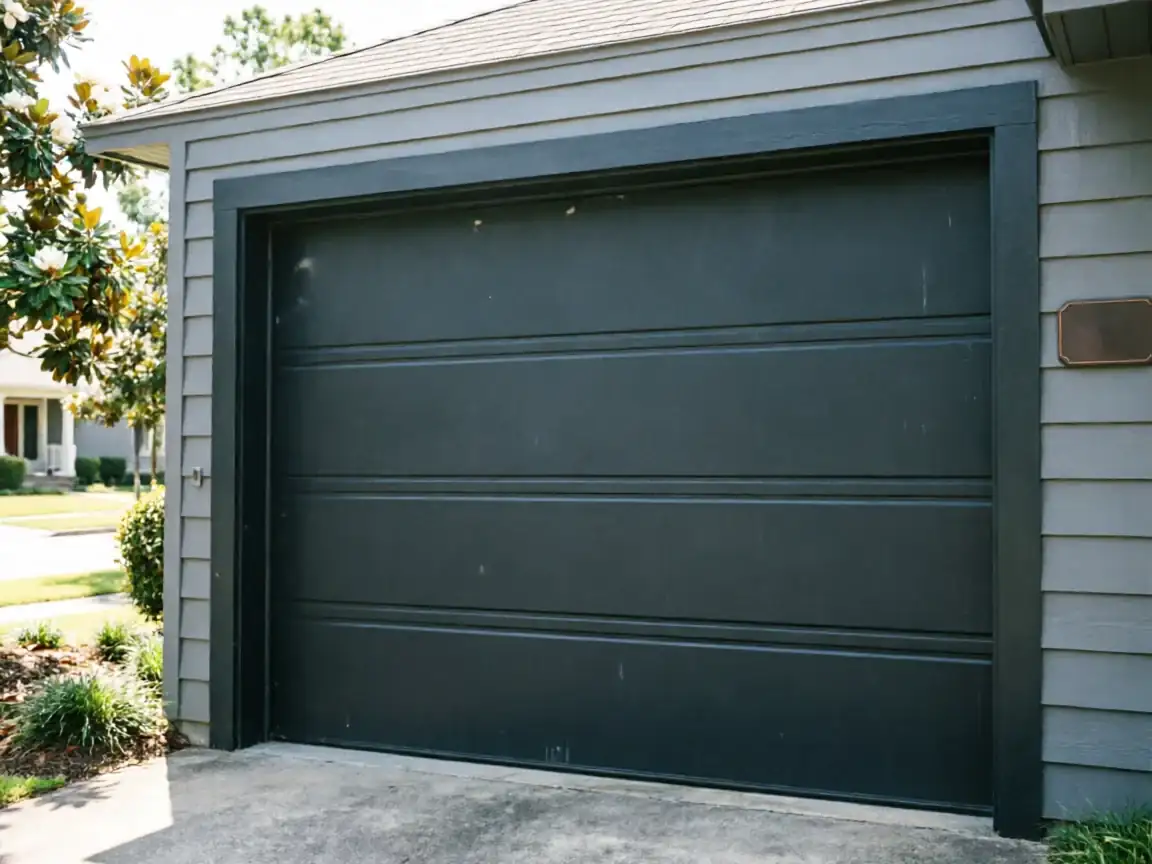
Most South Riding homes went up around 2006, which means steel insulated doors and newer torsion hardware. Centreville Garage Door Pros covers emergency repairs here.
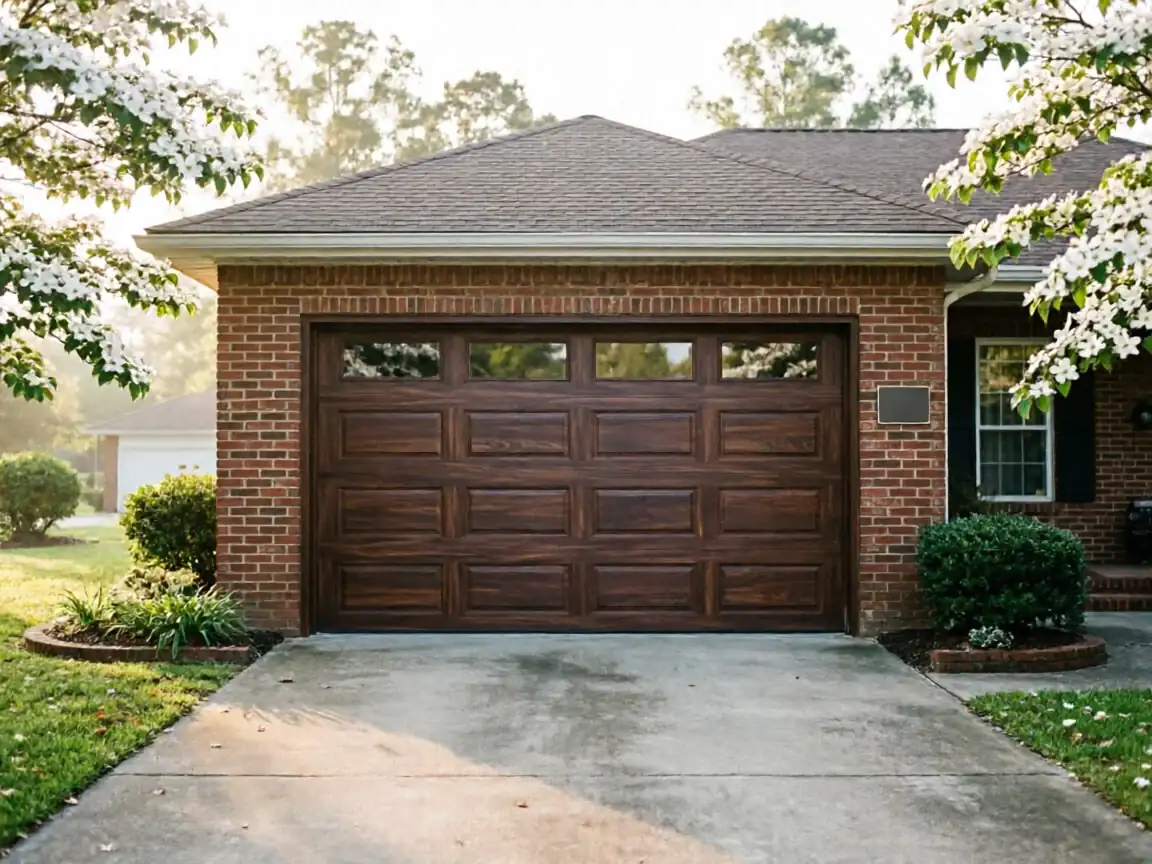
South Riding's median house dates to 2006, which puts it decades ahead of most of the Centreville service area, where the typical home was built back in 1981 and a lot of the stock still dates to the 1980s and 90s. That gap matters on a service call. Houses built around 2006 almost never carry the old side-mounted torsion springs or the single-torsion-tube setups you still find on older doors nearby. They carry factory-matched torsion springs sized for insulated steel double doors, steel ball-bearing rollers, and openers with rolling-code logic boards rather than the fixed-code dial switches from the 80s stock. We carry common spring sizes and roller stock for this era of door on the truck. What we don't carry is every opener logic board on the market - if your opener is an odd brand or an older board that's been swapped in, that part sometimes has to be ordered, and we'll tell you that up front rather than guess at a fix that doesn't hold.
What the Fix Involves
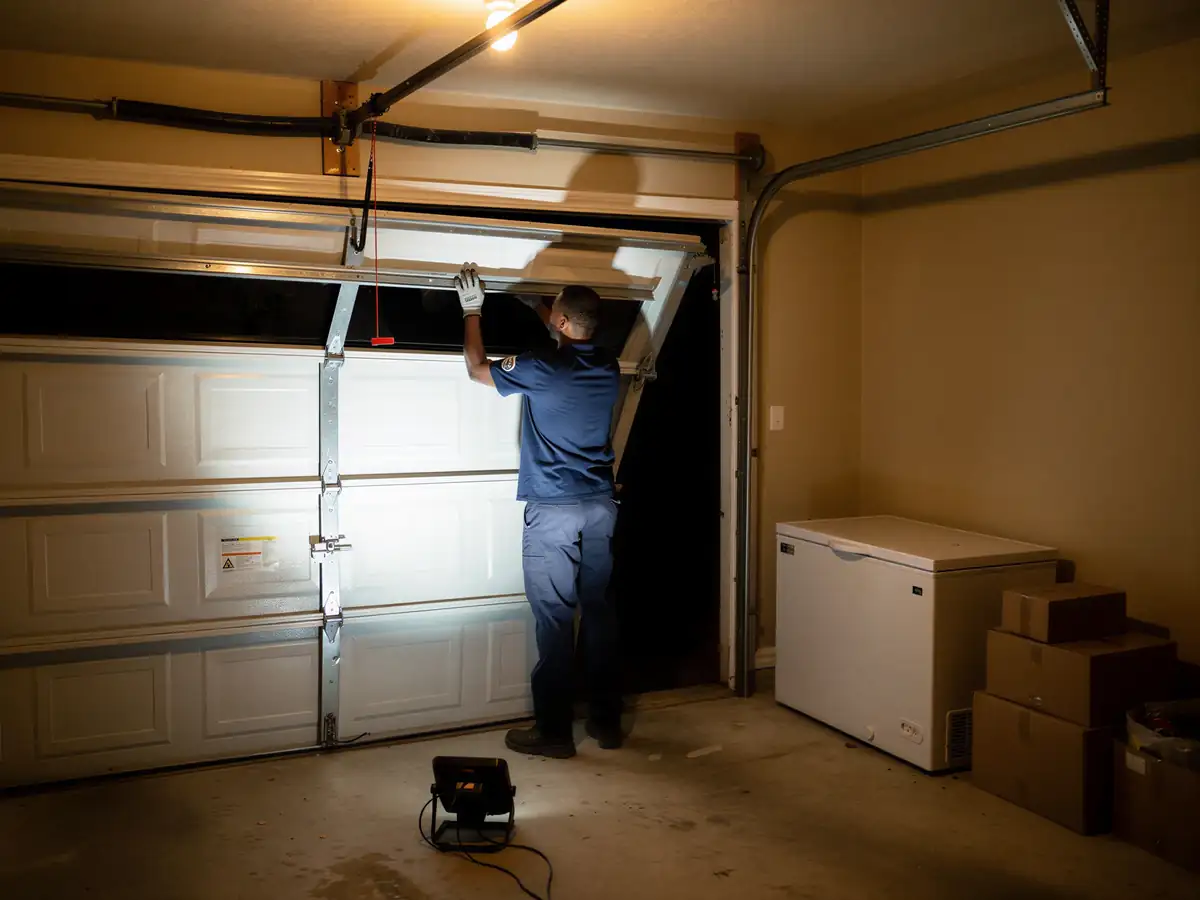
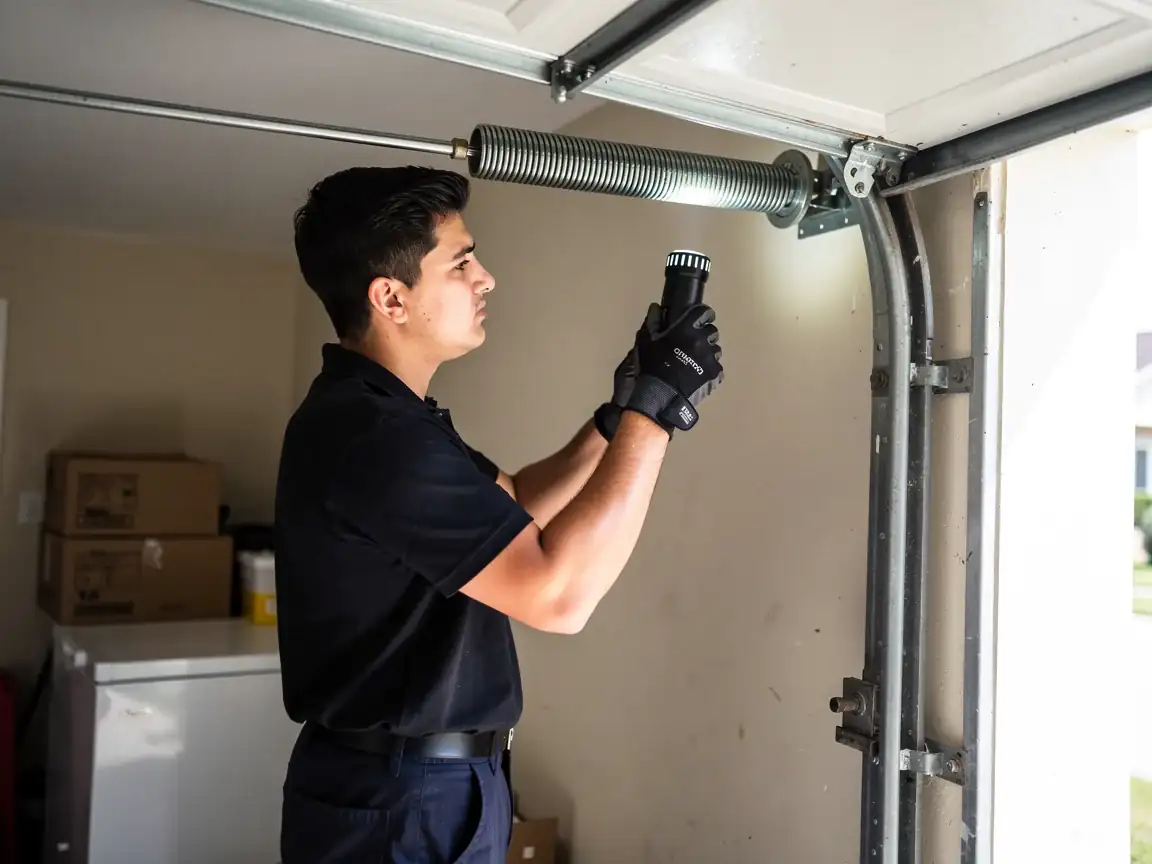
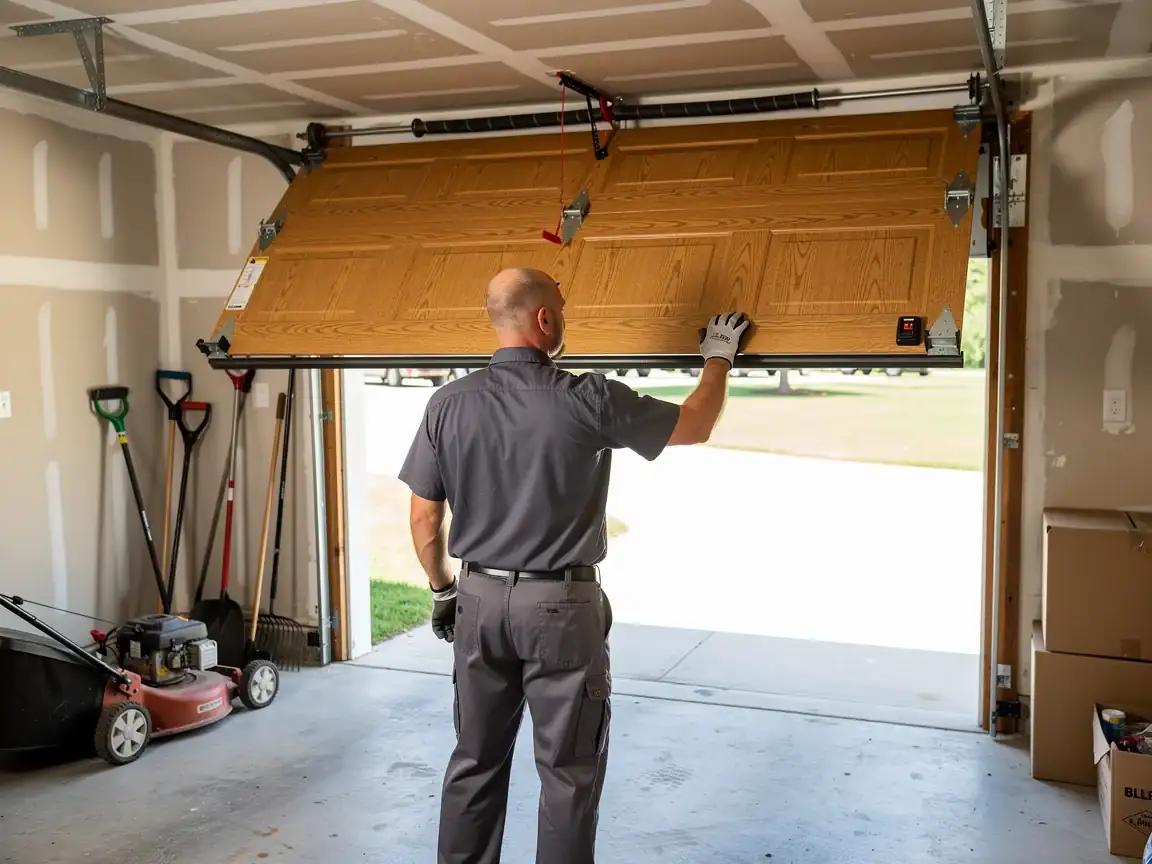
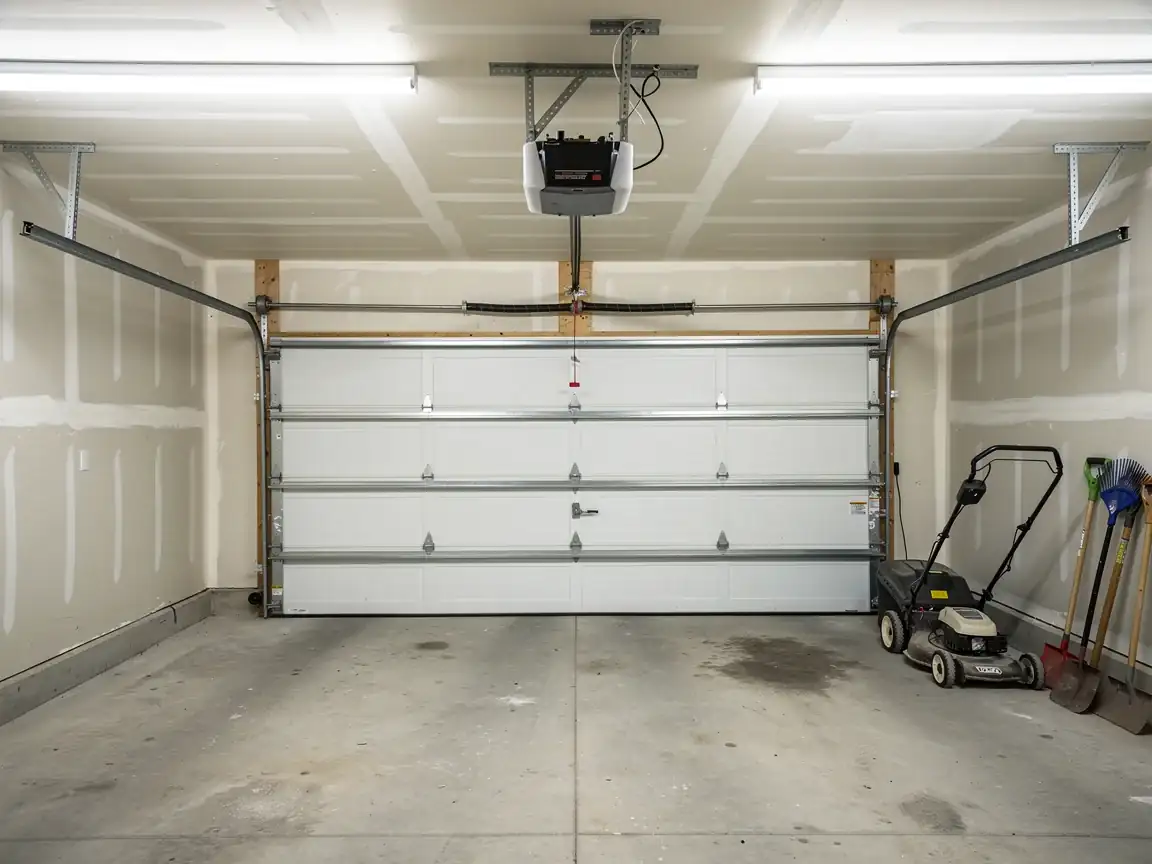
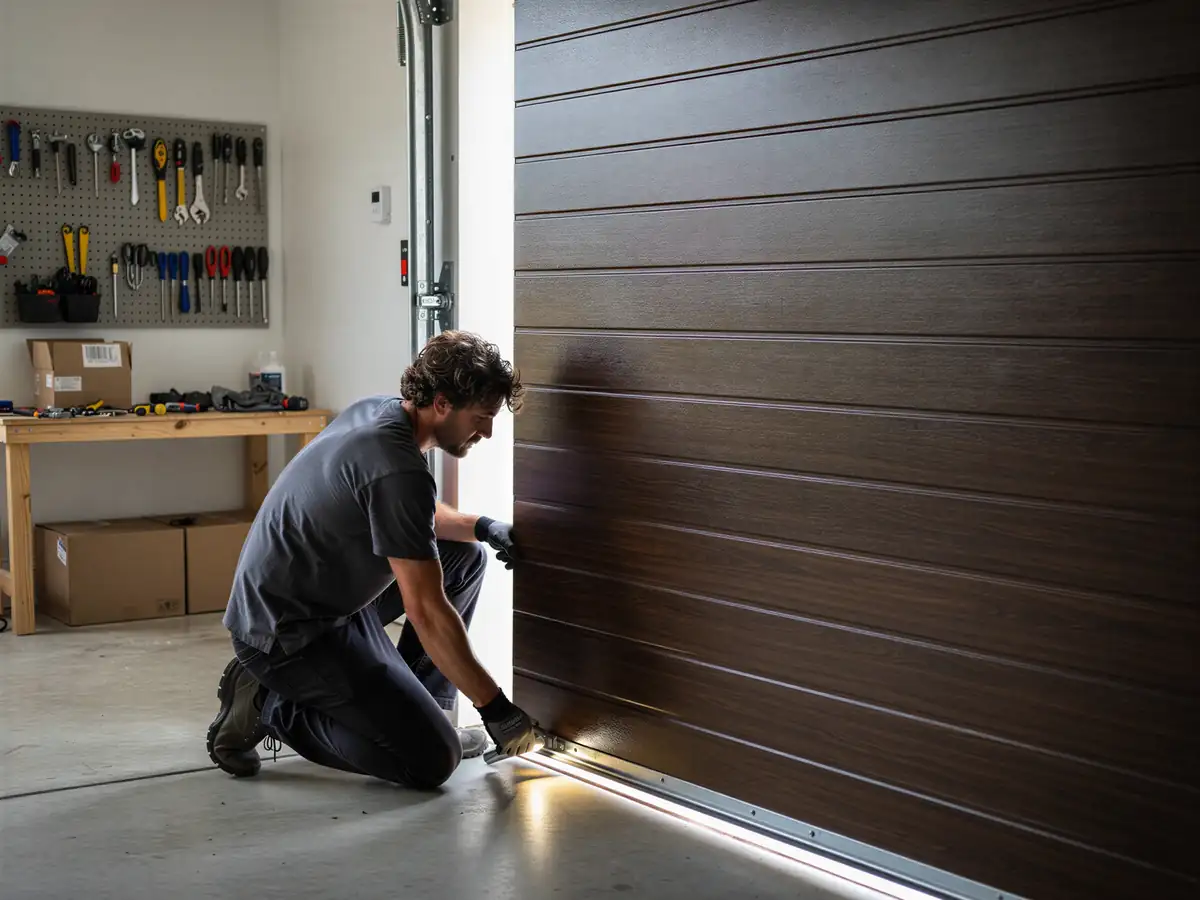
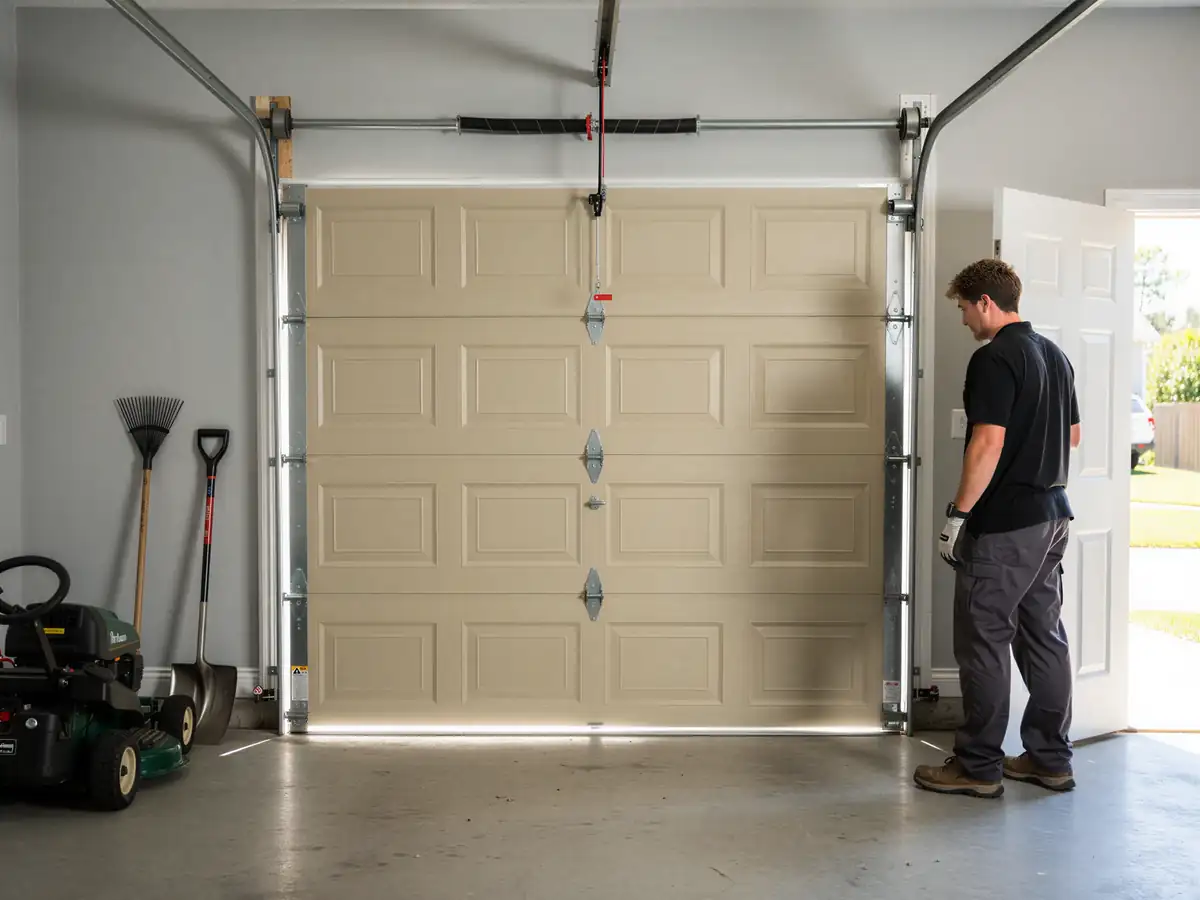
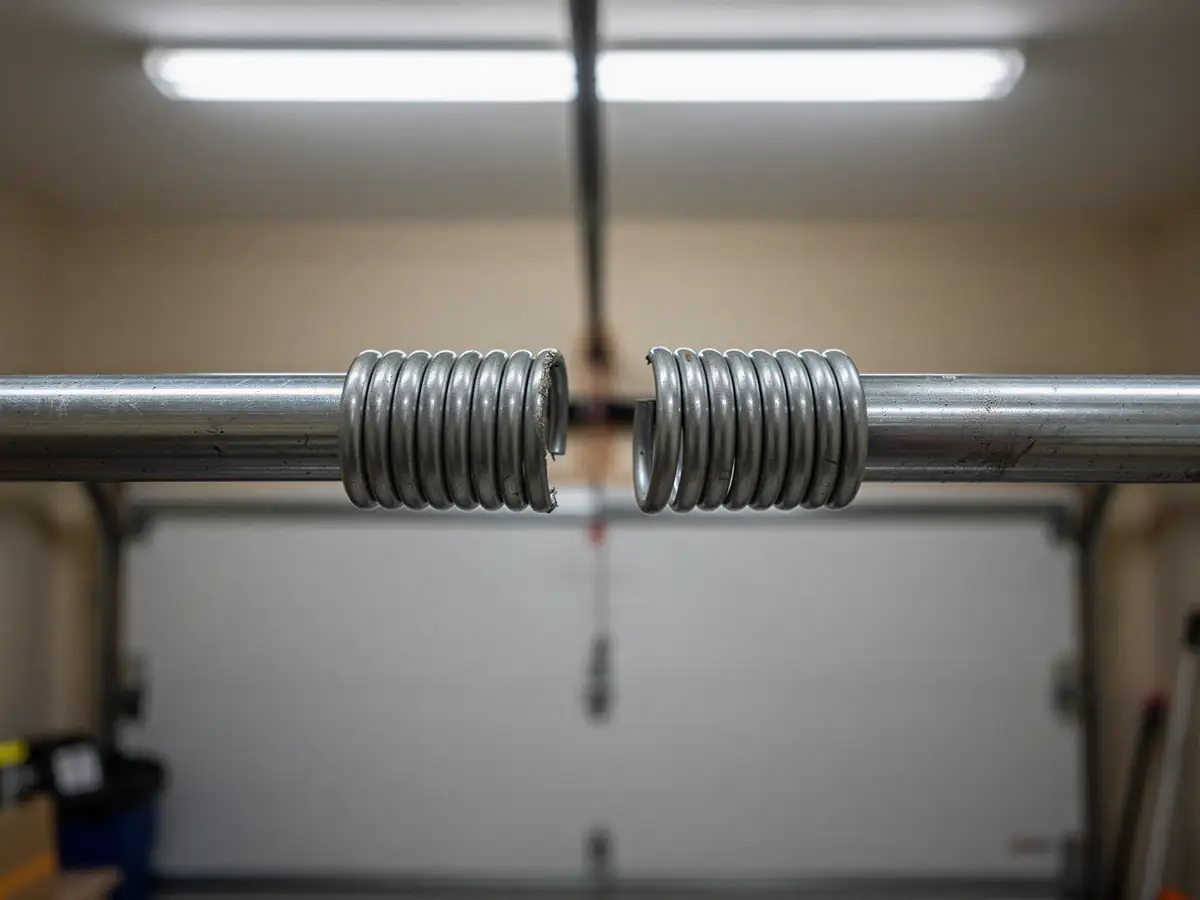
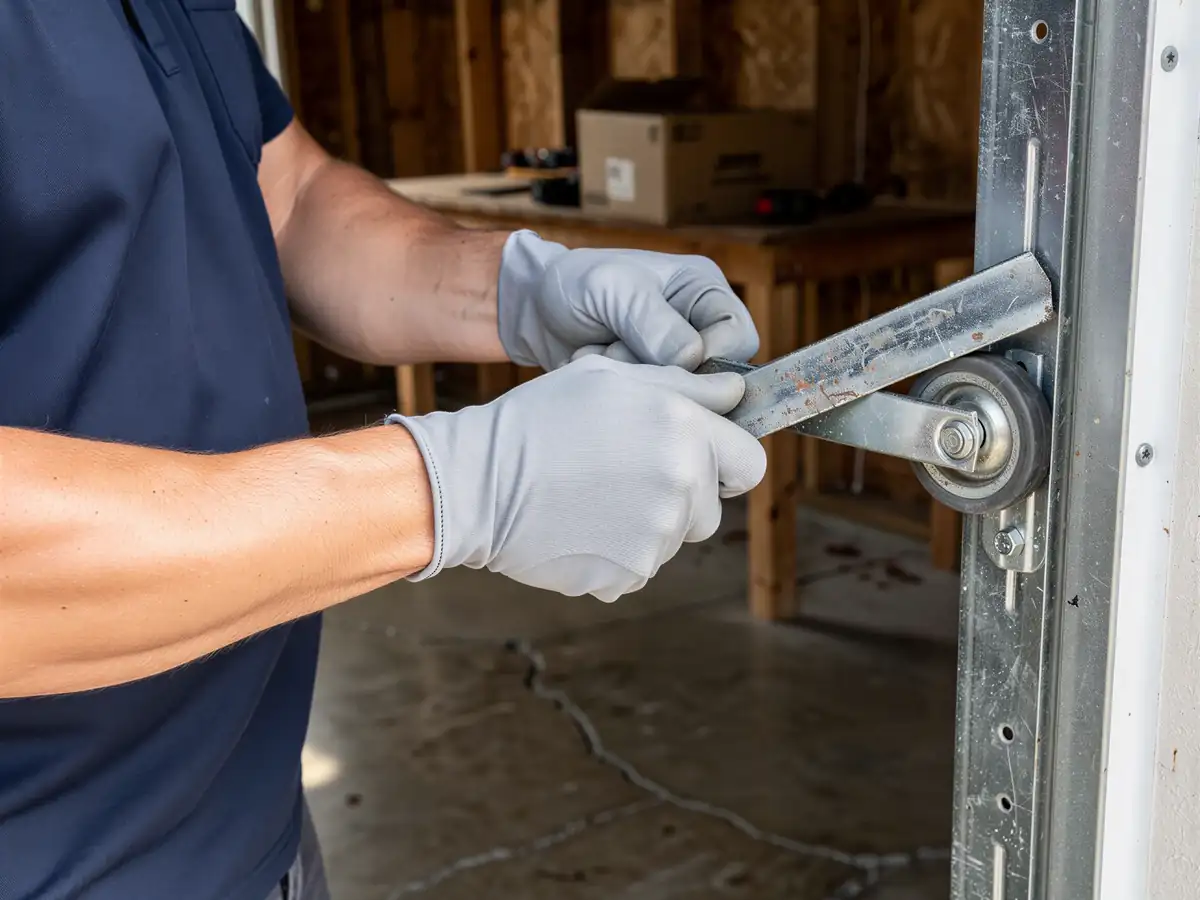
A broken torsion spring on a 2006-era double door is a different job than the same complaint on a house from the 80s. The spring is almost always a factory-wound size matched to a specific door weight, so getting the wind right the first time keeps the opener from straining against an unbalanced door afterward. We unwind the broken spring, check the shaft and bearing plates for wear - minimal on a door this age, usually - and install a matched replacement, then recheck balance by hand before we ever run the opener again. On these newer doors we're also checking the safety sensors and the rolling-code receiver, since a spring failure sometimes trips a fault code on the board that looks like a separate problem but isn't. We don't replace parts that aren't broken just because we're already there - if the rollers and cables are sound, they stay.
The DIY Question
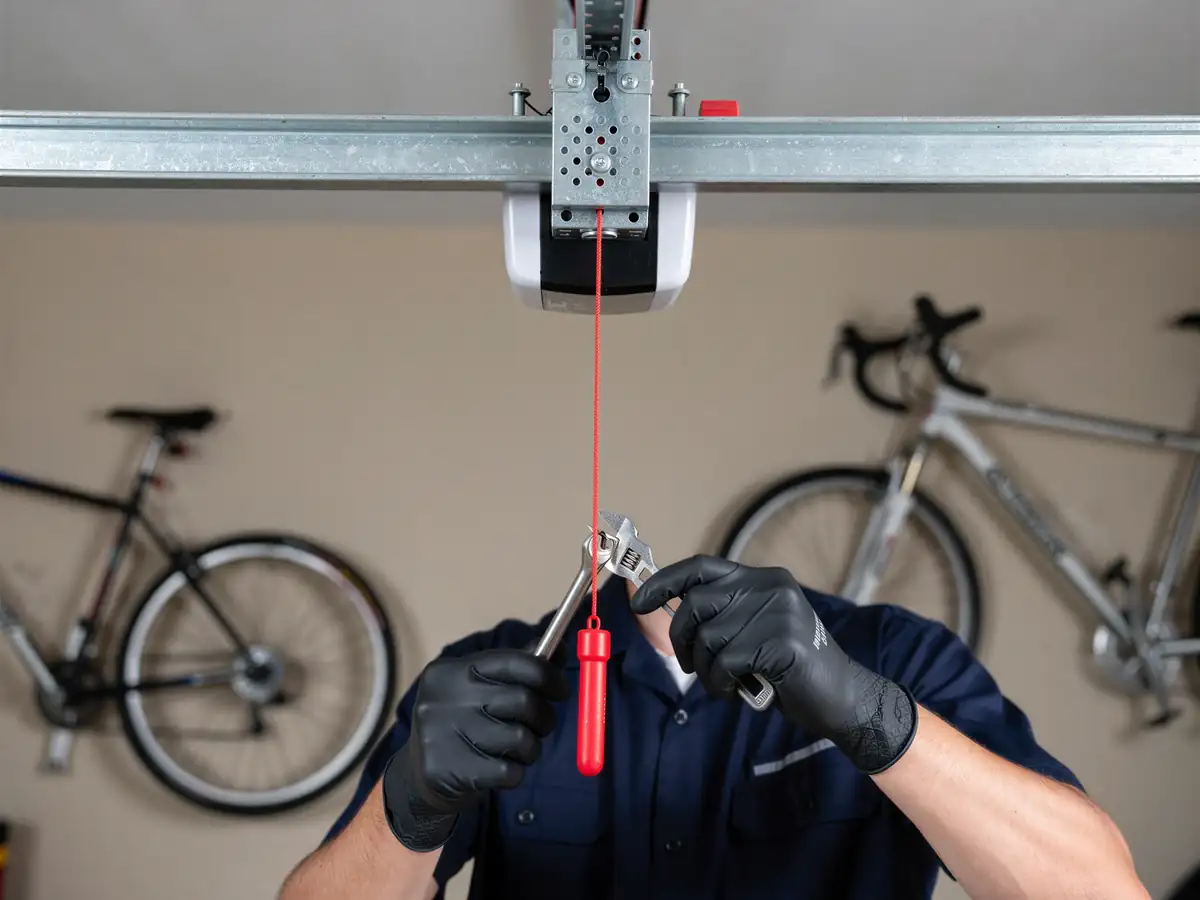
A torsion spring under tension can break a hand or worse, and that doesn't change because the door is newer. What does change is the temptation - a 2006 door looks clean and modern, so it's easy to assume the spring is lighter-duty than it is. It isn't. These are full-size torsion springs holding up an insulated steel double door, and the tension is the same regardless of how new the paint looks. If the door won't open, or opens and drops, call it in rather than reaching for a winding bar. Where DIY is reasonable: clearing the track of debris, checking that the safety sensors aren't blocked, or resetting a tripped circuit breaker. Spring tension and cable work are not in that category.
What Can Go Wrong
The region sits in a cold-severe climate band, and that affects doors regardless of build year. On a 2006 door, the usual failure points under cold stress are the lift cables, which can stiffen and fray at the drum in hard freezes, and the opener's force settings, which drift as grease in the drive screw or chain thickens in low temperatures. A door that slams the last six inches on a cold morning usually means the opener's down-force needs recalibrating, not that the spring is going. We also see insulated steel panels crack at the corners if a door is forced against ice buildup at the base - something more common on driveways with less sun exposure. None of this is unique to South Riding's housing age, but it's worth knowing before you assume a cold-weather glitch is a bigger repair than it is.
How Long You Are Without the Door
We run this call from Centreville, about six miles out, not from a branch in South Riding itself. That's worth saying plainly: we don't have a depot here, and we're not going to claim a response time we can't back up. What we can tell you is the drive is short and the job itself, on a door this age, is usually straightforward once we're on site - matched spring sizes mean less guesswork, and newer hardware means fewer surprises once the panel's off its track. The one thing that can stretch the timeline is a part we don't carry on the truck, like an unusual opener board. If that's the case, we'll say so at the door rather than leave you waiting without an answer.
How it works
From “it’s stuck” to “it’s fixed”
A quick, honest process - no guesswork and no surprises, start to finish.
Straight answers about garage door repair in Centreville. Still unsure? Ask us directly.
Why does my door's spring size matter if the house is newer?
Doors built around 2006, like most in South Riding, use factory-matched torsion springs sized to the door's exact weight. Using the wrong size - even one that looks close - throws off the balance and strains the opener. We match spring size to the door, not to whatever's on the shelf.
Is a 2006-era garage door cheaper to fix than an older one?
Not necessarily cheaper, but often simpler. Newer insulated steel doors have standardized torsion hardware that's easy to source, compared to some of the older side-mounted setups still common elsewhere in the service area. Simpler doesn't always mean less expensive, but it usually means fewer surprises.
Do you have a local office in South Riding?
No. We cover South Riding from our base in Centreville, about six miles away. We don't keep a branch or depot in South Riding itself, so we won't promise a response time tied to a local location we don't have.
Can cold weather really crack a newer insulated door?
It can, usually at the panel corners if the door is forced shut against ice buildup at the base of the track. The region sits in a cold-severe climate band, and that stress doesn't care how new the door is. Clearing ice from the threshold before closing the door helps avoid it.