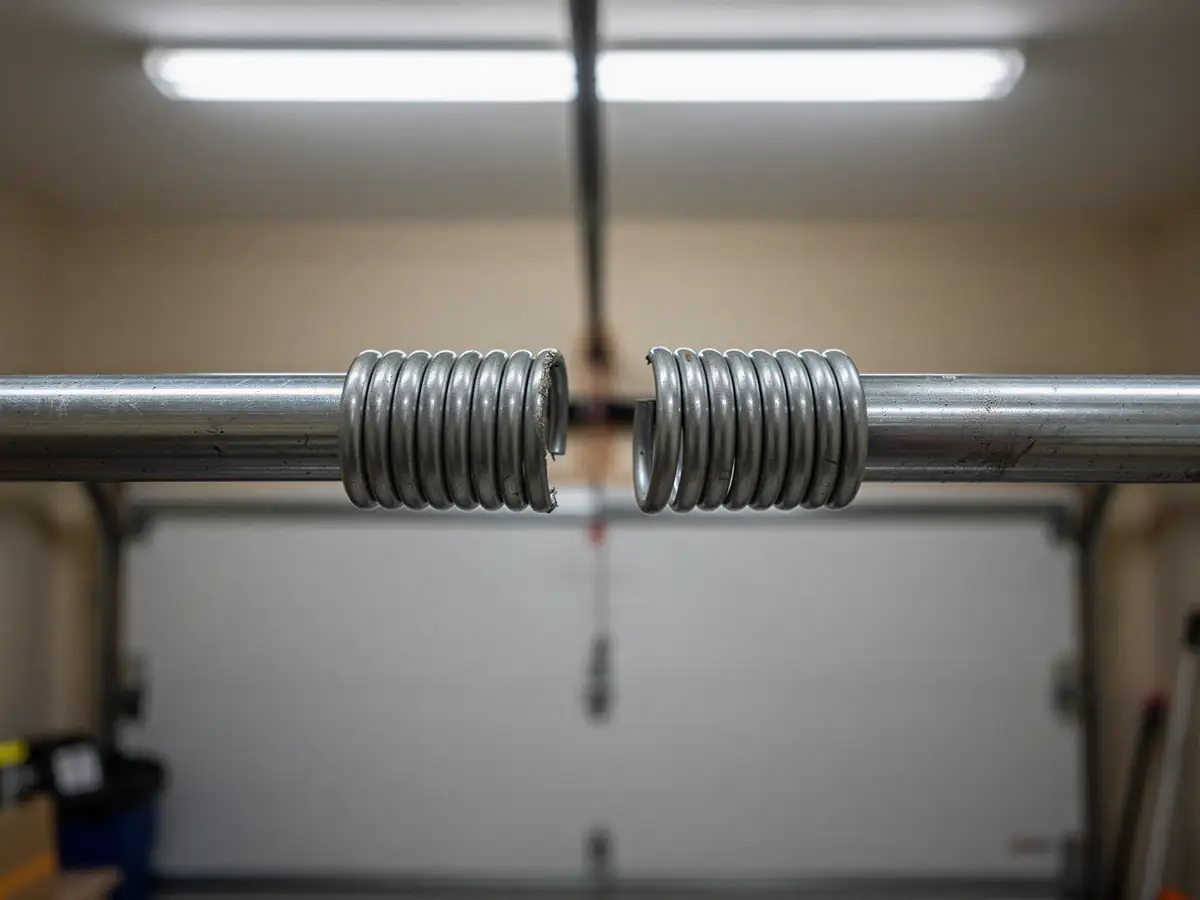
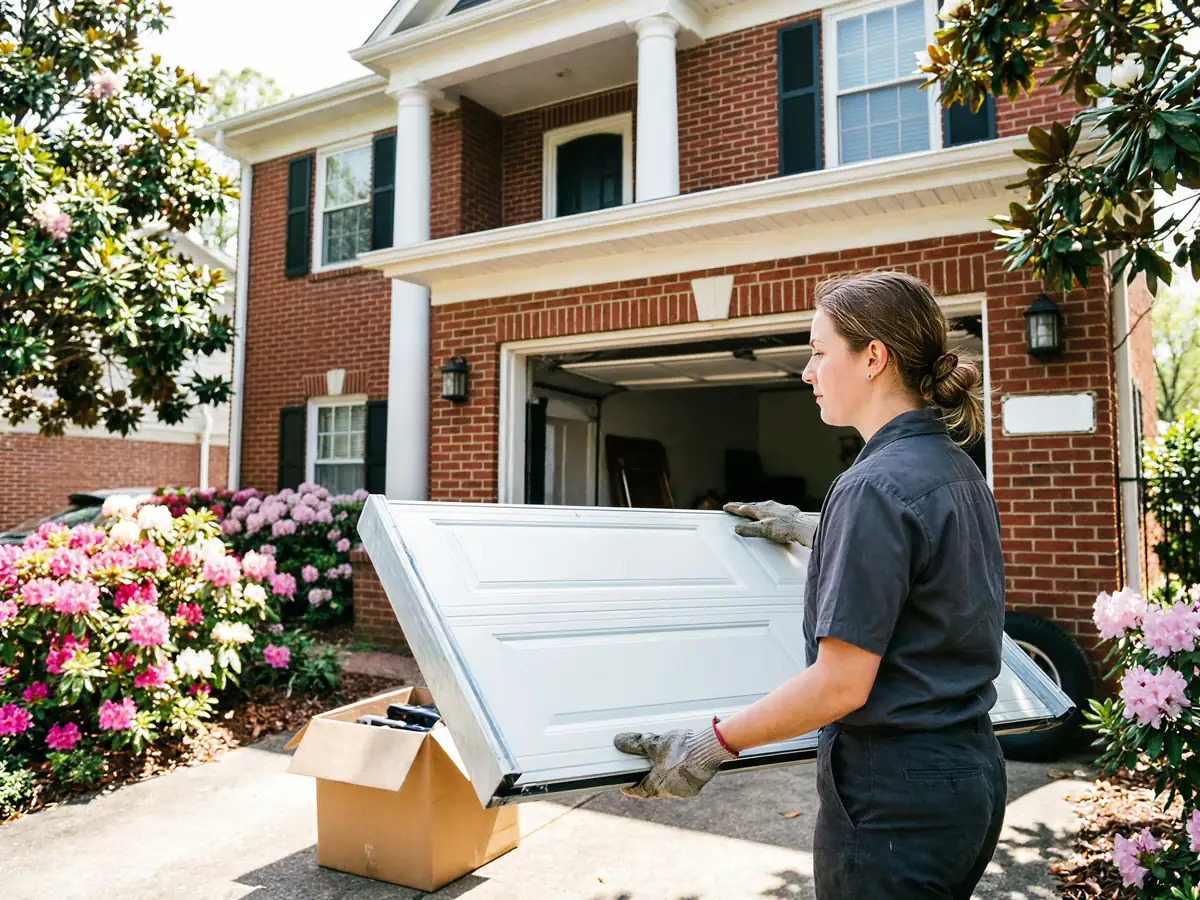
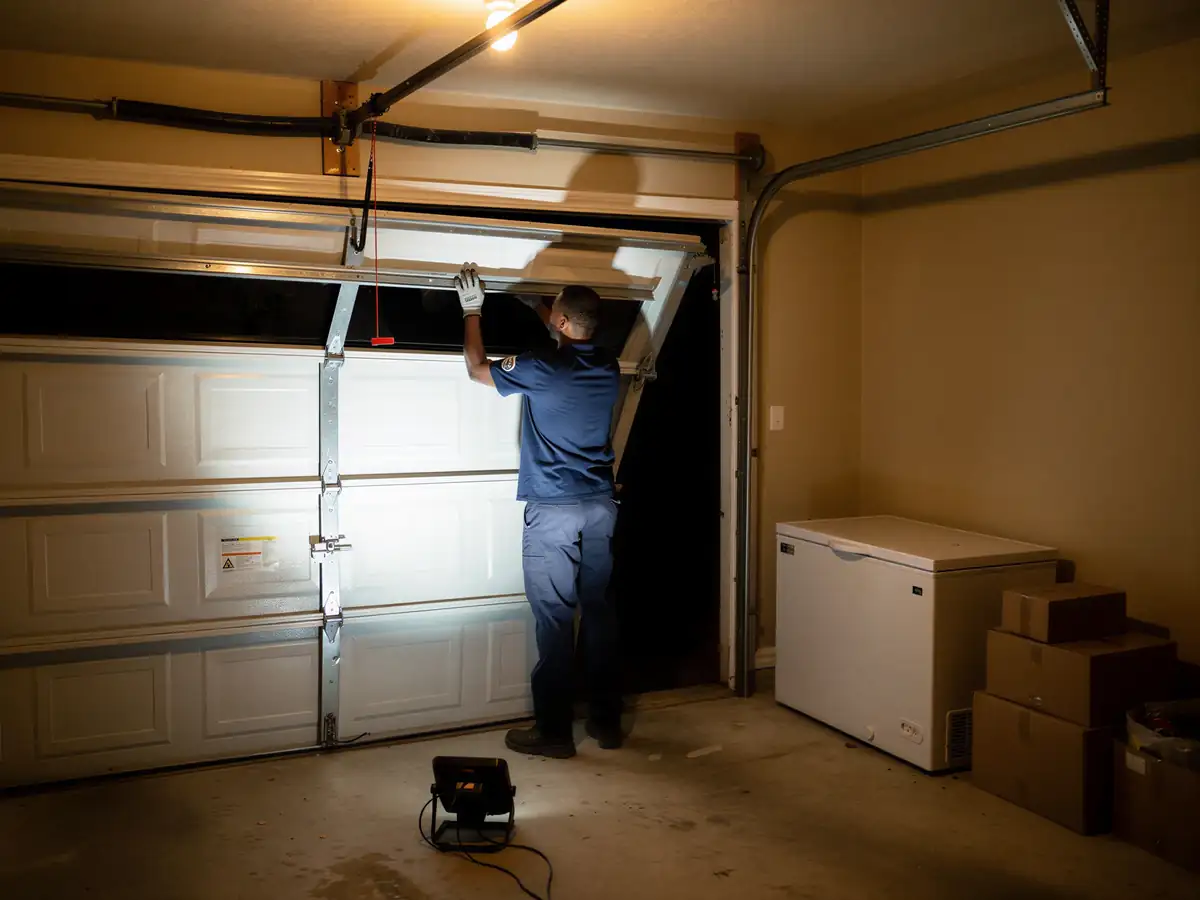
Garage doors in this area sit in a cold-severe climate band, and that matters more for a replacement decision than most homeowners expect. Steel panels contract in deep cold and expand again once temperatures swing back up, and a door that's been doing that for thirty-plus years starts showing it at the seams - gaps at the bottom astragal, a slider that catches, hinges that loosen a little more each winter. Torsion springs wound for an average climate wear out faster under repeated cold-to-warm cycling than the spec sheet suggests. None of this is dramatic on its own. It shows up as a door that gets a little harder to lift every January, then one morning it doesn't lift at all. If you're weighing repair against replacement, the season you're in when the spring finally goes matters: a cold-weather spring failure under load is a different, more sudden break than one that loosens gradually. A new door built with a cold-rated spring and better weatherstripping doesn't eliminate winter stress, but it handles the swing in temperature the way a thirty-year-old one-layer steel door was never built to.
The Situation
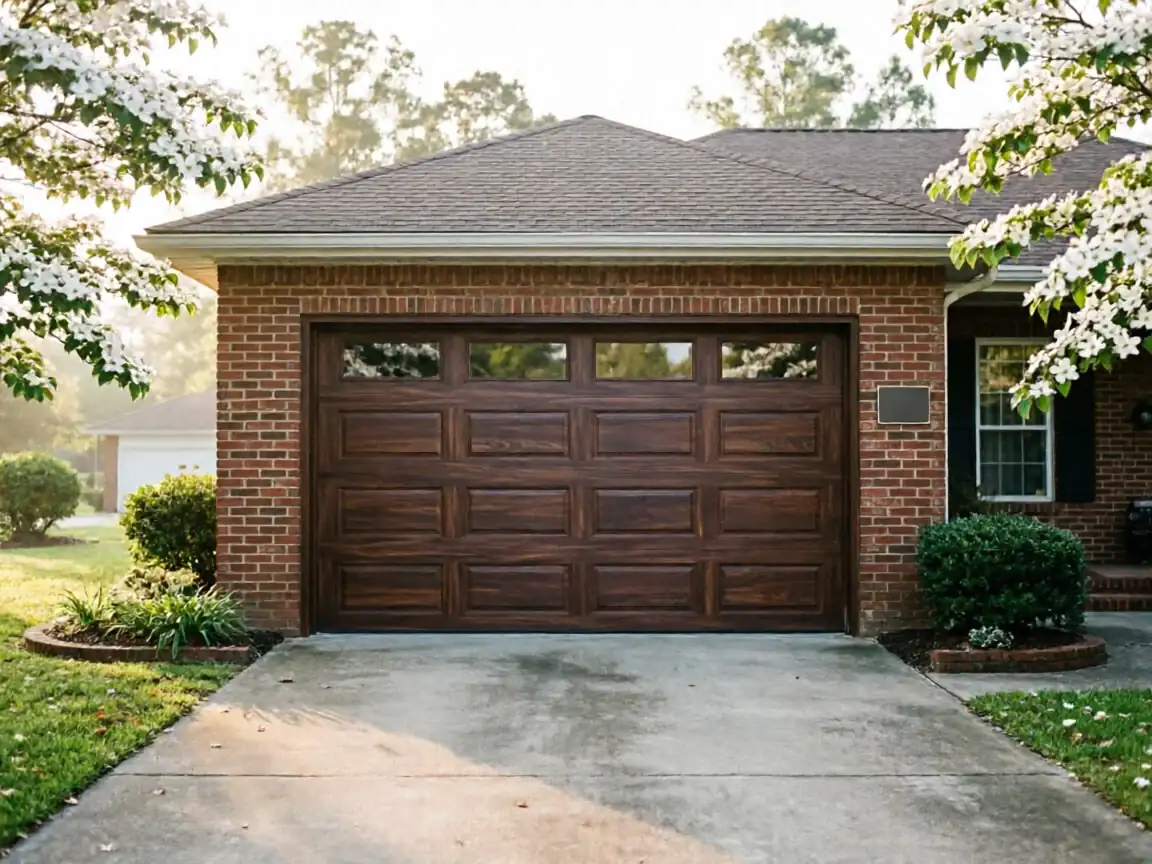
Housing in this service area was built between 1940 and 2015, with the median home going up around 1981, and most of the stock across the named areas we cover clusters in the 1980s and 90s. That's the generation of garage door you're most often dealing with here - single-layer steel, little or no insulation, a torsion spring sized to whatever the original builder spec'd and probably never upgraded since. A door from that era wasn't built wrong, it was built to the standard of its decade. Forty years on, the hardware has usually outlived its practical service life even where the panels still look fine. At a median household income of $136,173 across this area, replacement is within reach for most owners here, which is part of why we see more people choosing a new insulated door over a third or fourth spring repair on an old one. With roughly 109,606 owner-occupied houses among 305,317 households in the broader service area, a meaningful share of them are carrying a door original - or close to original - to a house built decades ago.
What Local Conditions Do
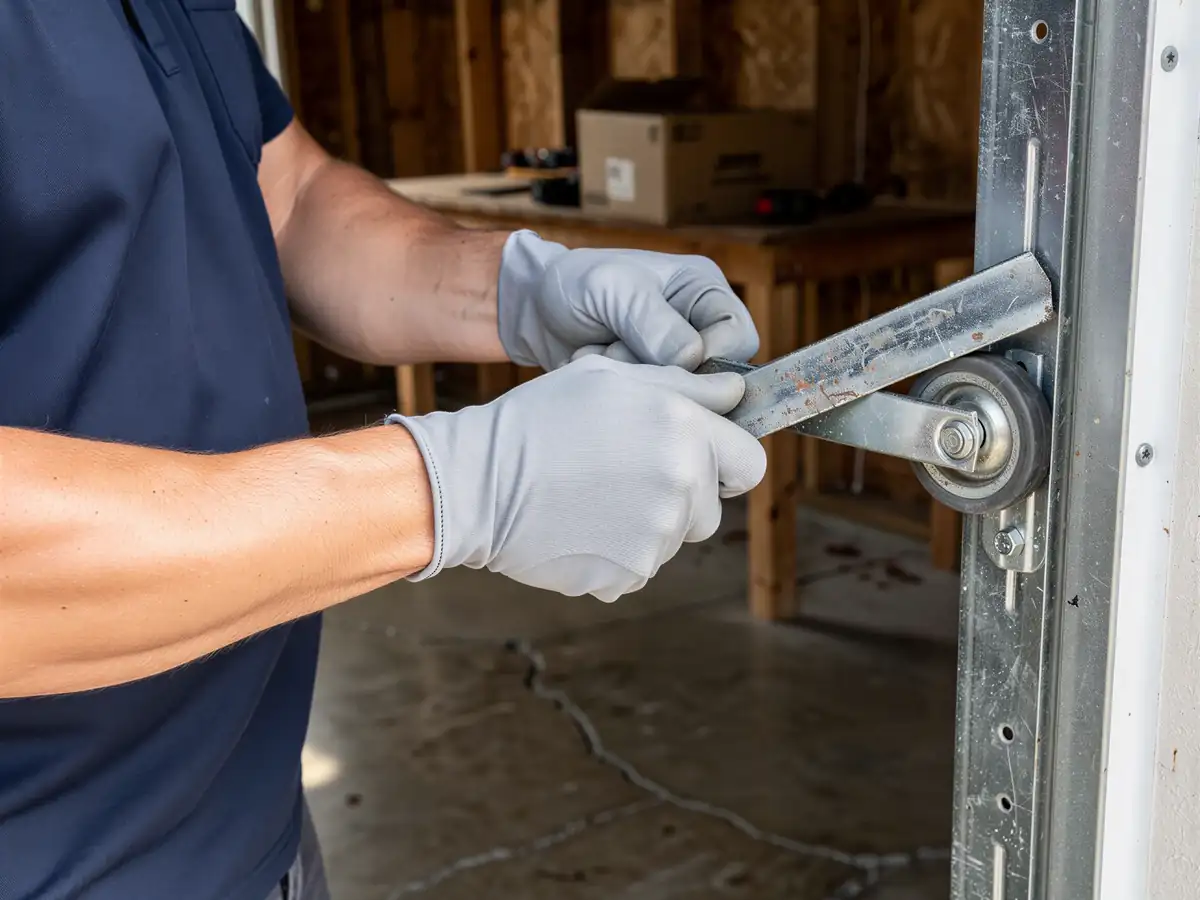
Cold-severe conditions work on a garage door in a few specific ways. Metal tracks contract slightly in hard cold, which can throw rollers out of alignment that were fine in October. Nylon rollers get brittle faster than steel ones in repeated freeze cycles. Lubricant that was fine in summer thickens up and makes the opener work harder than it should, which shortens motor life on top of spring life. None of this is unique to any one house - it's a function of the climate band this area sits in, applied to whatever door happens to be hanging in the opening. The age of the typical door here compounds it: a door built in the 1980s or 90s wasn't designed with modern weatherstripping or thermal breaks, so cold air moves through the bottom seal and around the perimeter more than it would on a door built to current standards. That's not a flaw you fix by tightening a bolt. It's the reason a straight repair on an old door sometimes buys you one more winter and not much more, and why a full replacement conversation is worth having honestly instead of deferring it again.
What to Look At First
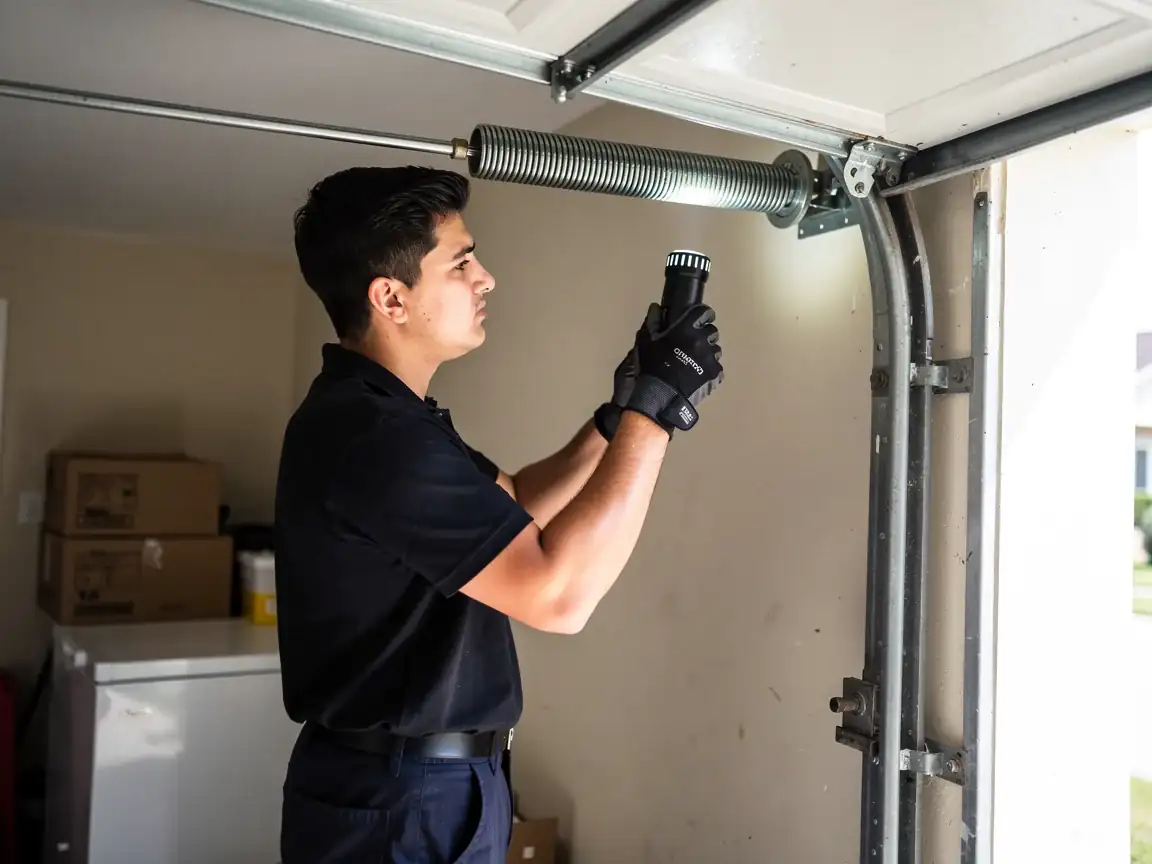
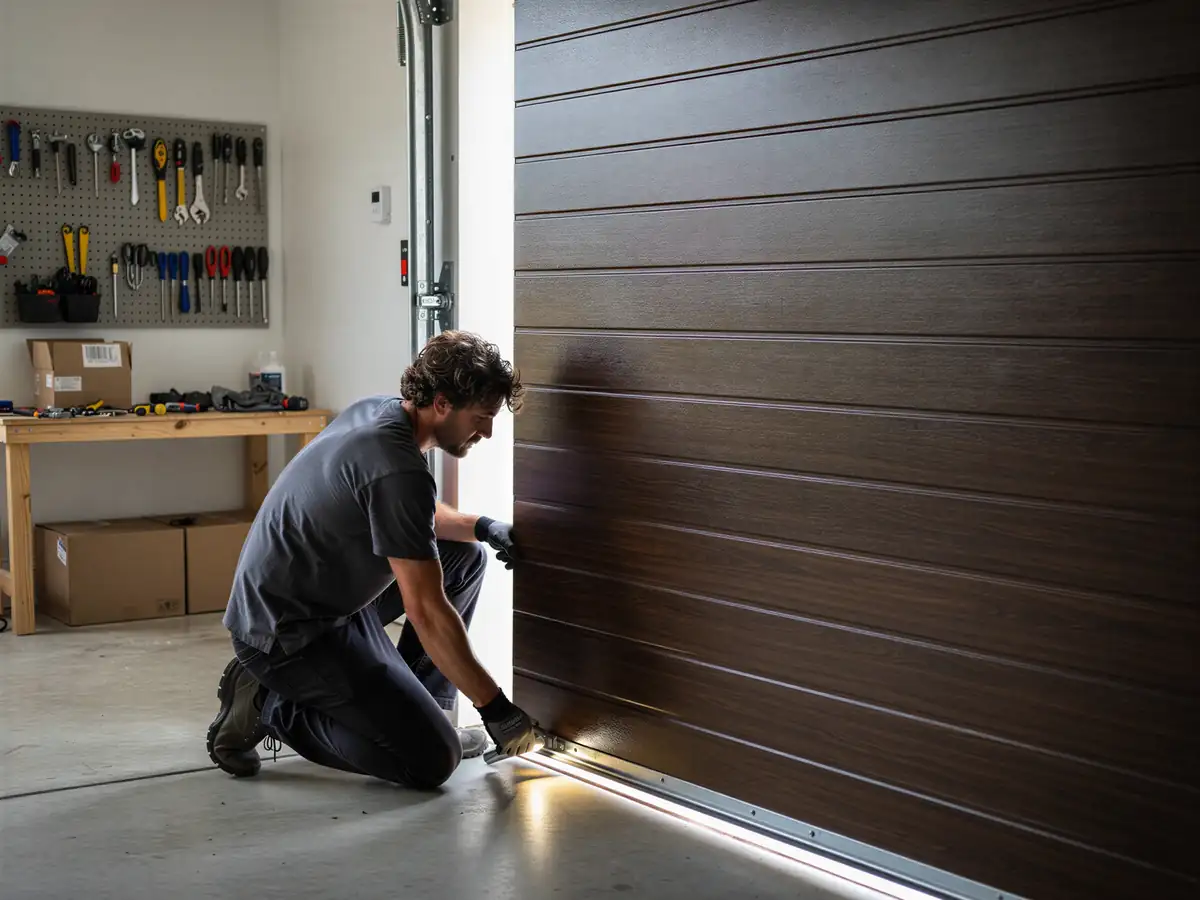
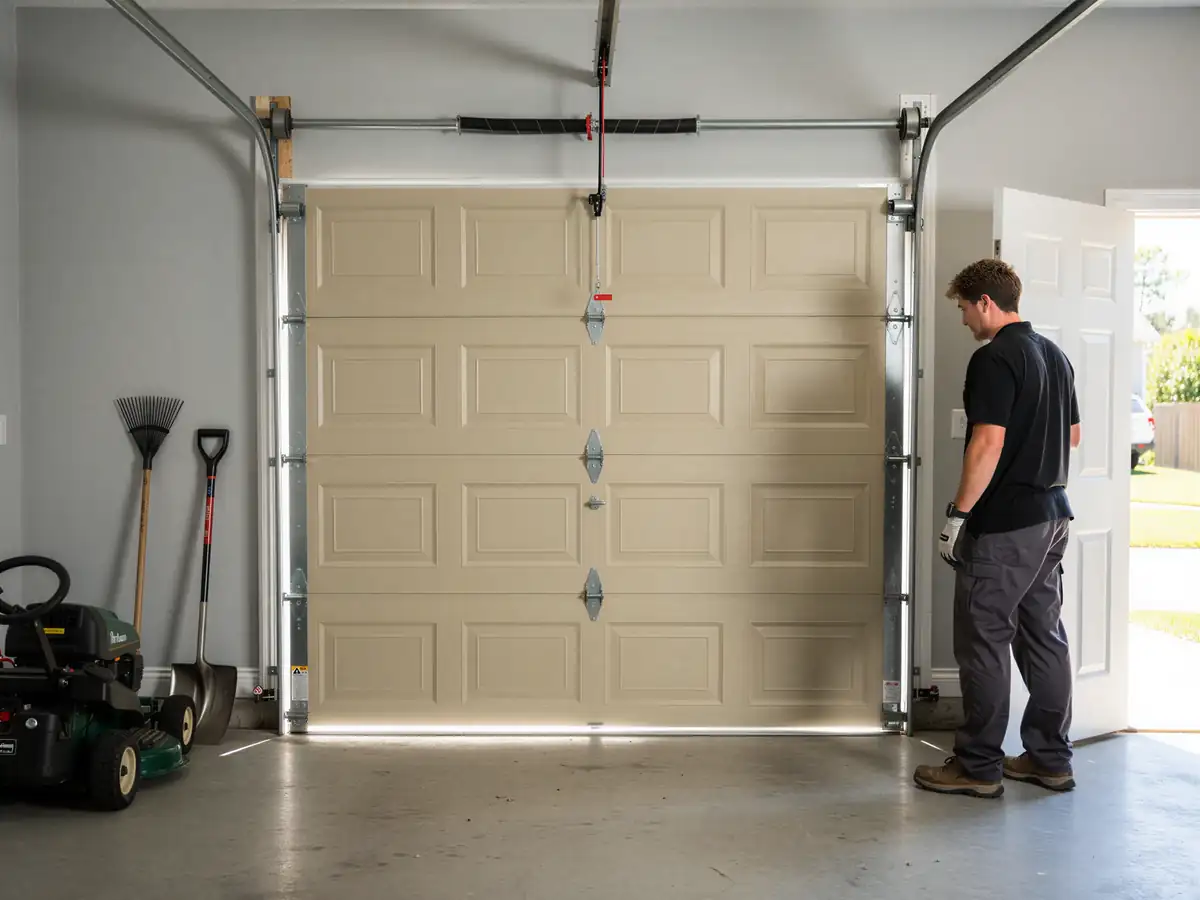
Start with the spring. If your door is original to a house built in the 1980s or 90s window that's typical here, the torsion spring has likely seen three or more decades of cold-cycle stress, and that's the part most likely to fail without warning. Next, check the bottom seal and the weatherstripping along the jambs - gaps you can see daylight through are gaps cold air is also moving through, and that's a direct cost on heating in a climate this severe. Look at the panels themselves for rust at the bottom corners, a common spot for moisture to sit through winter. Check whether the opener is newer than the door; if it is, a door-only replacement can leave you with a mismatch in travel limits or force settings that's worth flagging before you commit, not after. One honest limitation: we won't tell you to replace a door that's structurally sound just because it's old. If the panels are solid and the only issue is a worn spring or a bent roller, a repair is usually the right call, and we'll say so even when a full replacement would be the bigger job for us.
How it works
From “it’s stuck” to “it’s fixed”
A quick, honest process - no guesswork and no surprises, start to finish.
Straight answers about garage door repair in Centreville. Still unsure? Ask us directly.
How old is too old for a garage door here
There's no fixed number, but most doors from the 1980s and 90s stock common in this area are past their original hardware's service life by now. If the spring has already been replaced once or twice and the panels show rust or warping, replacement usually makes more sense than another repair.
Do I need an insulated door given the winters here
Given the cold-severe climate this area sits in, an insulated door cuts down on the draft and temperature swing you'd otherwise get through an older single-layer steel panel. It won't match a finished wall's insulation value, but it's a real difference from what most 1980s-era doors have.
Will a new door fit my existing opener
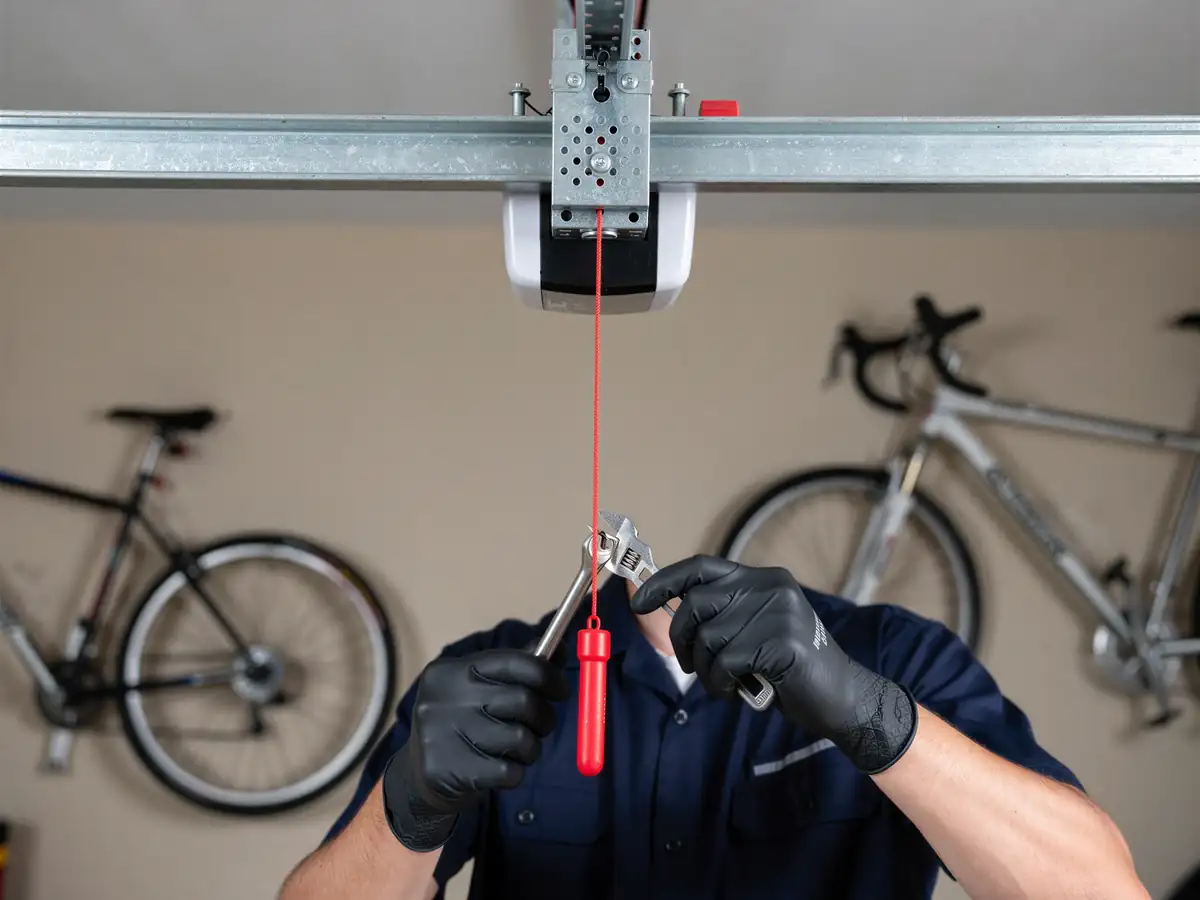
Sometimes, sometimes not. If your opener is newer than the door, travel limits and force settings may need adjusting after install. We'll check that before we quote the job rather than finding out on install day.