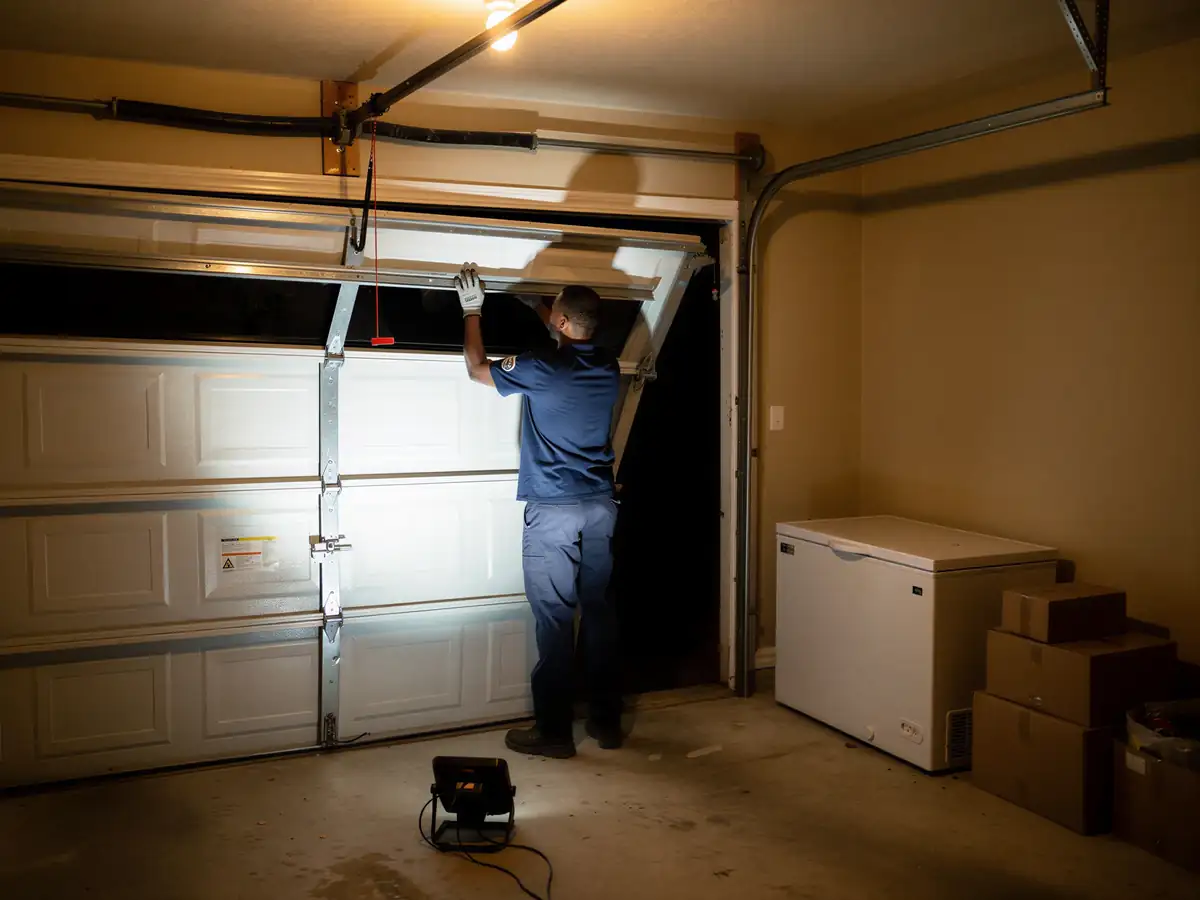
Why Centreville's 1980s-era housing stock and severe cold winters make torsion springs fail without warning, and what to check before you call for a repair.
A torsion spring doesn't care about the calendar, but it cares about temperature
Steel contracts as it gets cold, and a spring that's been doing fine all fall can lose the small amount of give it has left the first morning the thermometer drops hard. Centreville sits in a climate band classified as severe cold, which means the swings aren't mild dips - they're the kind that stress metal that's already fatigued from years of cycling.
02
Most of the housing stock around here went up between 1940 and 2015
With a median build year of 1981. That means a large share of the garage doors in this service area are original to houses now in their fourth decade, and the springs on those doors have been through forty-plus winters of exactly this kind of temperature swing. A spring near the end of its life doesn't usually give you a warning squeak for weeks - it holds right up until a cold snap finds the one coil that was already cracked, and then it goes.
03
The practical result
Calls for broken springs cluster hard in the first real cold stretch of the season, not gradually across fall. If your door has felt a little heavier to lift by hand the last few weeks, that's the spring telling you something before the cold finishes the job.
The Situation
Across the areas this company covers - from Bull Run and Yorkshire a few miles out to places like Sudley, Clifton, and Fairfax Station - the housing stock is overwhelmingly 1980s and 90s construction. That's relevant because that generation of builder-grade garage doors came with torsion springs sized for the door weight of the time, often the same gauge spring installed once and never touched again.
With roughly 109,606 owner-occupied houses across this service area, a meaningful share of those garages still carry an original spring, or a replacement installed without matching it properly to door weight. A spring that's slightly undersized for the door handles fine most of the year but runs out of margin exactly when cold stiffens the hardware and adds resistance to the track.
This isn't a problem unique to one street or one subdivision - it's a function of when this corner of Virginia was built out, which happened in a fairly tight window. A door in a house built in 1983 and a door in a house built in 1979 are, mechanically, in the same boat right now.
What Local Conditions Do
Cold does two separate things to a garage door spring, and both matter here given the severe-cold classification this area falls under. First, the steel itself stiffens and becomes more brittle at the microscopic level where a coil has already started to fatigue - so a crack that would have stayed a crack in October finishes the job in January. Second, the grease or oil in the torsion bearings thickens in the cold, which adds friction the opener and the spring both have to fight against. A spring that's barely strong enough to lift the door in August can be flatly not strong enough once that extra friction shows up.
This is also why cold-weather spring failures tend to happen at specific times of day - the first lift after a hard overnight freeze, before the garage has had any chance to warm back up. If your garage is attached and gets some residual heat from the house, you may notice the door behaves differently on the first cold morning versus by afternoon.
One honest limit here: we can't tell you from a phone call whether a spring is about to go or has another two winters left in it. Spring fatigue doesn't show up as a visible sign most of the time. That's a hands-on inspection, not a guess.
What to Look At First
01
Before you assume the worst, check a few things yourself
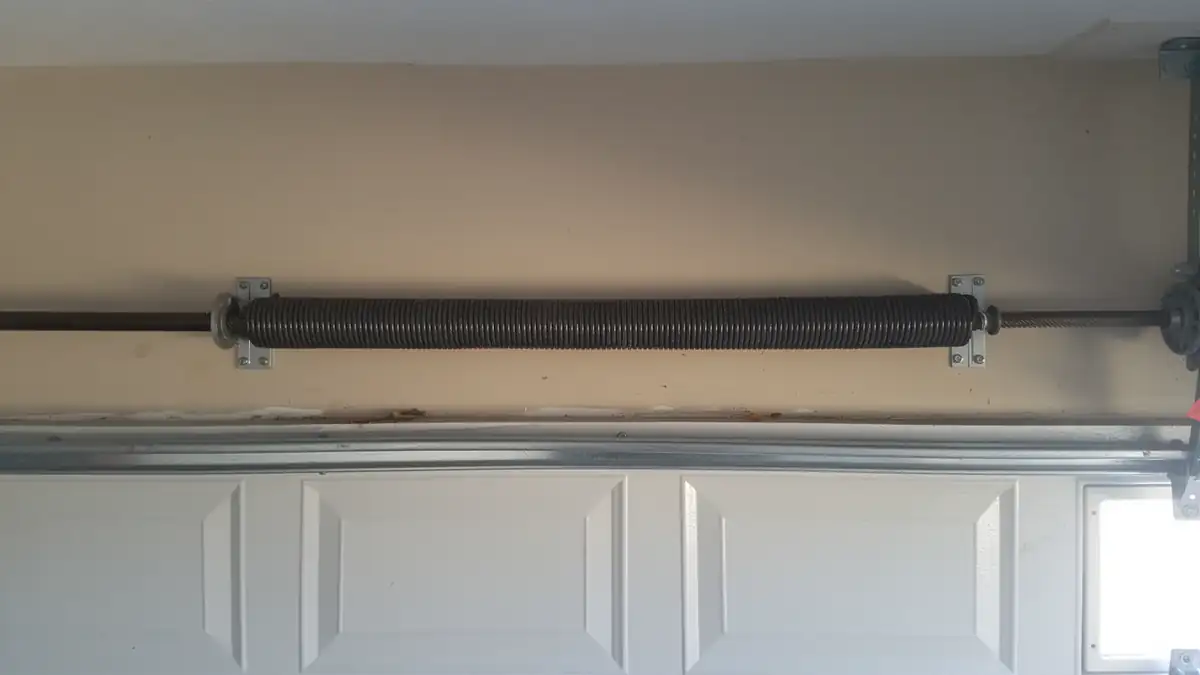
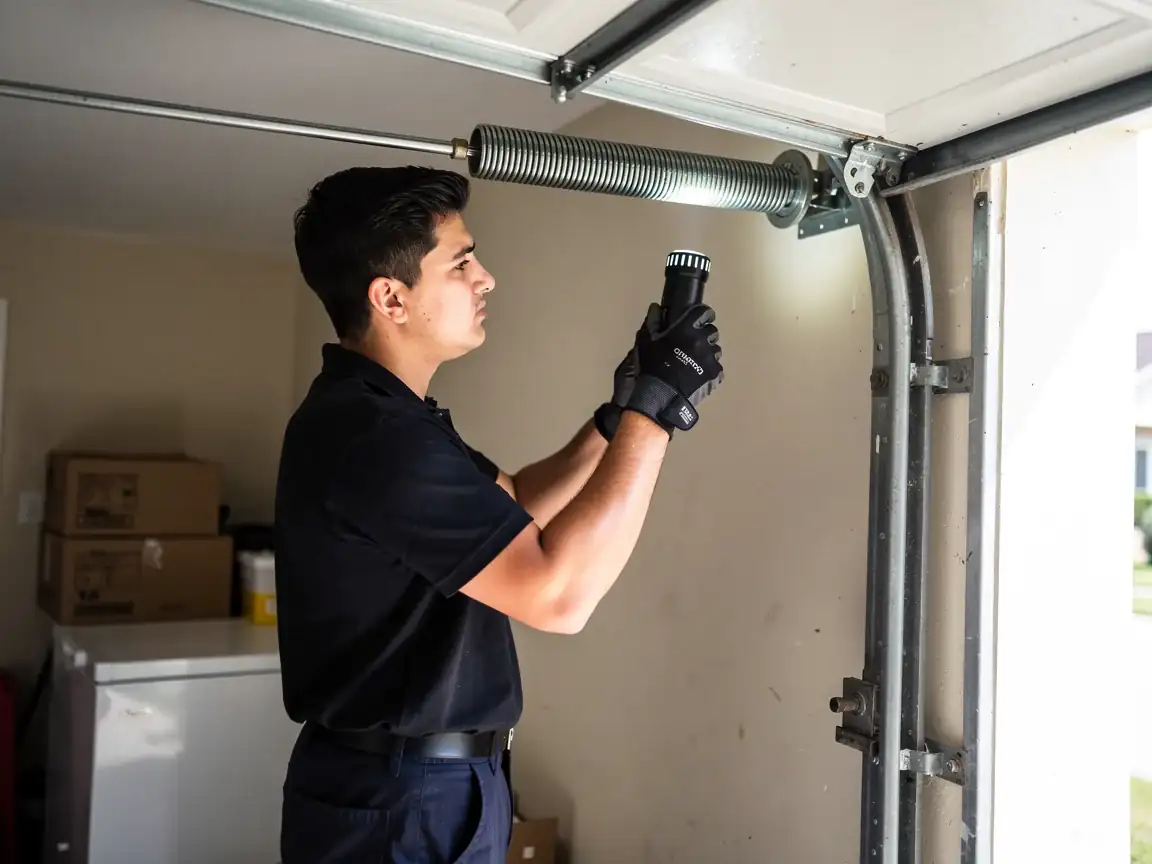
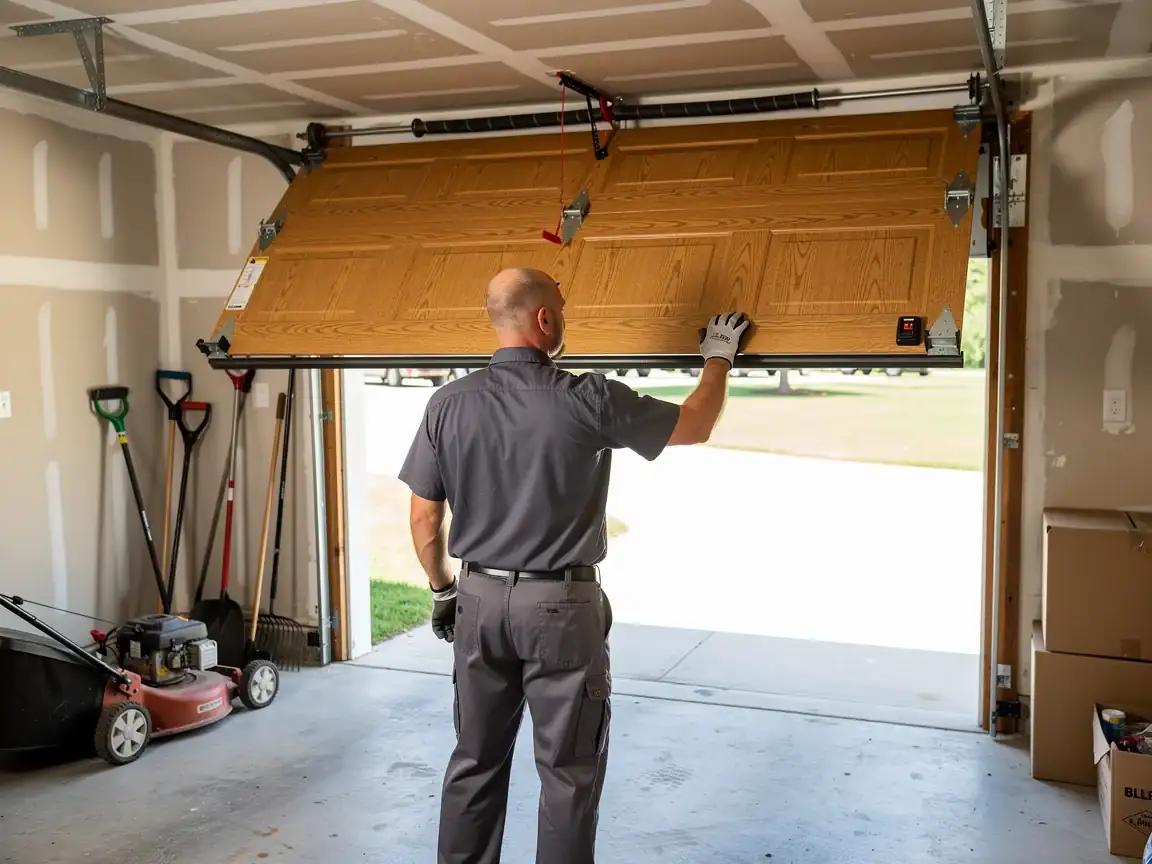
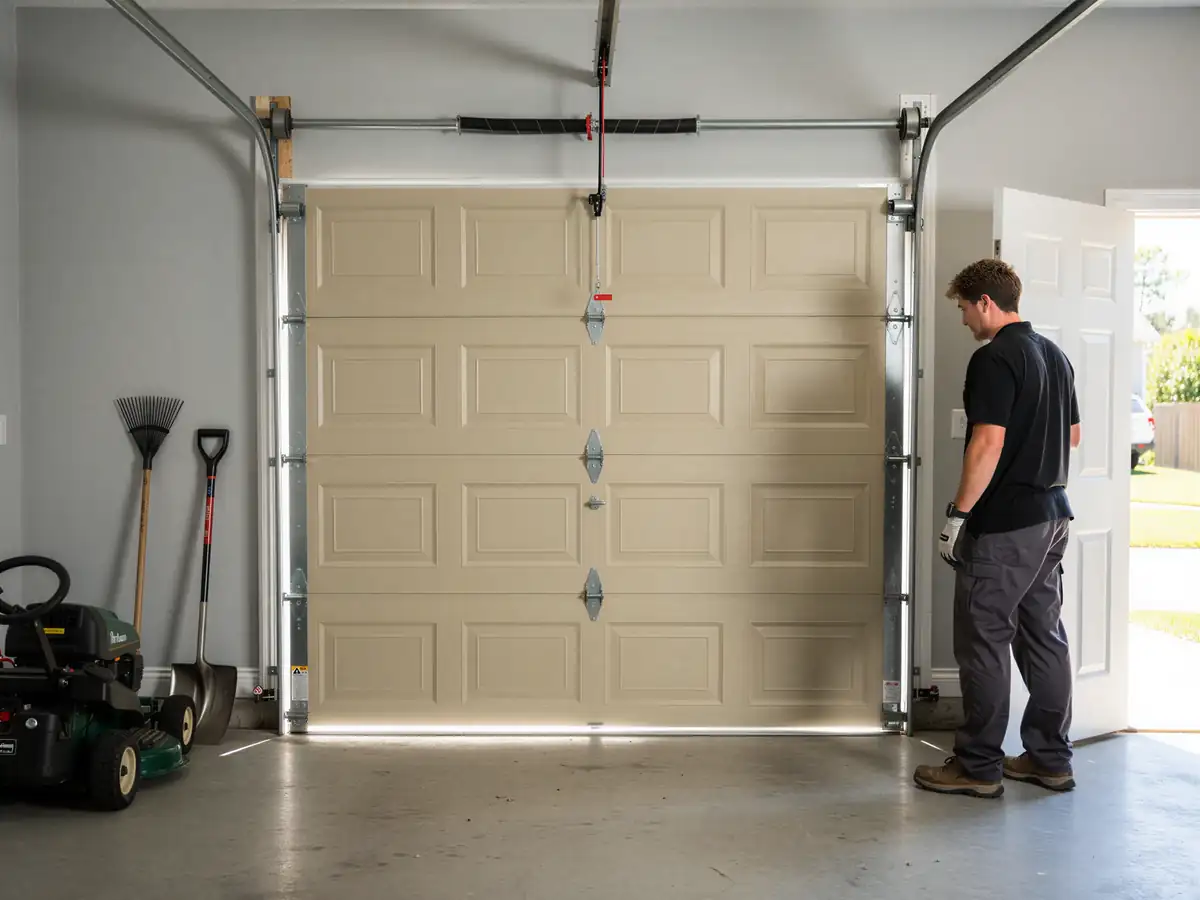
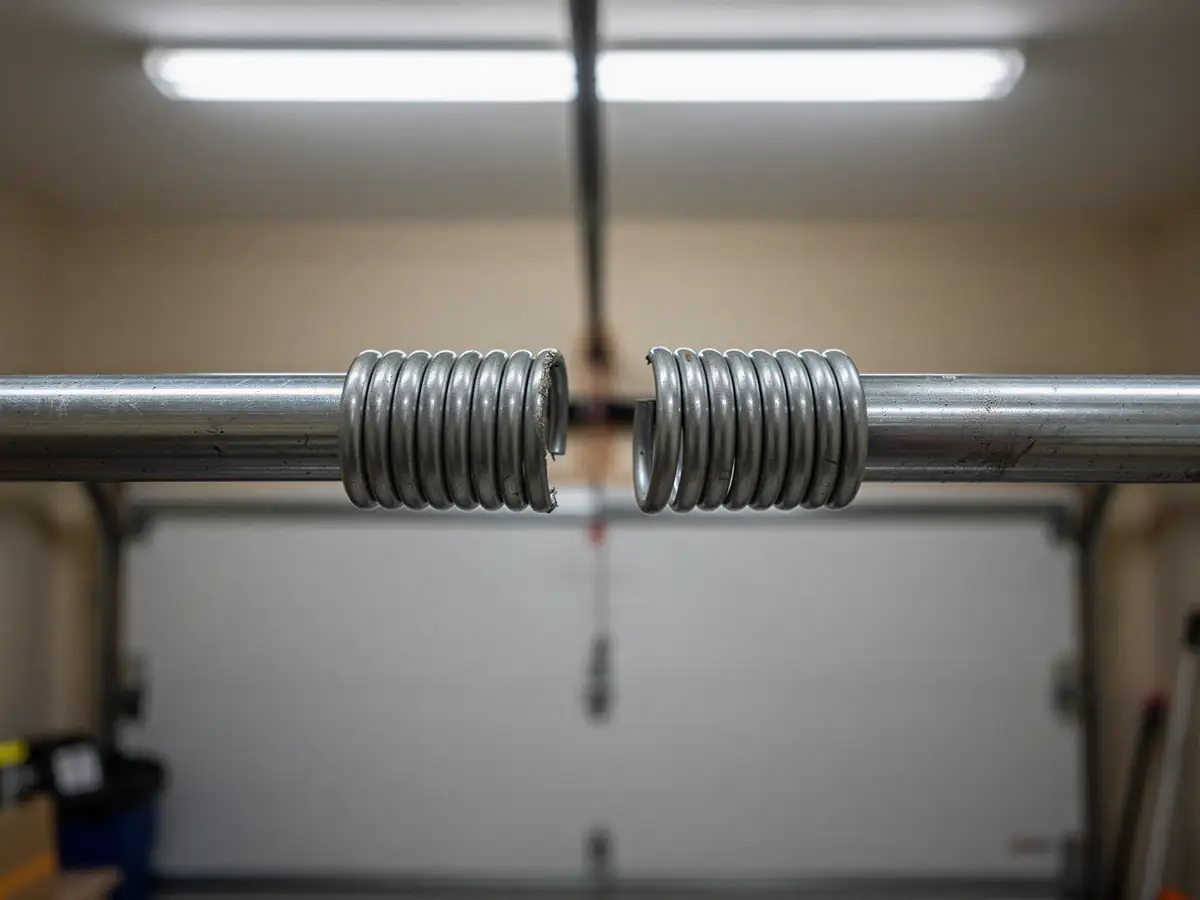
Look at the spring (or springs - some doors run two) above the door and see if either has a visible gap in a coil, which means it's already broken and just hasn't fully let go. Next, try lifting the door manually with the opener disconnected - if it feels noticeably heavier than it used to, or doesn't stay up on its own partway, that's a spring losing tension, not an opener problem.
02
Given that most doors in this service area are original to houses built in that 1980s-to-90s window
Age alone is a reasonable flag - a spring installed when the house was built has had four decades of exactly the seasonal stress described above. If you don't know when yours was last replaced, that's worth finding out before the first hard freeze rather than after.
03
Don't try to adjust or remove a torsion spring yourself
These are under enough tension to cause a serious injury, and that's true regardless of how old the house is or what the weather's doing. If a coil is cracked or the door won't stay up, that's a call, not a weekend project.
How it works
From “it’s stuck” to “it’s fixed”
A quick, honest process - no guesswork and no surprises, start to finish.
Straight answers about garage door repair in Centreville. Still unsure? Ask us directly.
Why did my spring break on the coldest morning of the year?
Cold stiffens the steel in a spring that's already fatigued, and it thickens the grease in the torsion bearings, adding resistance. A spring that was barely holding on through fall often has nothing left once a hard freeze hits, which is why so many failures cluster in the first cold stretch rather than spreading out evenly across the season.
Is my spring original to the house?
If your house was built in the 1980s or 90s, which describes most of the housing stock in this service area, there's a real chance the spring has never been replaced. We can't tell age from a phone call, but a spring that old has been through decades of winter cycling and is worth having looked at before it fails on its own schedule.
Can I just wait until spring to deal with a cracked coil?
No. A cracked coil under tension can let go without warning, and cold weather makes that more likely, not less. If you can see a gap in a coil, treat the door as unsafe to operate and don't try to force it open or closed until it's replaced.