Off-Track Garage Doors: A Centreville Problem Rooted in the 1980s
In Centreville's 1980s-90s housing stock, cold winters and aging track hardware are the top reasons garage doors jump their rails. Here's what to check first.
Centreville sits in a climate band rated cold and severe
And that matters more for a garage door than most homeowners think. The track that guides your rollers is bolted to wood framing and anchored to a concrete slab, and both of those materials move when the ground freezes and thaws through the winter. A slab that heaves a quarter inch is enough to pull a track bracket out of line. Steel track itself contracts in deep cold, which tightens the gap between roller and rail just enough to make a door bind on one side and climb off the other.
02
This isn't a one-time event
It's a cycle that repeats every winter, and each freeze-thaw pass loosens lag bolts a little more than the last. By February, a door that ran clean in October can be rattling, leaning, or jumping the track on the up-stroke. If your door has started acting different only in the cold months, that's the seasonal movement talking, not a sudden defect in the door itself.
The Situation
Housing in this part of the county was mostly built between 1940 and 2015, with the typical house dating to around 1981, and the bulk of that stock went up during the 1980s and 90s construction wave that filled in dozens of named subdivisions across the area. That matters for garage doors because it means a huge share of the doors still in service were installed with the house - original steel track, original roller brackets, original hinges - and that hardware is now forty-plus years old in a lot of cases.
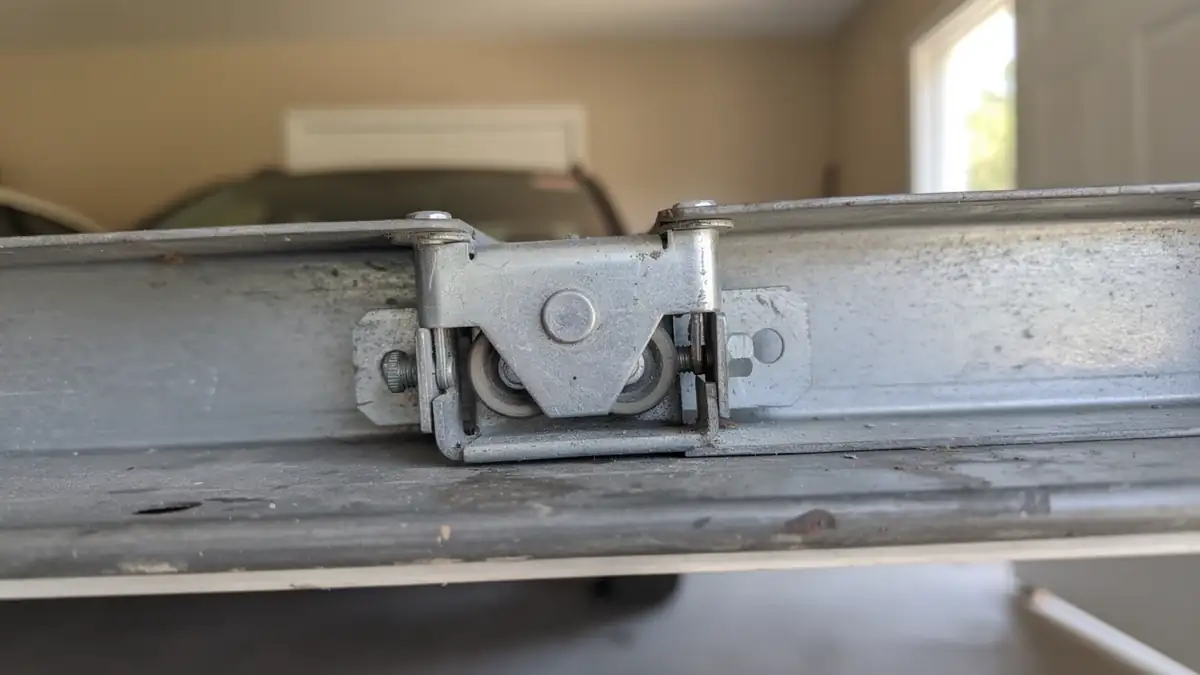
Original-era track was built to a lighter spec than what goes in today, and the galvanized coating on the brackets has had four decades to thin out and rust at the bolt holes. Rust at a bolt hole doesn't fail all at once. It lets the bolt work loose a sixteenth of an inch at a time until the bracket can rock under load. On a door that's otherwise sound, a rocking bracket is very often the real reason it's riding off the rail instead of running straight.
What Local Conditions Do
Put the cold and the old hardware together and you get the specific failure pattern we see on Centreville calls: slab movement loosens a bracket that was already thin from decades of surface rust, and the first hard freeze of the season is what finally lets the track twist enough for a roller to pop out. It tends to show up on the side of the door that gets less sun, since that side of the slab stays colder longer and moves more.
We're not talking about a dramatic weather event - there's no storm behind this. It's the ordinary freeze-thaw cycle acting on hardware that was never rated for forty winters in the first place. Newer installs with heavier-gauge track and stainless fasteners handle this same ground movement without incident, which is part of why off-track calls cluster so heavily in the stretch of this area that still has its original 1980s and 90s door hardware.
What to Look At First
01
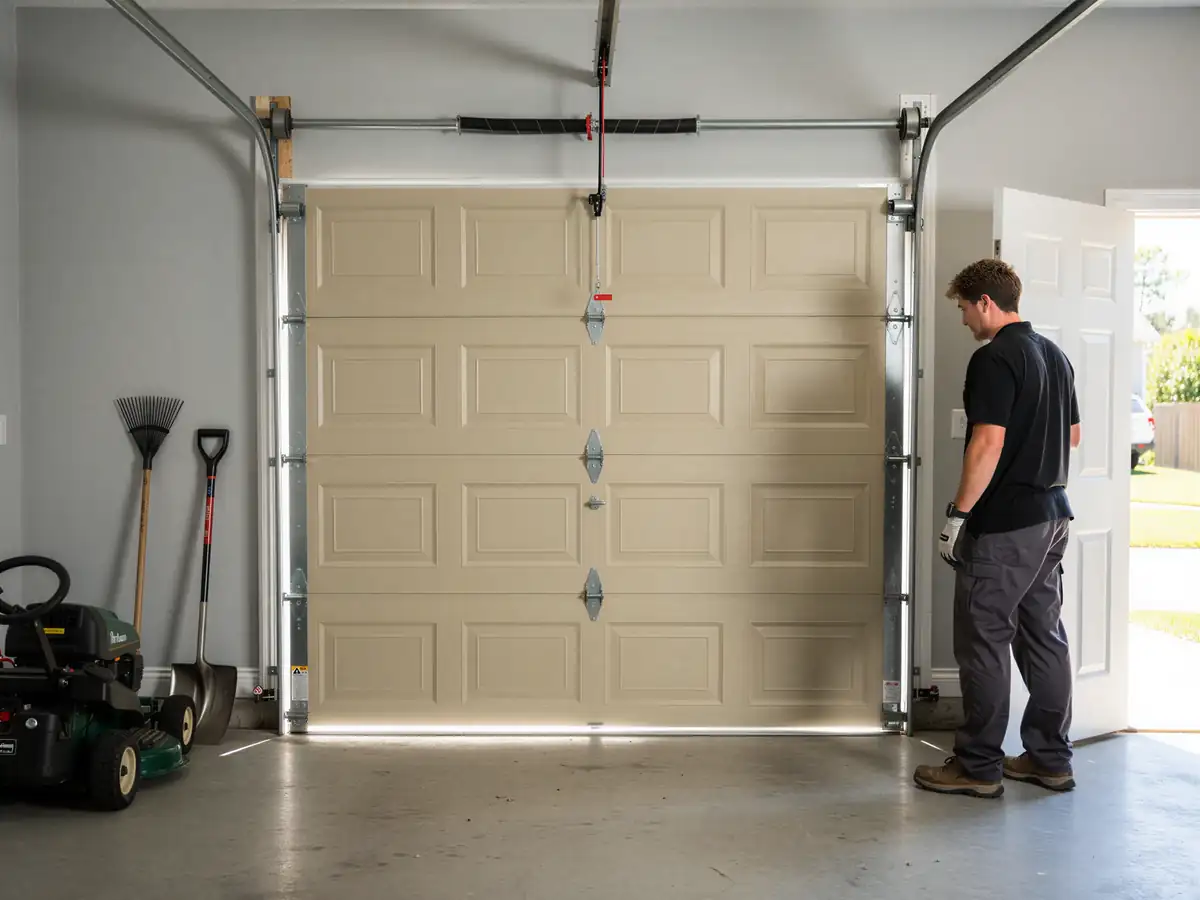
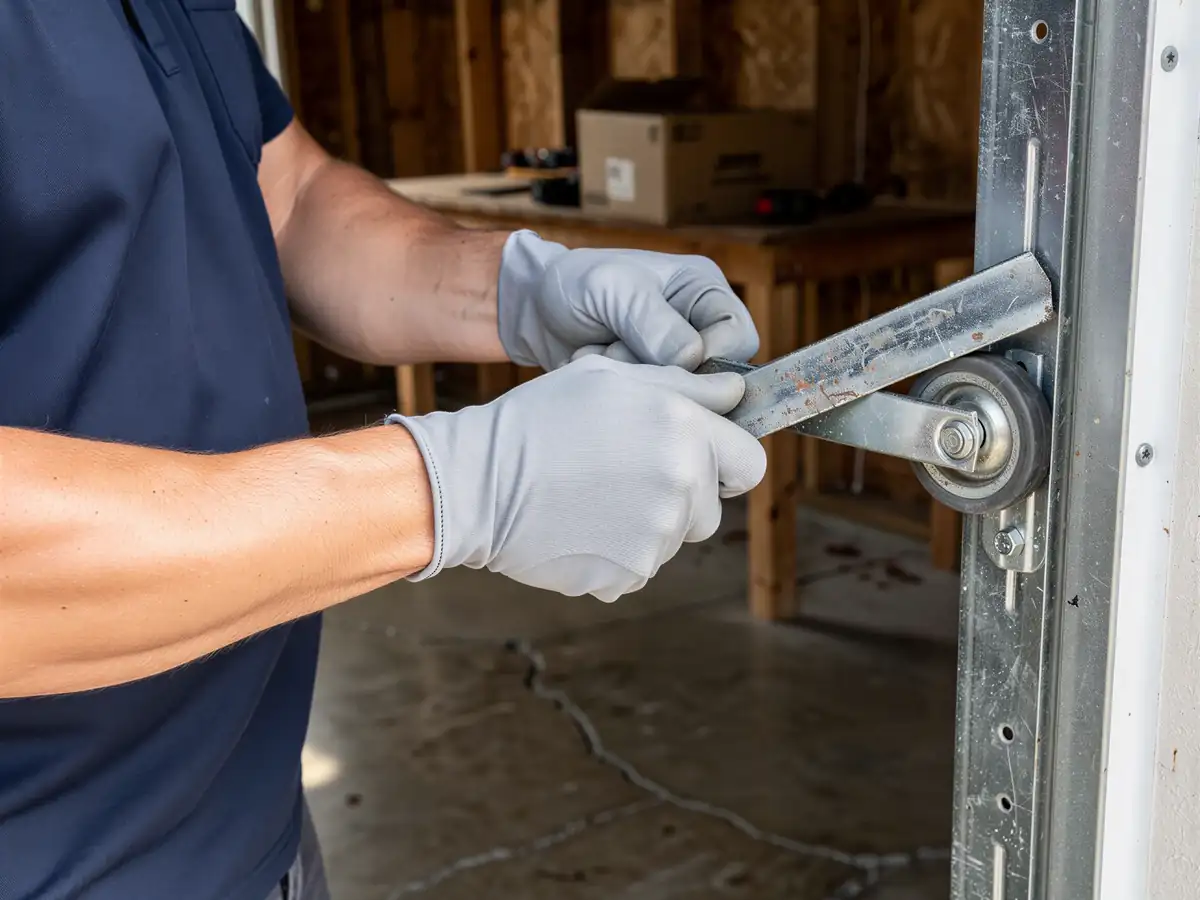
Before you touch the door itself, look at the brackets that hold the track to the framing
If you can wiggle a bracket by hand or see rust bloom around the bolt heads, that's your likely cause, not the rollers or the opener. Next, run your hand down the track looking for a spot where the two walls of the rail have pulled apart slightly - that gap is where a roller walks out.
02
Check whether the gap is worse near the floor or near the top
A floor-level problem usually points to slab heave; a top-of-track problem usually points to a loose jamb bracket. Either way, a door that's only off by a little can often be pulled back into alignment and re-bolted. One honest limit here: if the track itself is bent rather than just loose, straightening it rarely holds for long, and replacing that section of track is the better use of your money than repeated realignment visits.
Straight answers about garage door repair in Centreville. Still unsure? Ask us directly.
Why does my garage door only go off track in winter?
Cold makes the slab under your garage move and makes steel track contract slightly, both of which can pull a bracket out of alignment. If your hardware is original to a house built in the 1980s or 90s, which describes a lot of homes around here, the bolts have had decades of rust working on them already, so winter movement is often what finally lets a roller jump.
Is a bent track worth fixing or should I replace it?
A track that's just loose can usually be re-aligned and re-bolted. A track that's visibly bent, kinked, or bowed won't hold alignment for long even after you straighten it, and most of the time you're better off replacing that section rather than paying for repeat realignment calls.
How do I know if it's the bracket or the roller?
Check the bracket first by hand - if it moves or shows rust at the bolt holes, that's the likely cause. Rollers that are simply worn tend to make noise and wobble but don't usually throw the door off the rail on their own; a loose or rusted bracket is the more common root cause in older houses.