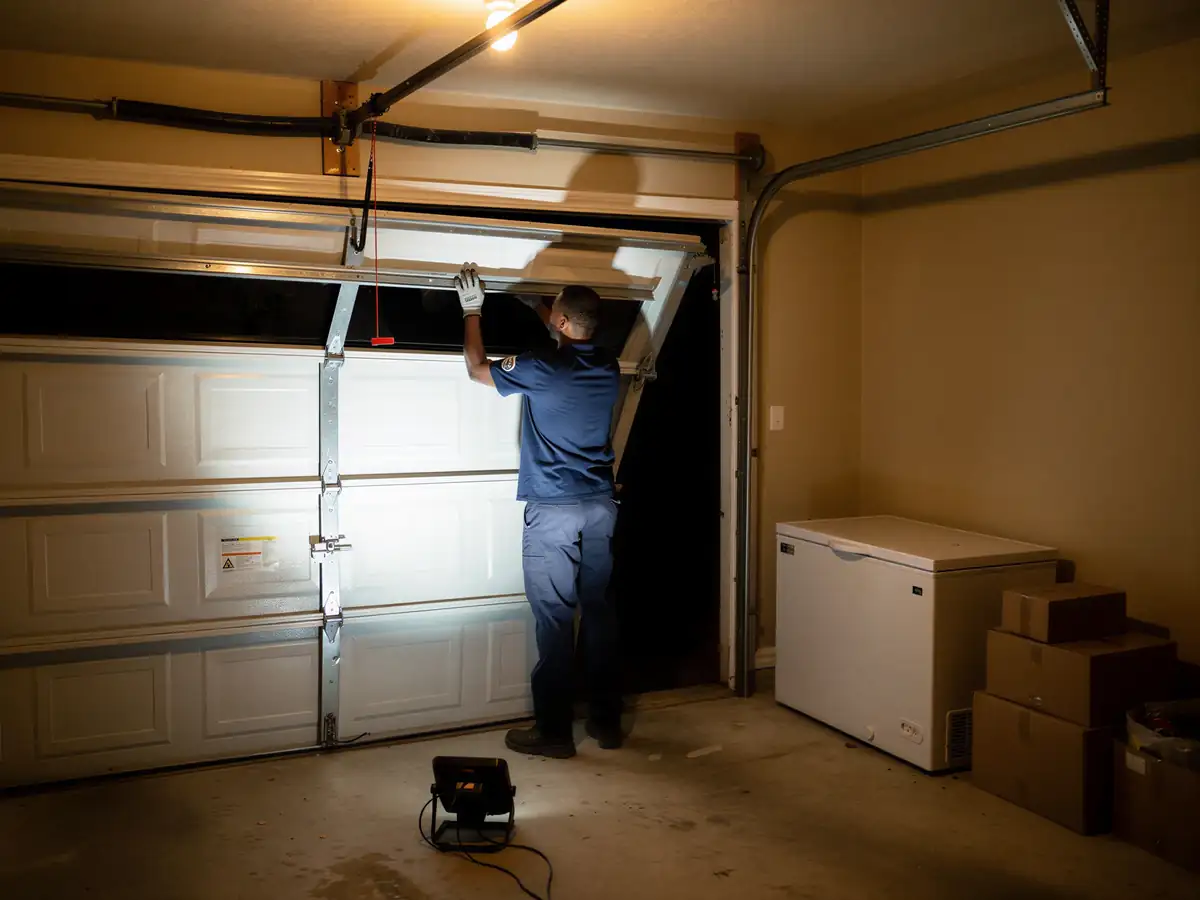
Centreville sits in a cold-severe climate band, and that matters differently depending on whether your garage is attached to the house or standing on its own. An attached garage usually shares at least one insulated wall with living space, so it holds some residual heat even when the door itself is a thin, non-insulated panel from the original build. A detached garage has no such buffer - every wall faces outside air, and the door is doing all the work of keeping winter out. On a detached structure, a door with worn weatherstripping or a sagging bottom seal lets cold air move straight through the slab, which you'll feel in frozen tracks and stiff springs before you feel it in the house. On an attached garage, the same wear shows up more slowly, often as a cold wall in the room next door before the door hardware itself starts failing. Either way, cold tightens steel and stiffens grease, so a door that rolled smoothly in August can bind or groan in January regardless of which type it is.
The Situation
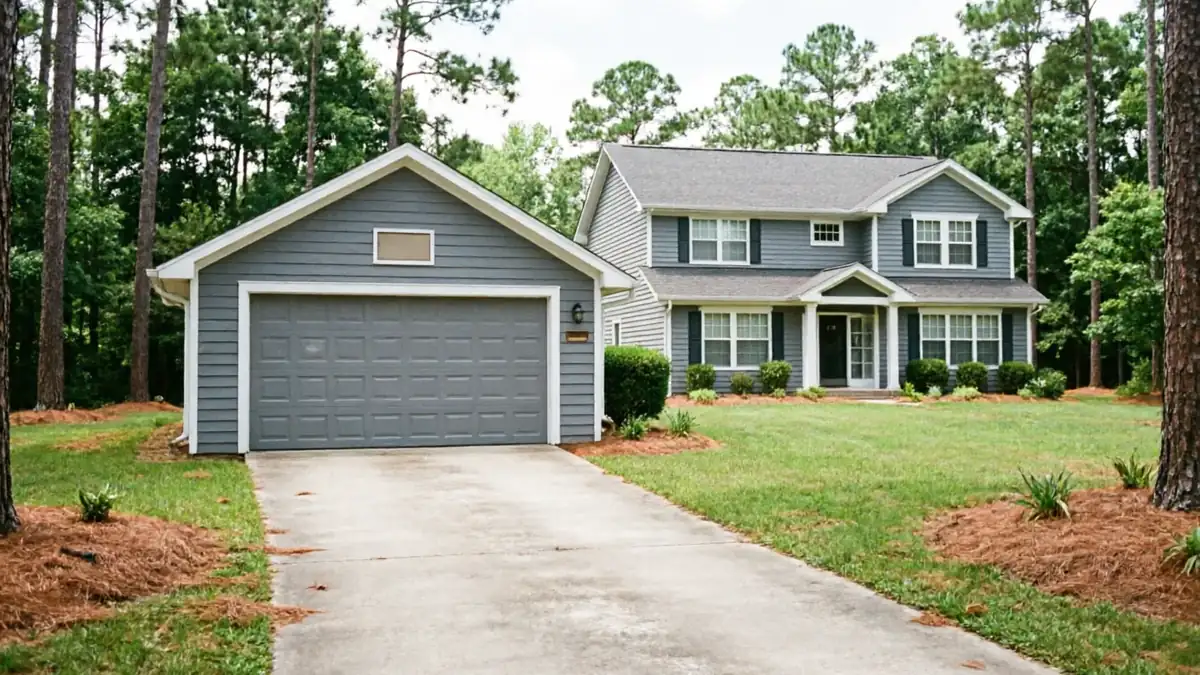
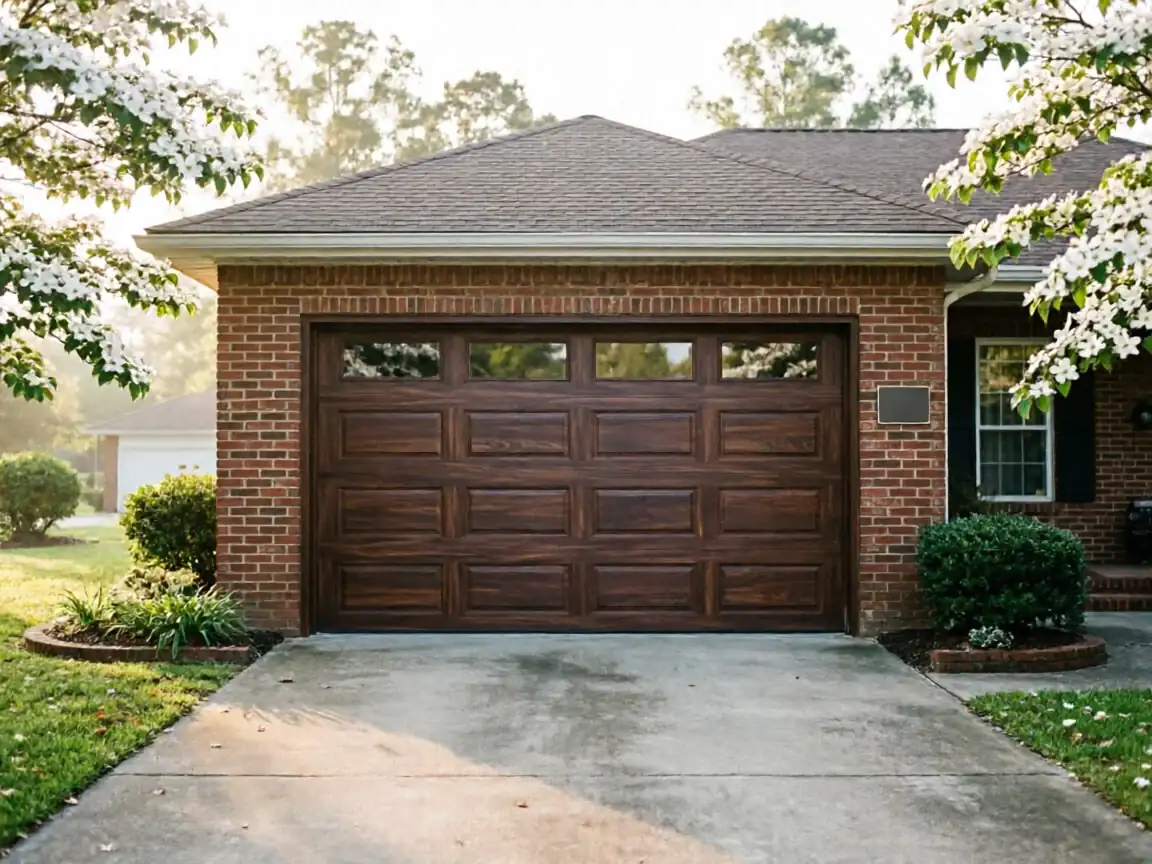
Housing across this service area runs from 1940 to 2015, with the median build year landing around 1981, and most of the 49 named communities we cover sit squarely in 1980s-90s construction. That era is relevant here because it's when steel sectional doors on extension or torsion springs became standard, replacing older one-piece tilt-up doors. A lot of Centreville's detached garages - the kind built as a separate structure behind a colonial or split-level from that period - still run original or first-replacement hardware sized for a door that was never meant to be weathertight on its own. Attached garages from the same build years were framed as part of the house envelope, so their doors tend to carry a bit more insulation value by design, even when nobody's touched them since the original install. Knowing which decade your structure dates to tells you more about what's likely to fail than knowing the brand on the door.
What Local Conditions Do
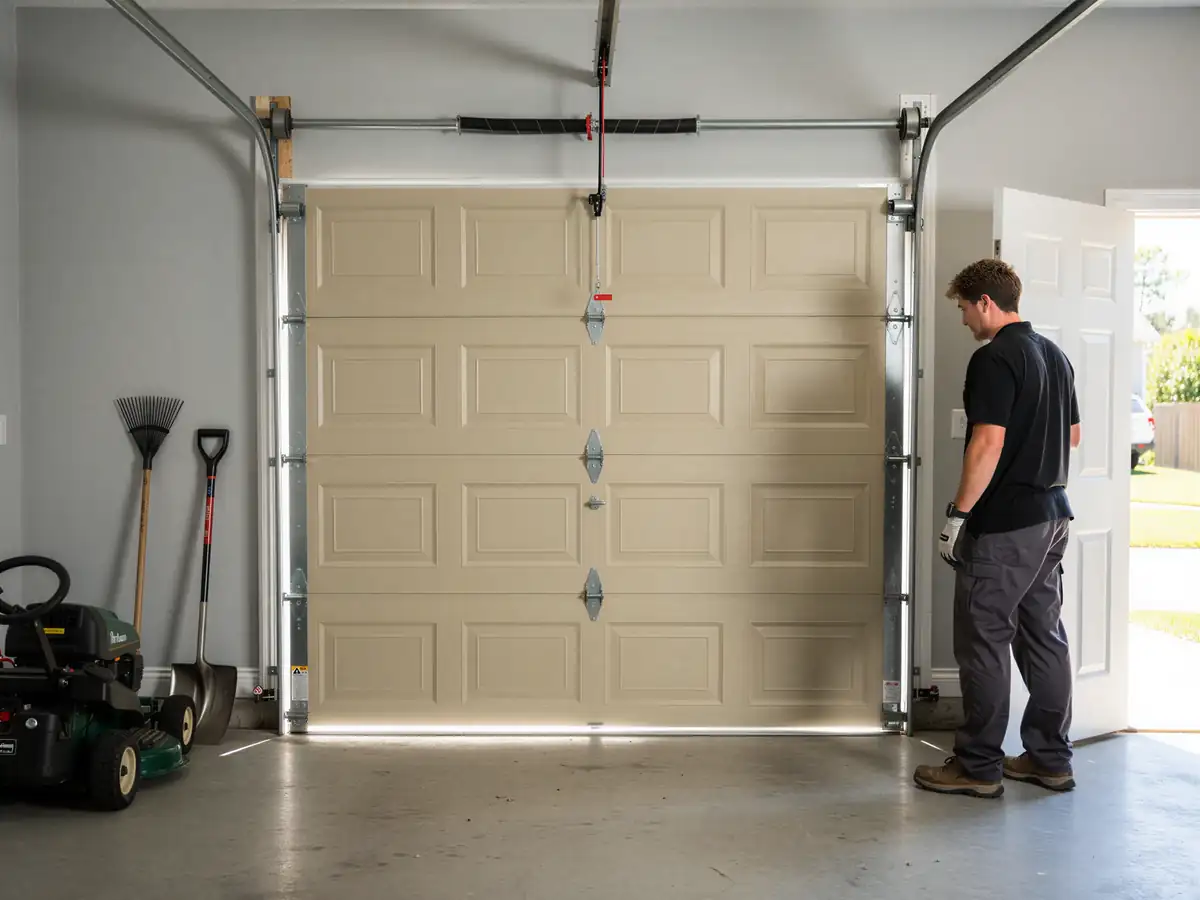
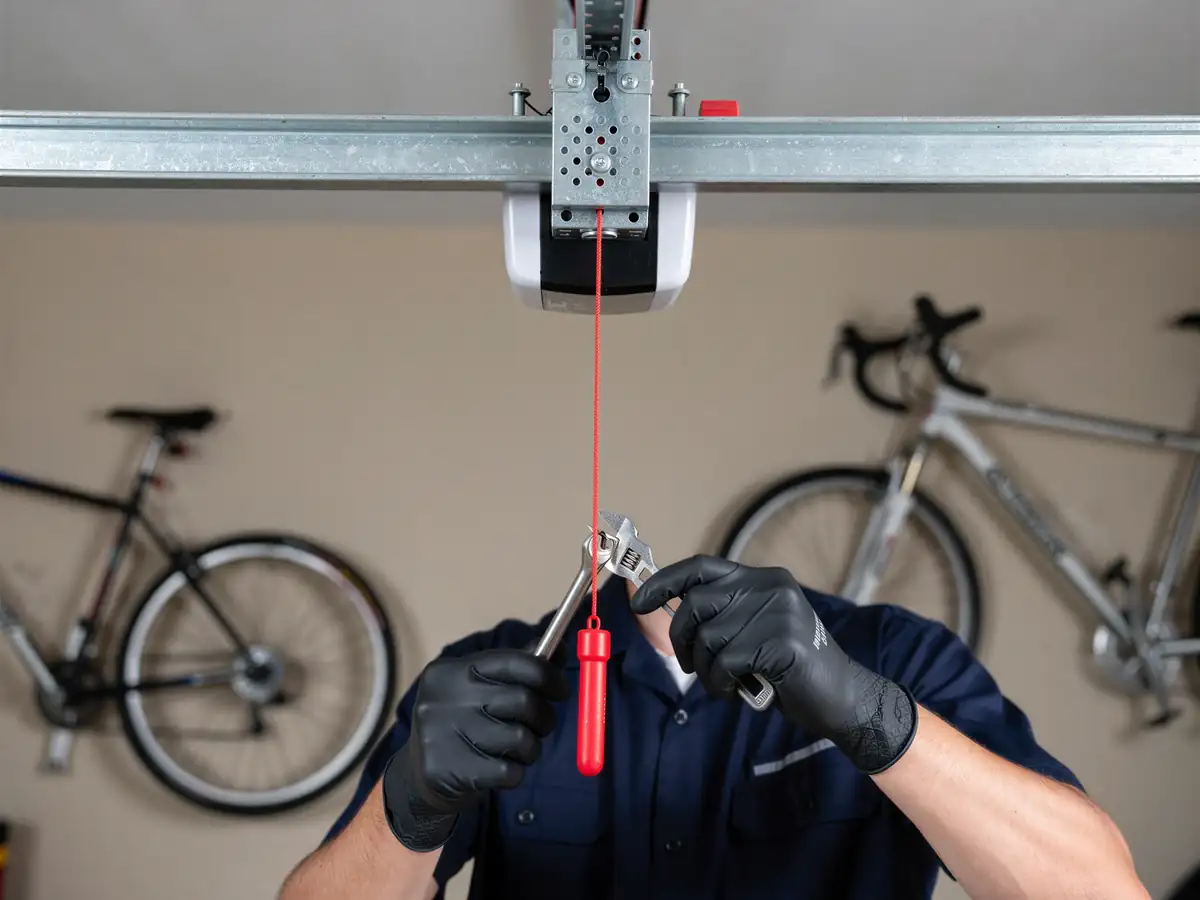
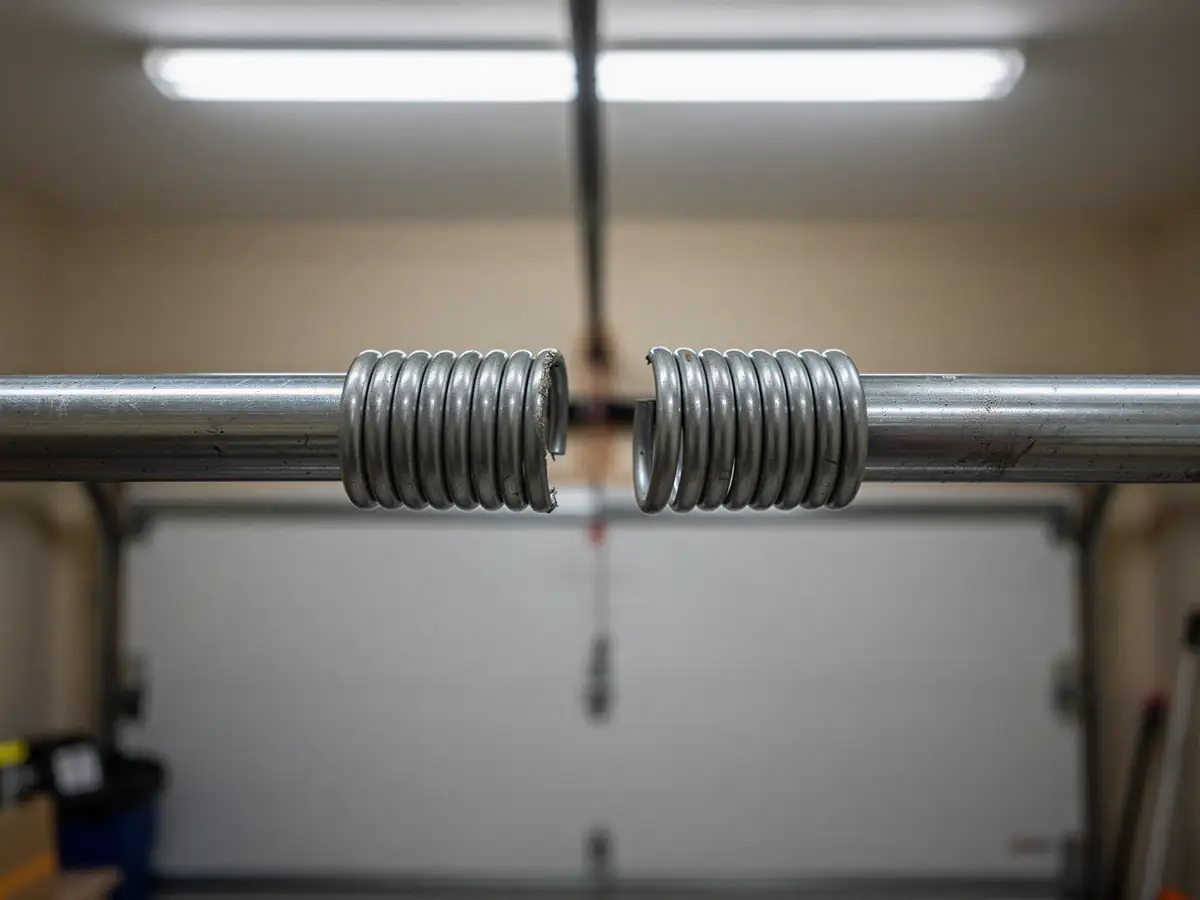
A detached garage with 1980s-era hardware and no heat source is the setup most exposed to cold-severe swings: the steel contracts, lubricant thickens, and a spring that was already near the end of its cycle count is more likely to let go on a frigid morning than a mild one. We see this pattern most in the older pockets of the service area, further from newer construction near places like South Riding or Brambleton where doors and openers are more likely to have already been replaced. Attached garages fare a little better thermally, but they carry a different risk: if the door is original to a 1981-median-year house, the opener is almost certainly a later retrofit, and the bracket or header mounting may not match what a modern opener expects. That mismatch shows up as a door that reverses unpredictably or an opener that strains on cold mornings even though the track itself is fine.
What to Look At First
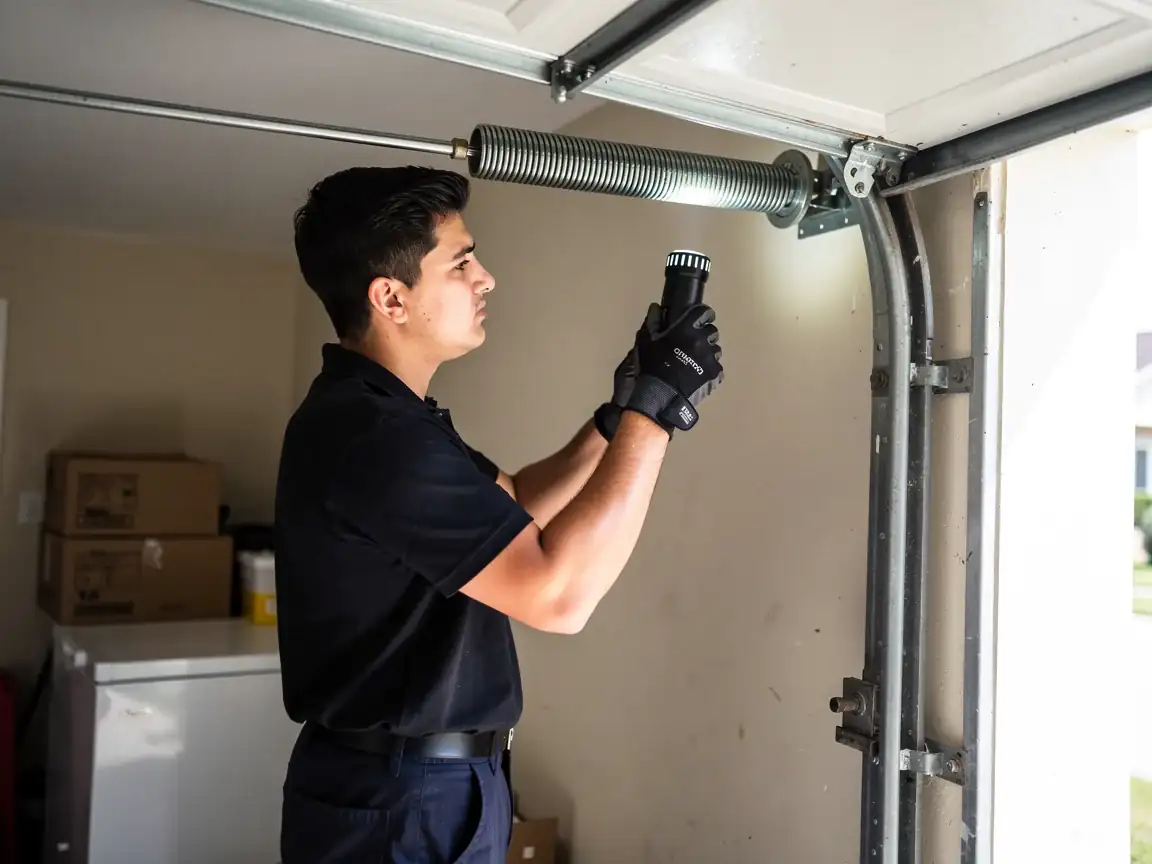
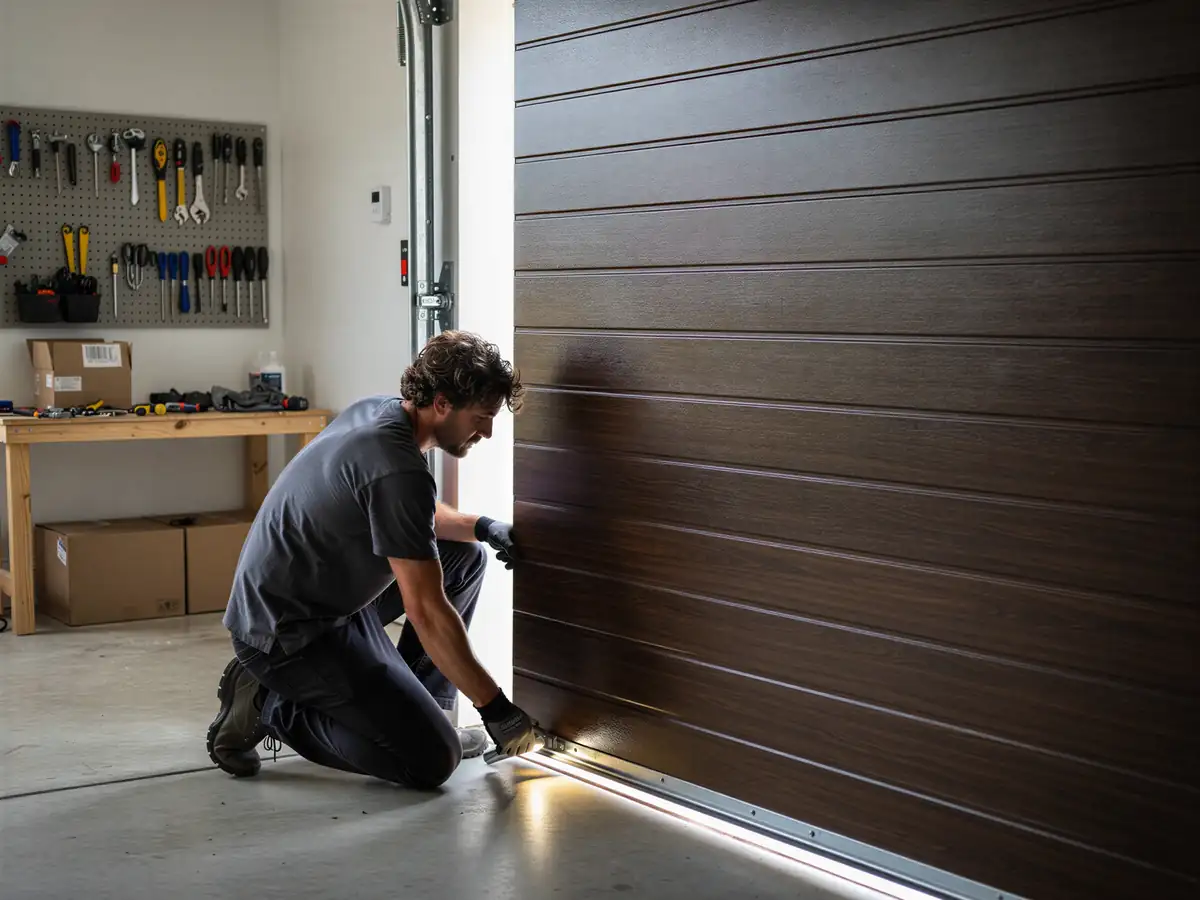
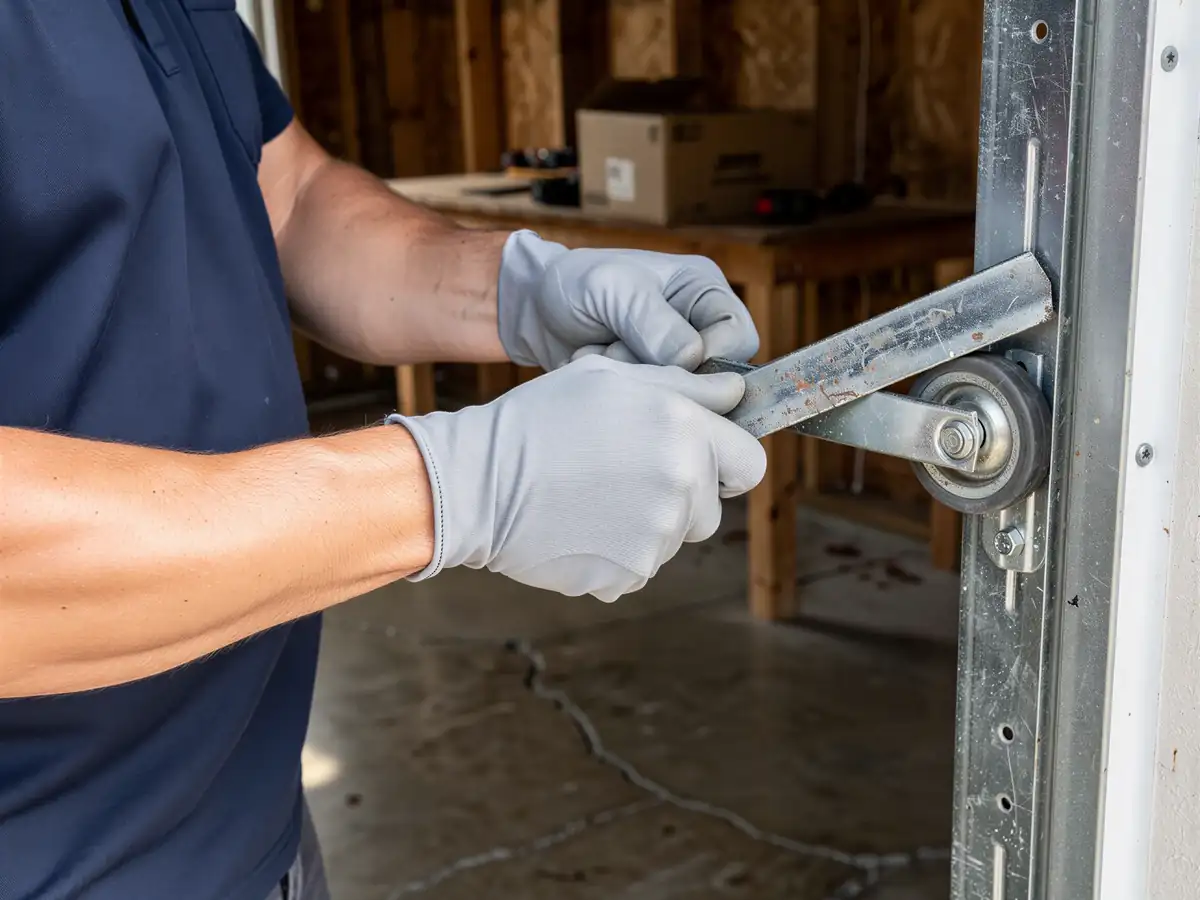
On a detached garage, start with the bottom seal and the weatherstripping along the jambs - if you can see daylight or feel a draft at floor level, cold air is getting to the springs and rollers before it gets to you, and that accelerates wear. On an attached garage, start at the wall shared with the house; if that wall feels noticeably colder than others, the door panel itself (not just the seal) may be the weak point, which is common on original steel doors from the 1980s-90s stock that makes up most of this area. In both cases, check the spring type - torsion springs mounted above the door versus extension springs along the tracks - since replacement parts and cost differ. One honest limit here: we can tell you what a cold snap is likely to break based on the age and type of your door, but we can't diagnose a specific noise or binding issue without seeing the door in person.
How it works
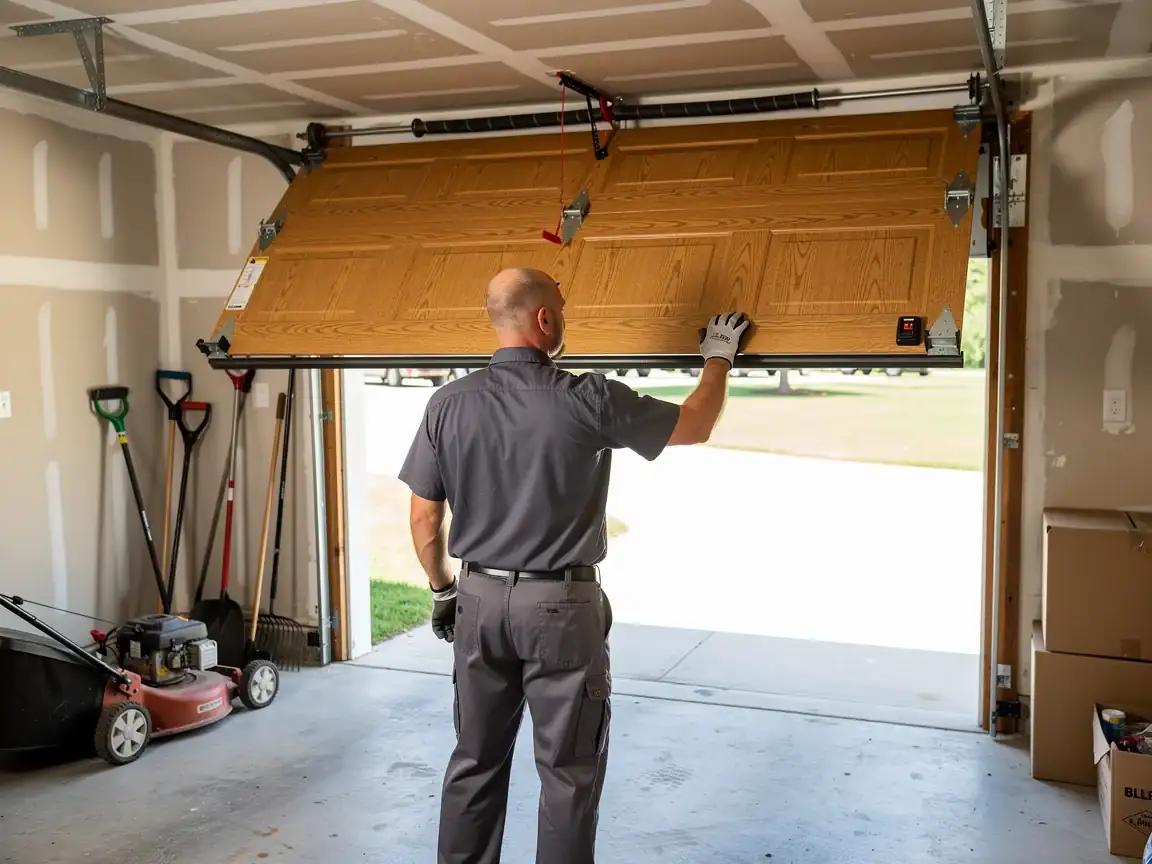
From “it’s stuck” to “it’s fixed”
A quick, honest process - no guesswork and no surprises, start to finish.
Straight answers about garage door repair in Centreville. Still unsure? Ask us directly.
Does a detached garage need a different door than an attached one?
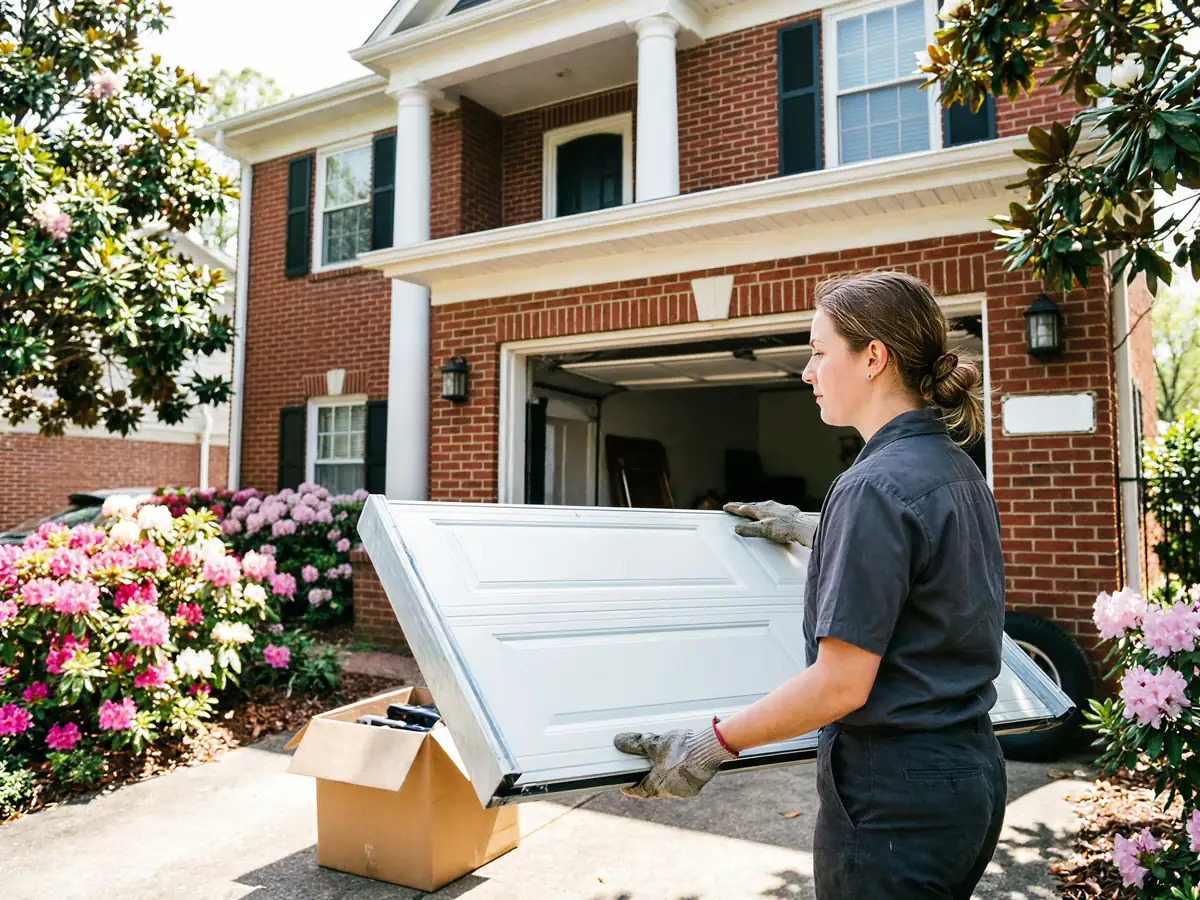
Not a different door category, but detached garages in this climate band benefit more from a well-sealed, better-insulated door since there's no shared wall holding heat. If your detached garage still has its original 1980s-90s door, the weatherstripping is usually the first thing worth checking before winter.
Why does my attached garage door strain more in cold weather?
Cold thickens grease and tightens steel, so springs and rollers sized decades ago work harder in cold-severe conditions. If your home dates to the area's median build year around 1981, the opener is likely a later retrofit, and mismatched hardware can make straining worse.
Is it worth insulating an older detached garage door?
Often yes, since a detached structure has no adjacent heated wall to buffer it. But if the door's hardware is already near the end of its life, replacing the whole door usually makes more sense than adding insulation to a door you'll replace again soon.