What a Power Cut Does to Your Opener in Centreville
Most Centreville garages run 1980s-90s chain-drive openers with no battery backup. Here's what a cold-weather power cut does to them, and what to check first.
Centreville sits in a cold-and-severe climate band, which matters more for your opener than most people think. It's not the door itself that struggles in a hard freeze - it's the motor and the circuit board behind it, and the battery inside your backup unit if you have one. Lead-acid and lithium backup batteries both lose a meaningful chunk of their usable capacity once temperatures drop into the teens and 20s, which is exactly when ice storms and downed lines are most likely to cut your power in the first place. If your opener is older, the drive motor itself can bog down trying to lift a cold-stiffened door on top of a weak battery feed. The two problems stack instead of happening one at a time. A door that opens fine on a 50-degree October afternoon can stall out halfway on a 15-degree January morning with the grid down, and that's the exact combination homeowners here run into every winter. None of this is about the opener being broken. It's about a unit built for average draw getting asked to do more work with less power, in the one season the area reliably delivers both at once.
The Situation
Housing across this area was built mostly between 1940 and 2015, with the median landing around 1981, and the bulk of the stock dating to the 1980s and 90s. That matters for openers specifically because garage door openers don't last as long as the garages they're bolted to. A house built in 1983 is very likely still running its second or even original opener, and a unit from that era, or even one replaced in the 90s, almost never came with a battery backup circuit - that feature didn't become common until well into the 2000s. So you've got a large share of Centreville garages where the opener predates the technology that would keep it running through an outage. It's not a defect and it's not neglect. It's just the math of when these houses and their original equipment went in. The honest version of this: if your opener still has a manual pull-chain style release and a single green learn button with no battery compartment, it's old enough that a power cut means the door simply does not open with the motor, full stop, until the grid or a generator is back.
What Local Conditions Do
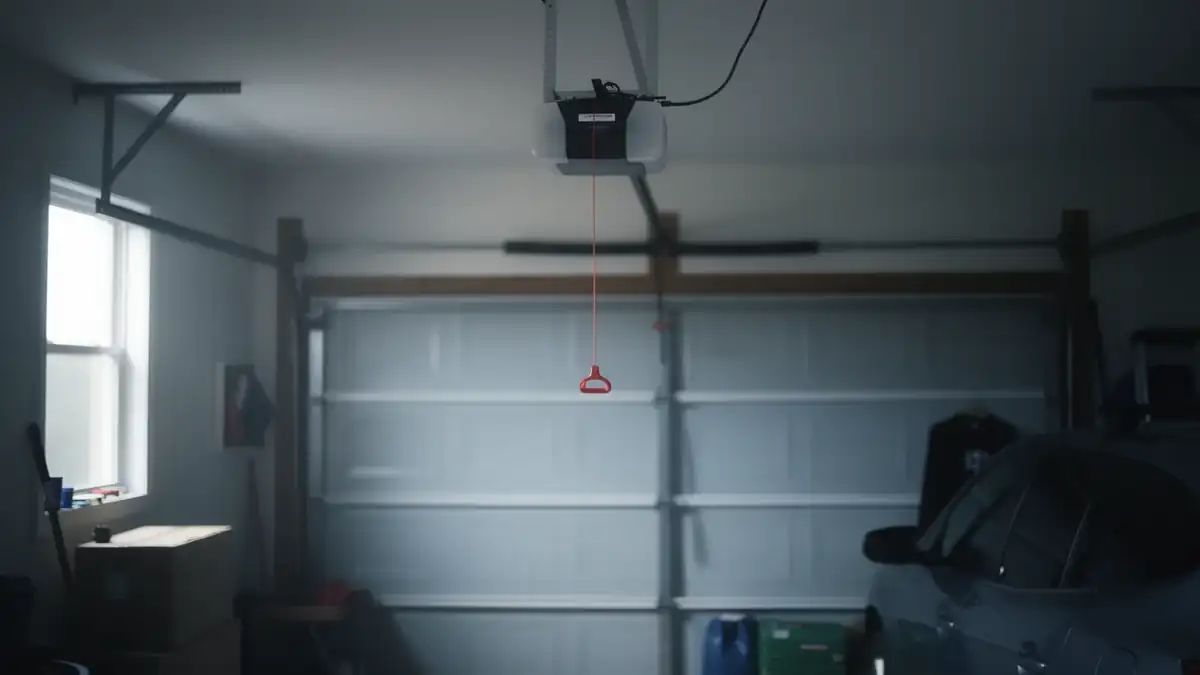
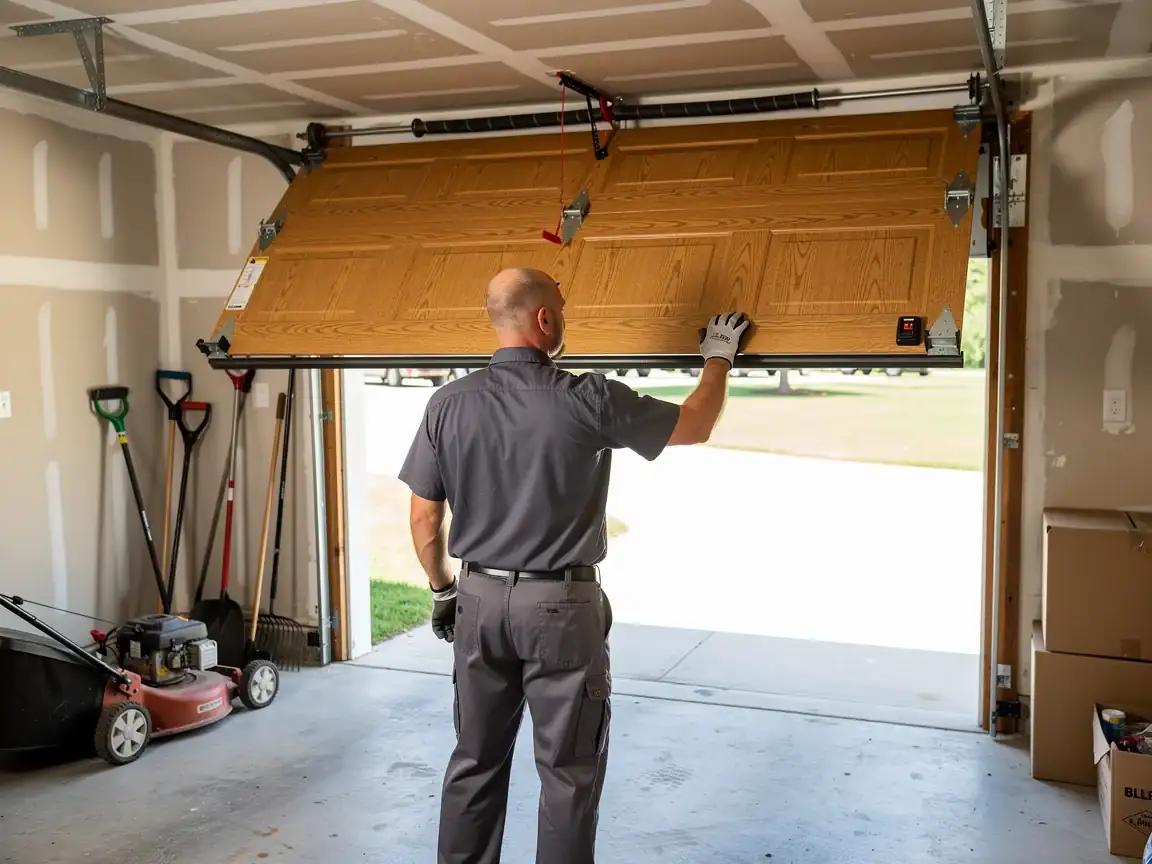
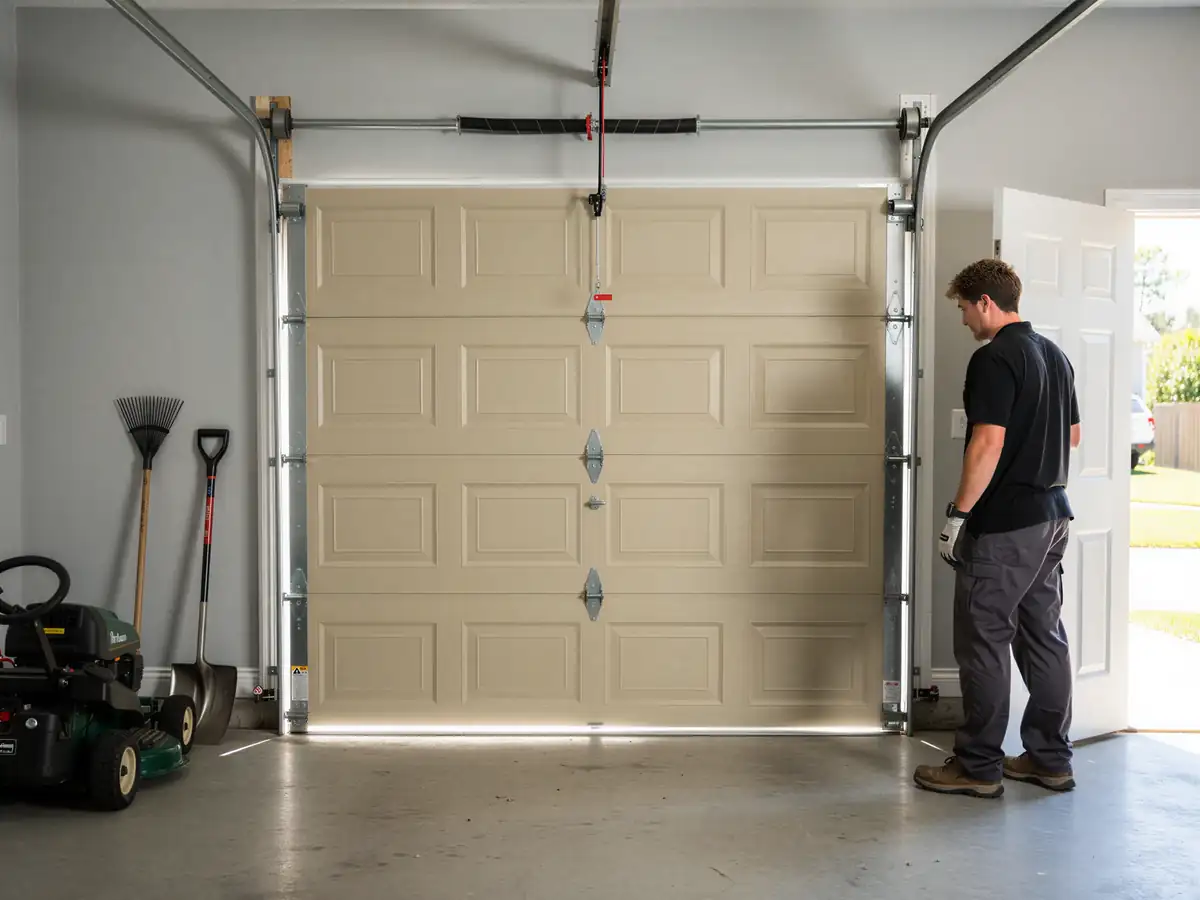
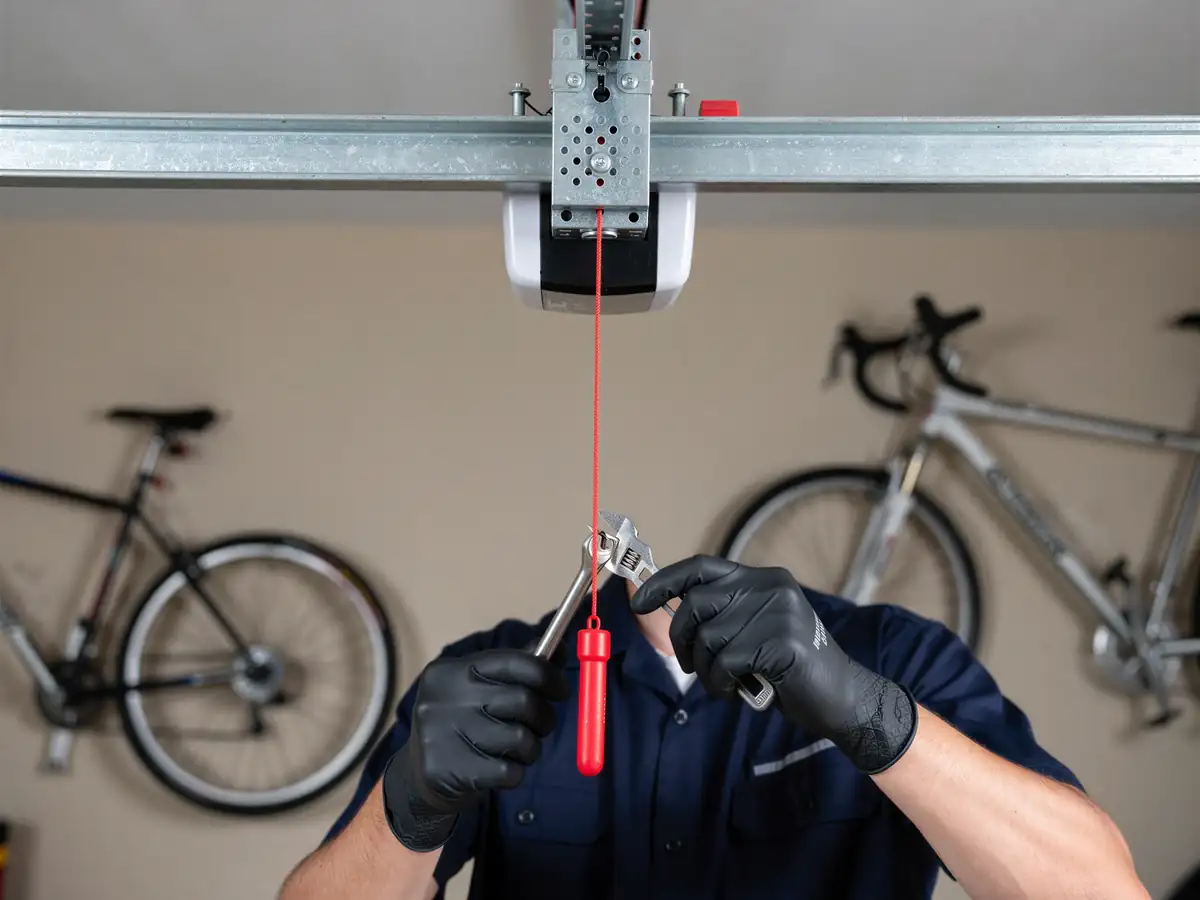
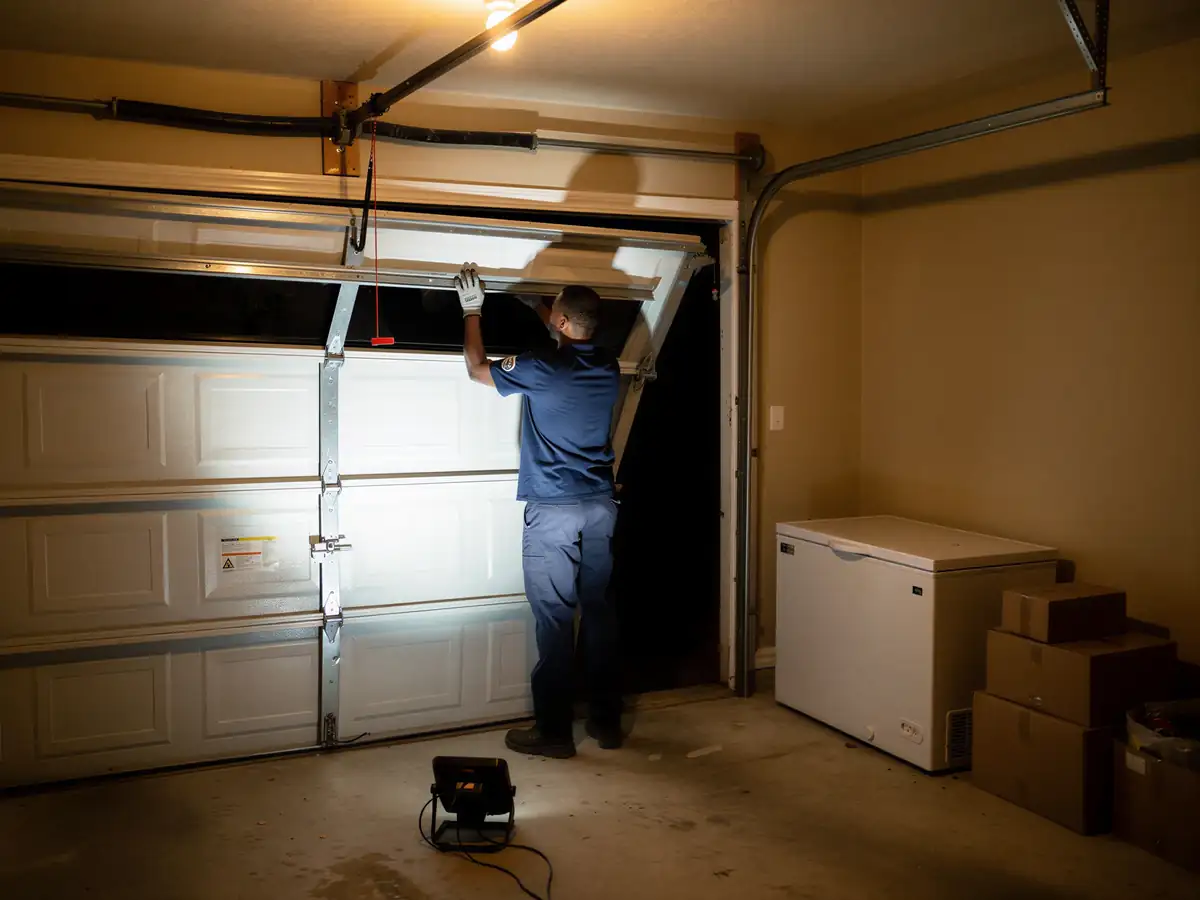
Put the cold-climate pattern and the older opener stock together and you get a specific, predictable failure: the power goes out in a winter storm, the opener has no battery backup because it's a pre-2000s-era unit typical of this area's housing, and the door is now sealed shut right as the homeowner needs to get a car out. Newer opener models sold today include battery backup as standard, but that only helps if the unit was actually replaced - and a lot of houses here, going by the area's building-year spread, still have the original or first-replacement opener from decades ago. The fix isn't exotic. It's the manual release, the red cord hanging from the trolley, which disconnects the door from the motor so you can lift it by hand. Every opener has one. The problem is almost nobody tests it until the power's already out and it's dark and 20 degrees. A battery backup unit, where one exists, also isn't designed to run the opener indefinitely - it's built for a handful of cycles to get you in and out, not to replace the grid for a week.
What to Look At First
Start with the opener's age, not the door. If you don't know when it was installed, check for a battery compartment near the motor head - its absence tells you the unit predates backup power as a standard feature. Next, find the manual release cord and actually pull it once so you know what it feels like and how far the door drops when disconnected; don't wait for a storm to learn this. Third, if you do have a battery backup, check it isn't the original battery from installation - these degrade over years and a dead backup is as useless as no backup, especially once temperatures drop. Fourth, look at the wall switch and sensor wiring for obvious wear, since houses built decades ago often have the original low-voltage wiring run along the same path it was installed in. One limitation worth saying plainly: we don't install whole-house generators or do electrical panel work, so if your real issue is house-wide outage protection rather than the opener itself, that's outside what this service covers.
Straight answers about garage door repair in Centreville. Still unsure? Ask us directly.
Will my garage door opener work at all during a power outage?
Only if it has a working battery backup, and only for a limited number of cycles - backups aren't built to run the opener indefinitely. Without one, which is common in opener units typical of this area's older housing stock, the motor simply won't run until power returns. You can still open the door manually using the release cord.
Does cold weather make outages worse for my opener?
Yes. Battery backups lose a real share of their capacity in freezing temperatures, right when winter storms are most likely to knock the power out in the first place. An older opener motor also draws harder trying to lift a cold-stiffened door, so the two problems tend to hit at the same time rather than separately.
How do I know if my opener is old enough to lack battery backup?
Look at the motor head for a battery compartment - units without one predate backup as a standard feature, which includes most opener installs from the 1980s and 90s common in this area. No compartment means no backup, regardless of how well the opener otherwise runs.