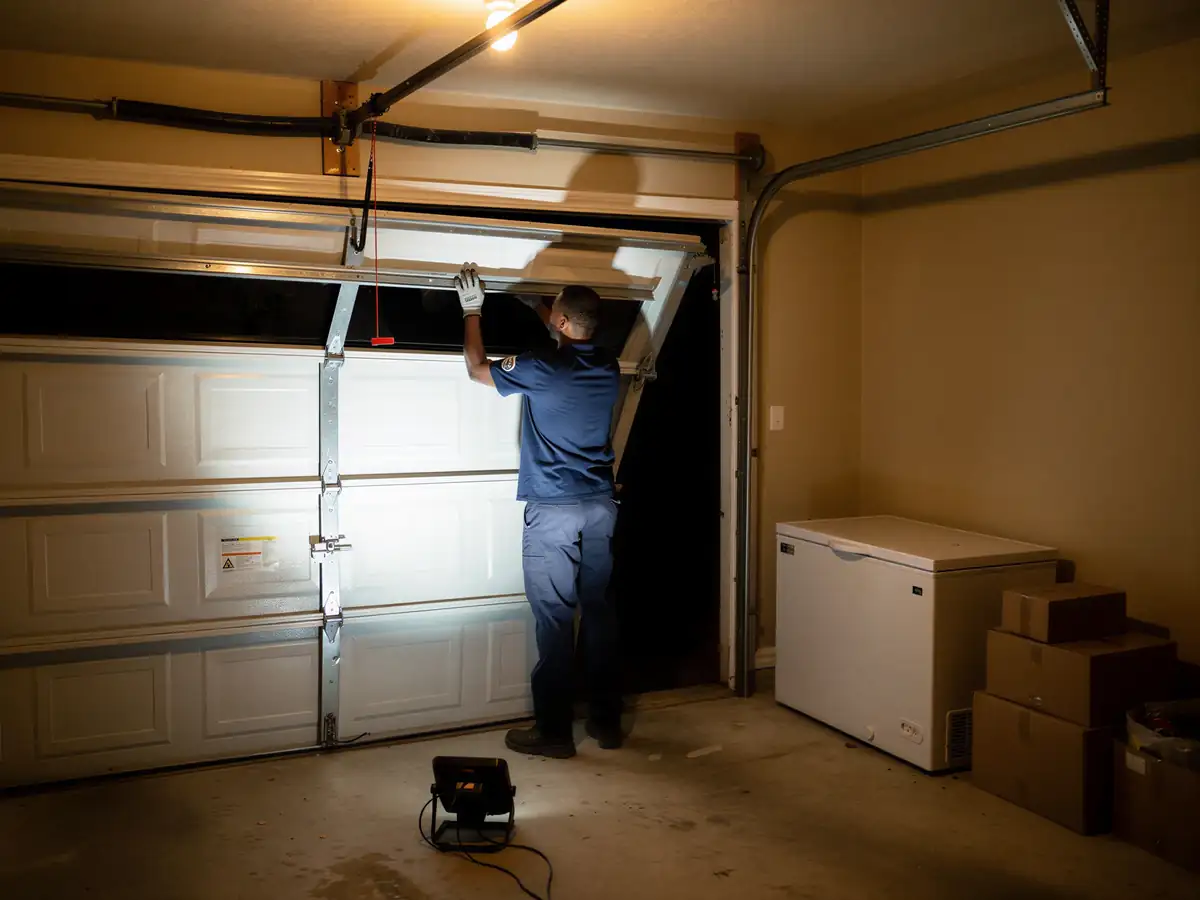
Centreville homes built mostly in the 1980s and 90s pair original hardware with hard winters. Here's what each noise actually means before it fails on a cold morning.
Centreville sits in a cold-climate band with real winter severity, and that matters more for a garage door than most people think. Steel contracts when it's cold, and so does the grease in a torsion spring's coil. A door that rolled quiet in September can start grinding, popping, or hesitating by December - not because anything broke overnight, but because the metal and the lubricant are both behaving differently at 20 degrees than they did at 70. Tracks that were a quarter-inch off alignment in summer heat can bind hard once the steel pulls tight in the cold. If your door's noise shows up only in the coldest months, that's a tell on its own: it's a tolerance problem, not a parts-failure problem, at least not yet. We hear this most on doors with the original rollers and hinges, which in this area usually means hardware that's been through thirty-plus winters with nothing but whatever grease was on it the day it was installed. Noise that comes and goes with the thermometer is the cheap fix. Noise that stays loud all year, winter or not, is the one that's already past prevention.
The Situation
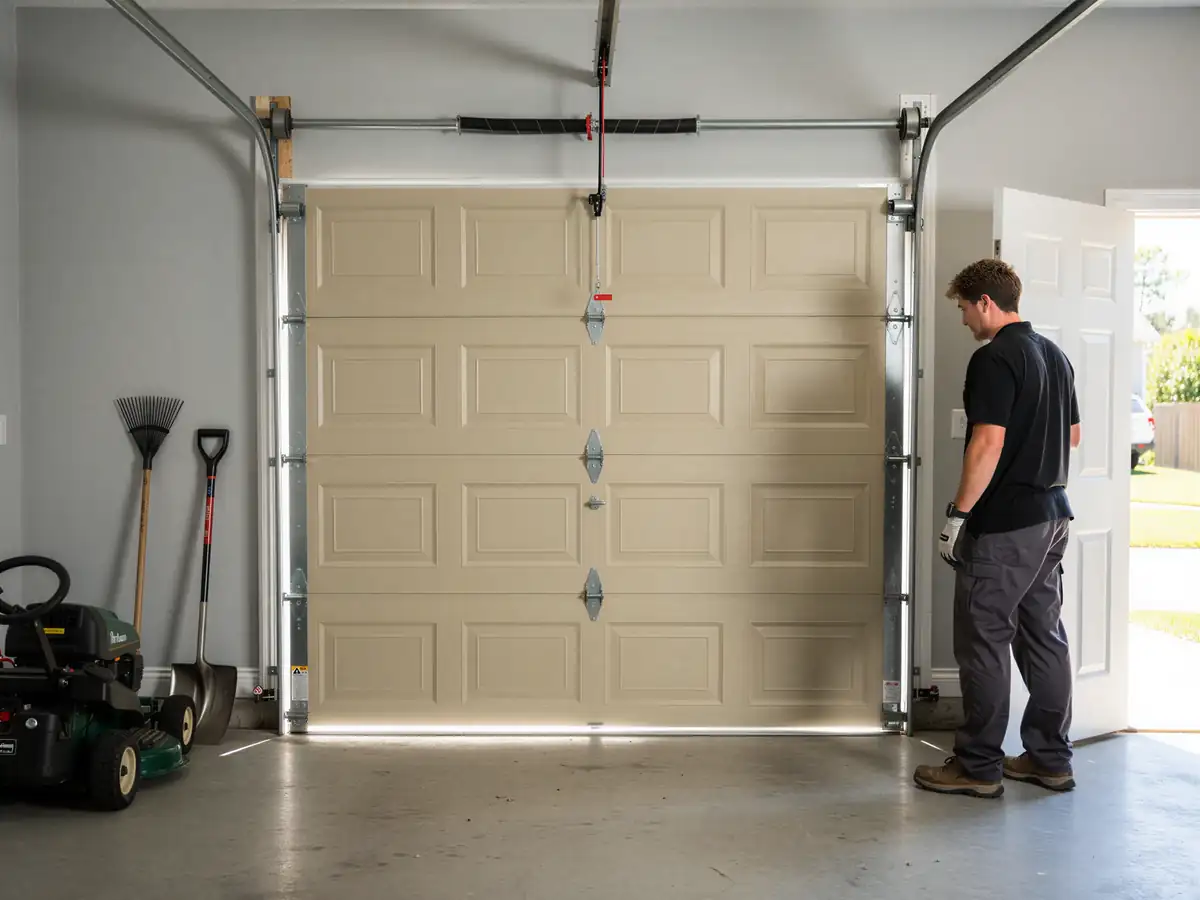
Housing in the Centreville service area mostly went up between 1940 and 2015, with the median build year around 1981, and the bulk of the stock across the 49 named communities we work in dates to the 1980s and 90s. That matters for noise diagnosis because it tells you what's actually inside the door and opener before a truck ever shows up. A house built in that window usually has its original torsion spring system, often the first-generation steel rollers (not nylon), and in a lot of cases the first opener the house ever had - chain-drive, older gauge motor, no soft-start or soft-stop programming. None of that is unusual or a sign of neglect. It's just what was standard when these neighborhoods were built, and forty-plus years is a long run for moving steel parts under tension. A loud door in a house from this era is rarely a mystery. It's metal-on-metal that was never meant to run this many open-close cycles without replacement.
What Local Conditions Do
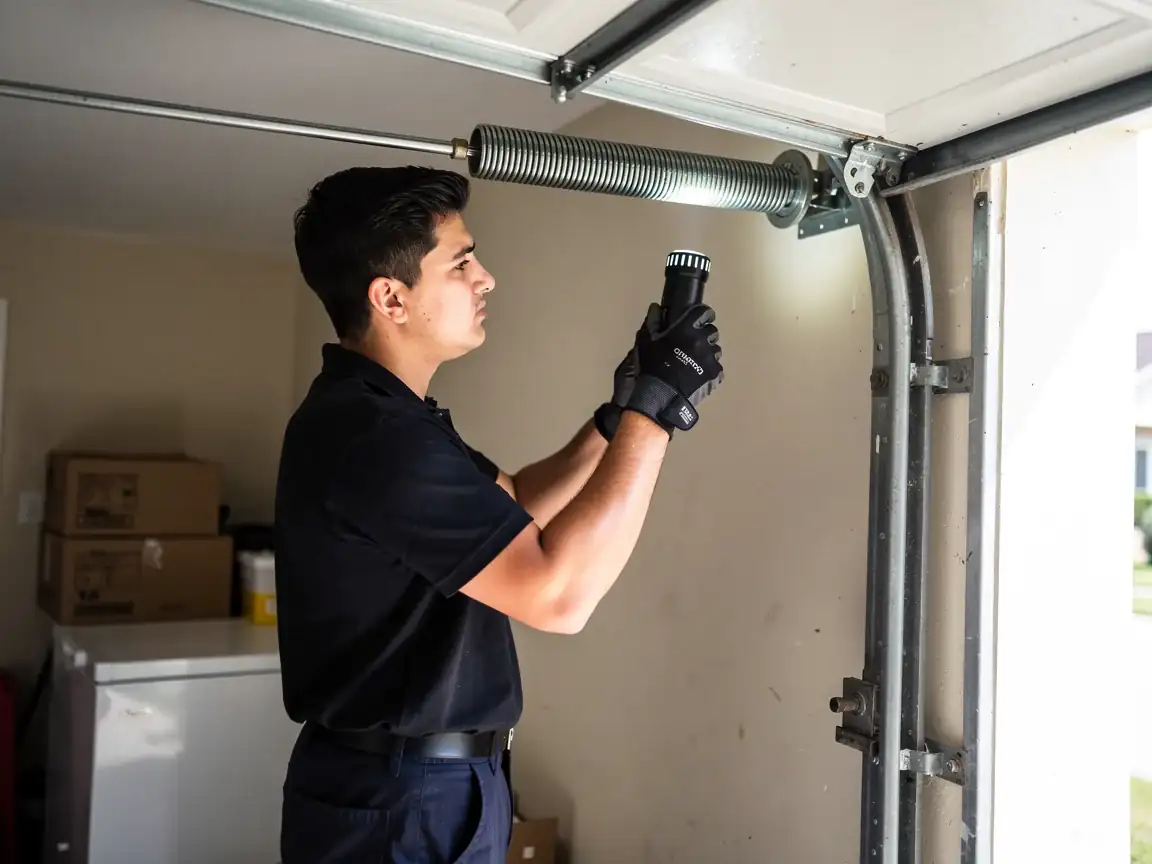
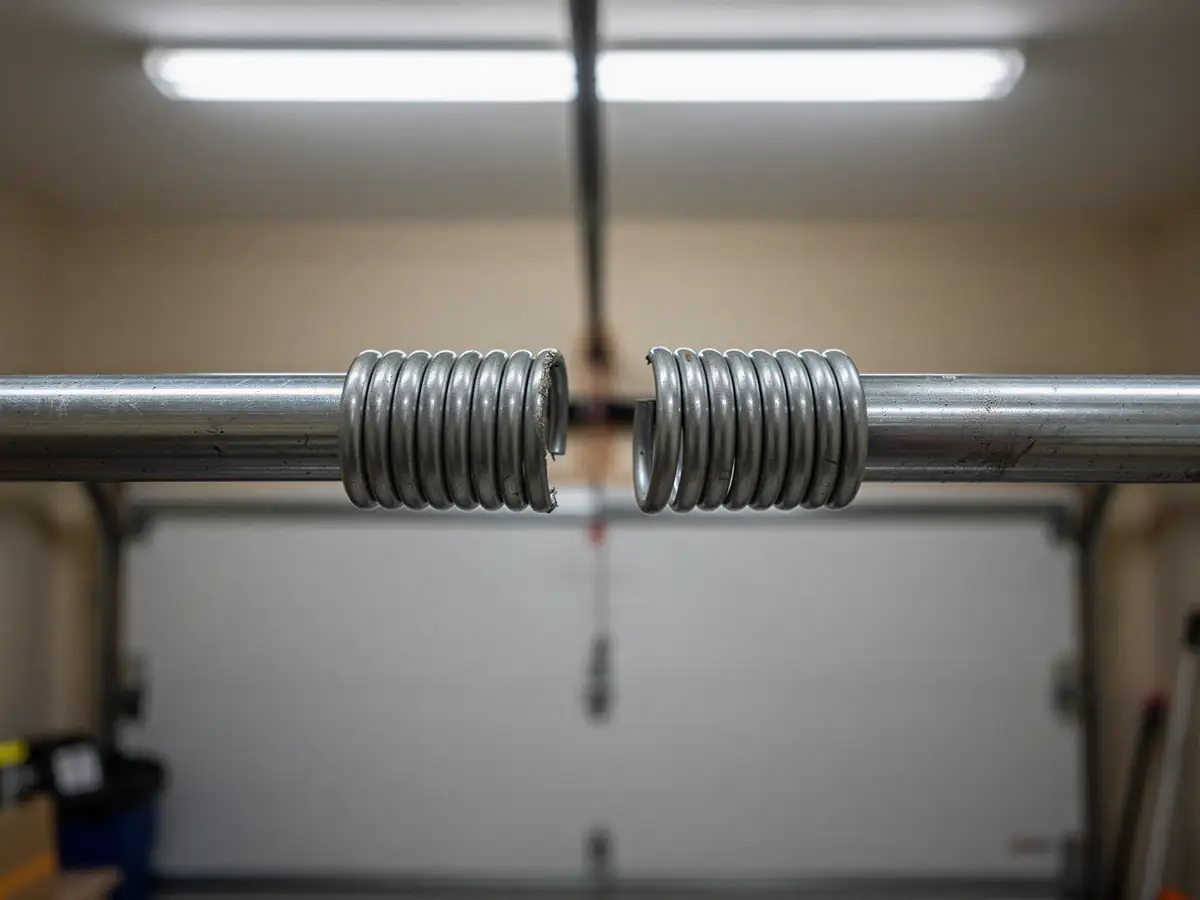
Cold-climate conditions here do two specific things to an aging torsion spring system. First, the spring steel itself loses a little flex capacity every winter it's cycled cold, and a spring that's already decades old (common given the 1980s-90s stock) is closer to the end of that curve than a newer one. Second, cold tightens tolerances across the whole track and roller assembly, so a hinge or roller that's dry (no grease, or grease that's gone stiff) will announce itself loudest exactly when the temperature drops - which is also, not coincidentally, when you need the door most reliably. We don't see much seasonal humidity swelling of panels here the way you might in a wetter climate; the noise problem in this area is almost entirely a cold-and-age combination, not moisture. That's useful to know because it narrows what you're actually listening for: squeal is usually dry metal, grinding is usually a roller or bearing giving out, and a sharp bang is almost always a spring.
What to Look At First
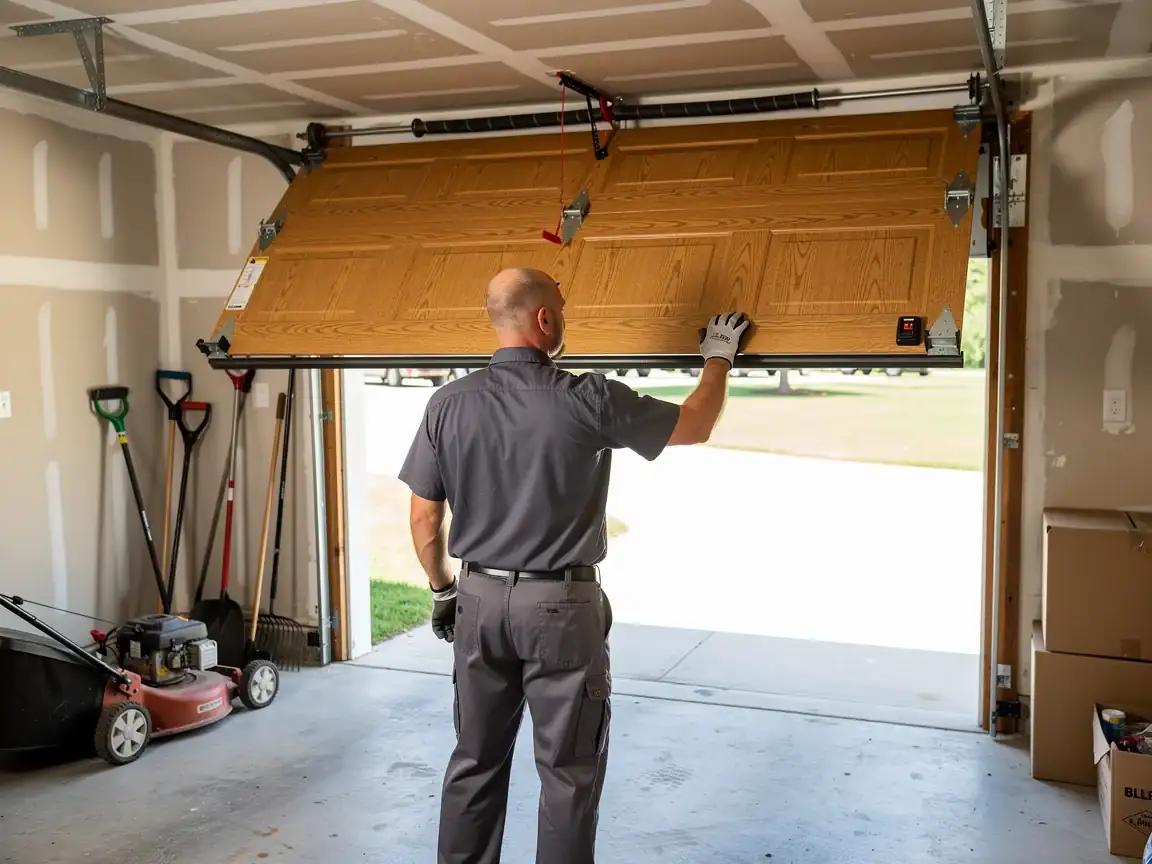
Start with when the noise happens, not what it sounds like. If it's worse on cold mornings and quiets down by afternoon, that's hardware tightening up in the cold - check rollers and hinges for grease before you assume anything's broken. If it's constant regardless of temperature, and it's a grinding or growling sound as the door moves, that's more likely a roller bearing or a track alignment issue that cold weather just makes louder. A loud bang, especially one that stops the door from moving at all, is a spring, and on a double door built with the original torsion hardware from this area's 1980s-90s construction era, that's not a DIY repair - the spring is under enough tension to cause real injury. Here's the honest limit: we can diagnose a lot over the phone from the sound and timing, but we can't tell you for certain whether it's a $20 lube job or a spring replacement without seeing the door move. If you're not sure, don't keep running it. A door that's
what to look at first
How it works
From “it’s stuck” to “it’s fixed”
A quick, honest process - no guesswork and no surprises, start to finish.
Straight answers about garage door repair in Centreville. Still unsure? Ask us directly.
Why does my garage door only make noise in winter?
In Centreville's cold-climate band, steel hardware contracts and lubricant stiffens as temperatures drop. A roller or hinge that's low on grease will squeal or grind hard in the cold even if it ran fine all summer. It's usually the first sign dry hardware needs attention, not a sign the door is failing.
My house was built in the early 80s - is that why the door is so loud?
Possibly. A lot of the housing stock across this service area dates to the 1980s and 90s, and doors from that era often still run original torsion springs and steel rollers. Thirty-plus winters of cycling is a long run for that hardware, so age by itself is a reasonable explanation for new or worsening noise.
Is a loud bang from the garage door dangerous?
Yes, treat it that way. A bang is almost always a torsion spring, and on the original hardware common in this area's older housing stock, that spring is holding significant tension. Don't try to free it yourself - leave the door closed and call for a look before using the opener again.
Can I just grease the noisy parts myself?
For rollers and hinges, yes, a light garage-door-rated lubricant on dry hardware is a reasonable first step, especially once cold weather starts the squealing. It won't fix a worn bearing or a spring losing tension, but it's cheap, it's safe, and it rules out the simplest cause first.