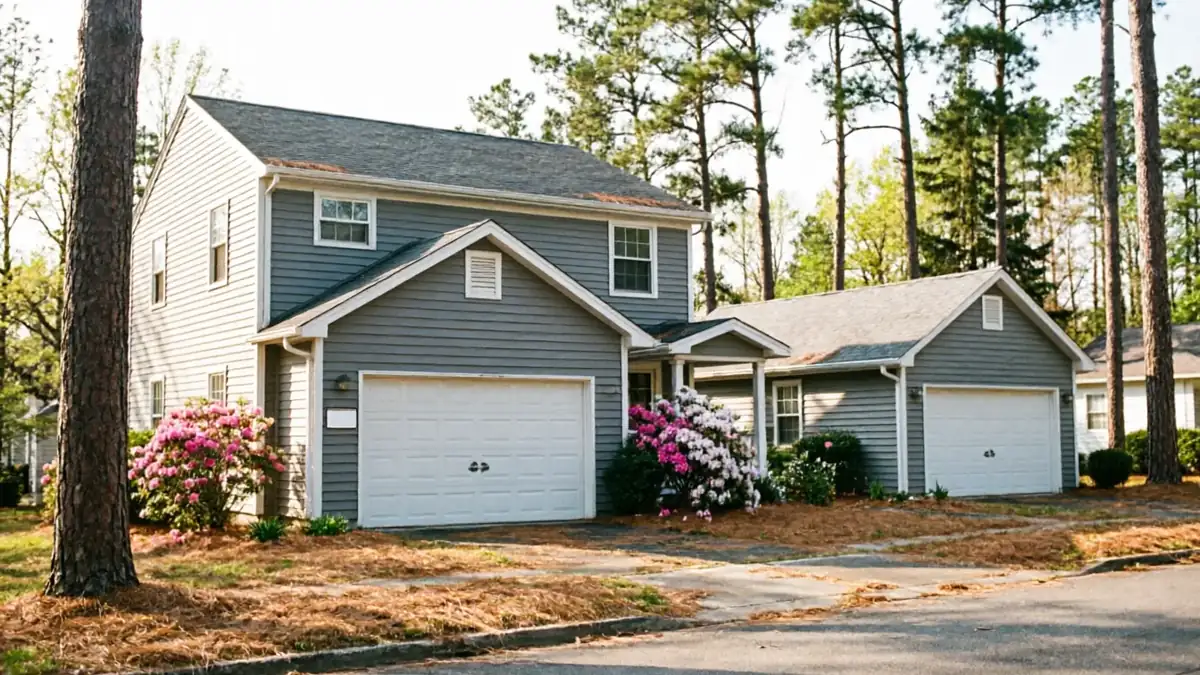
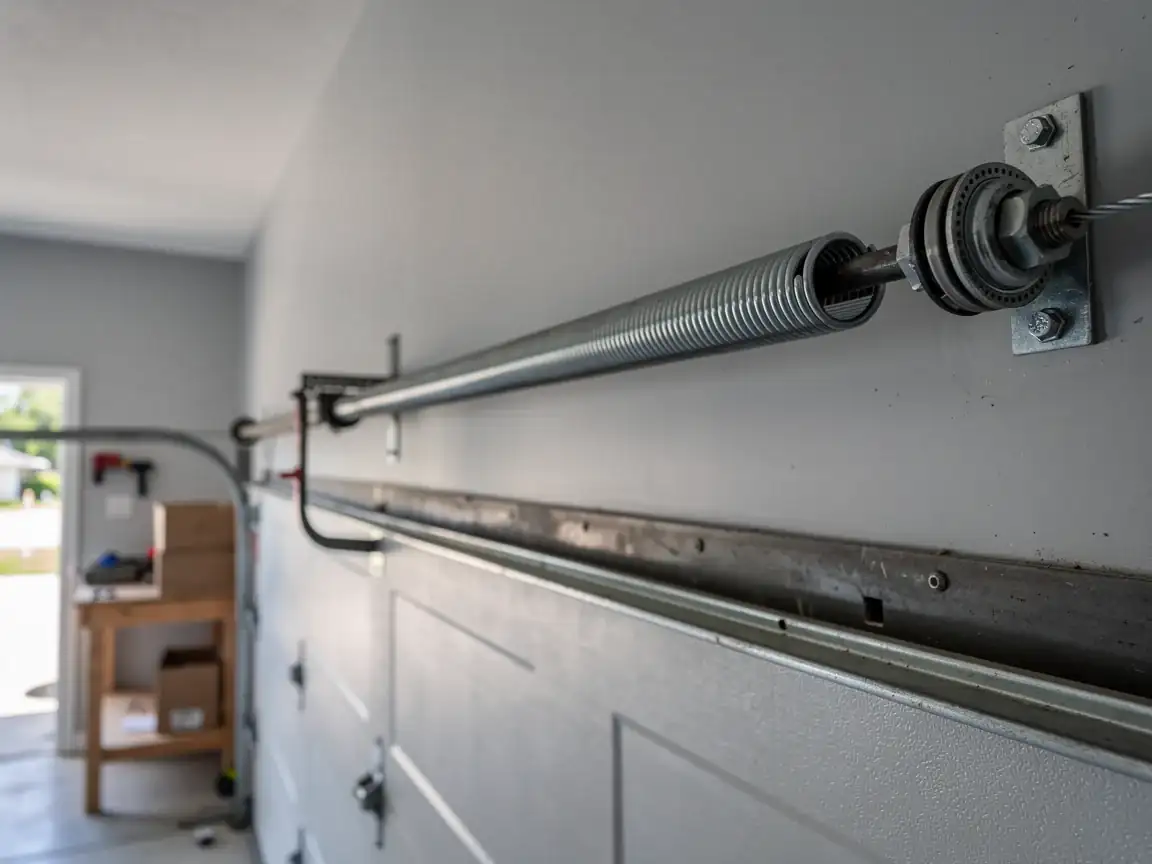
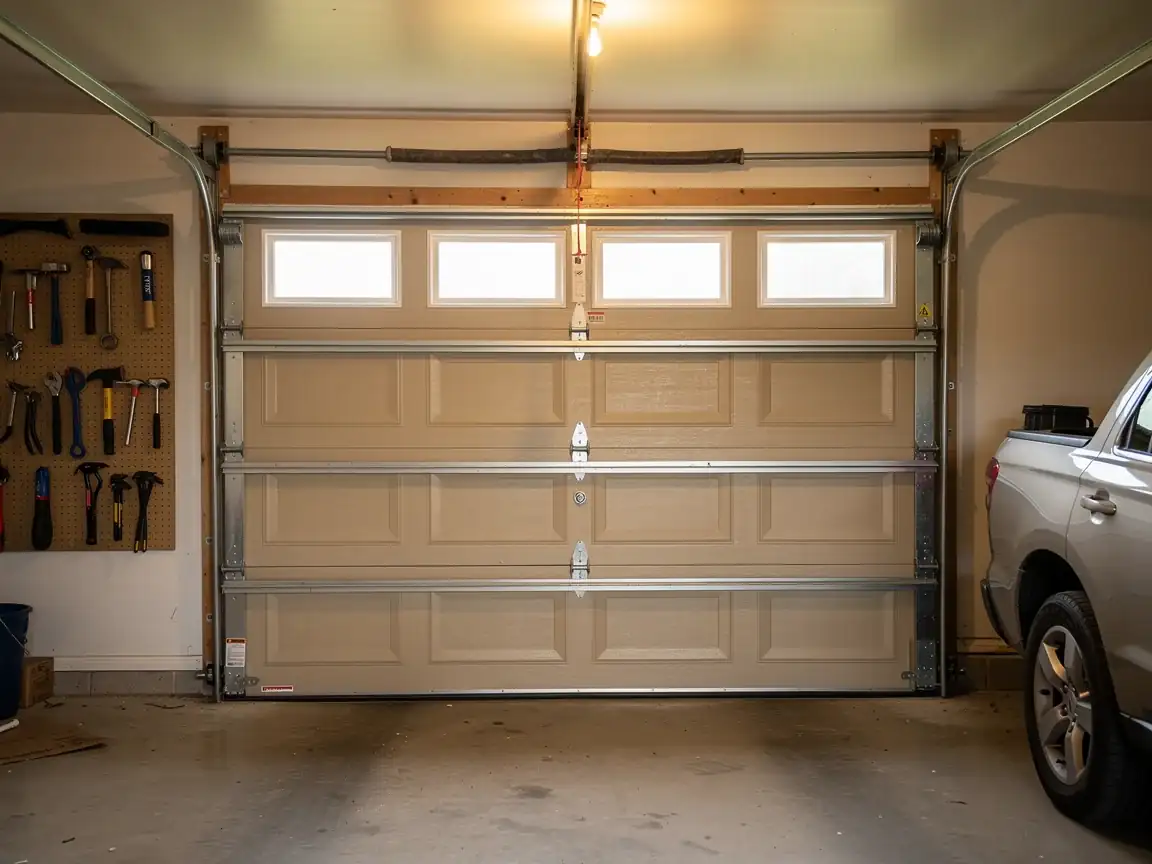
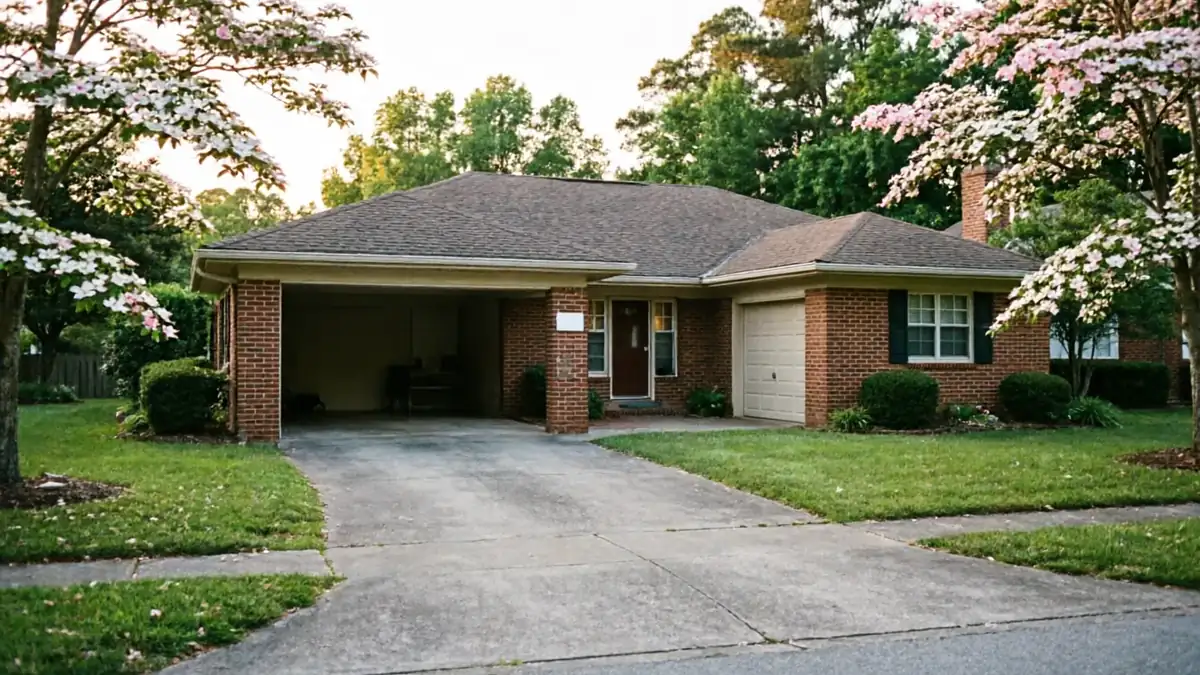
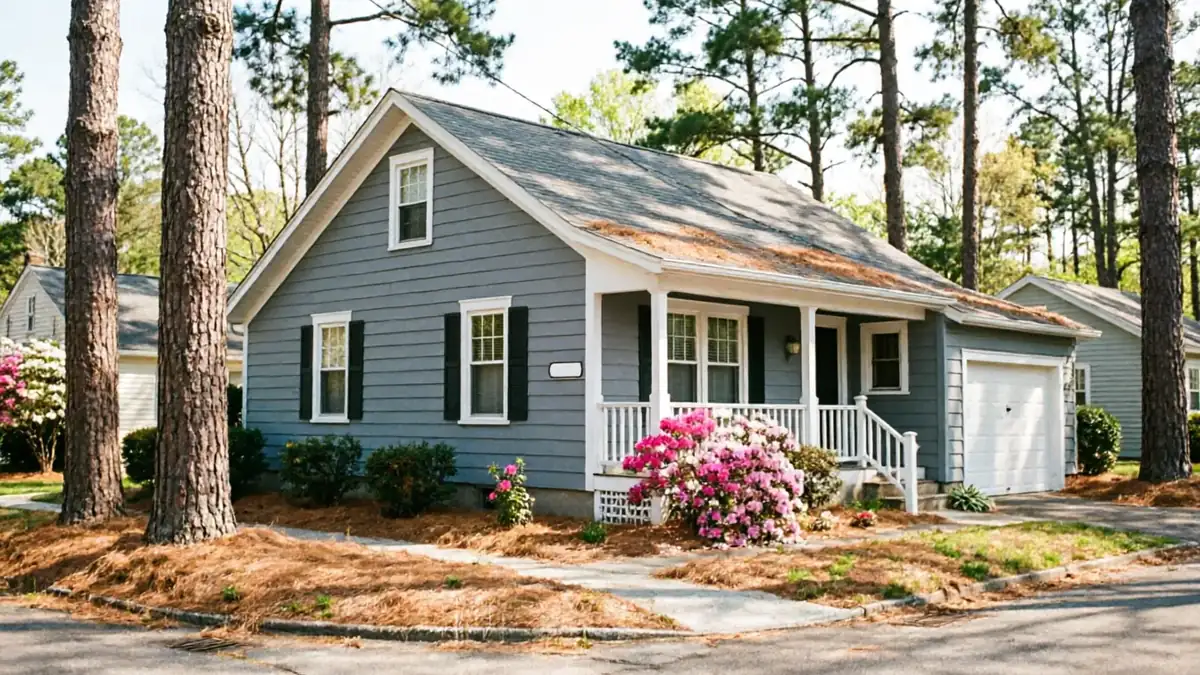
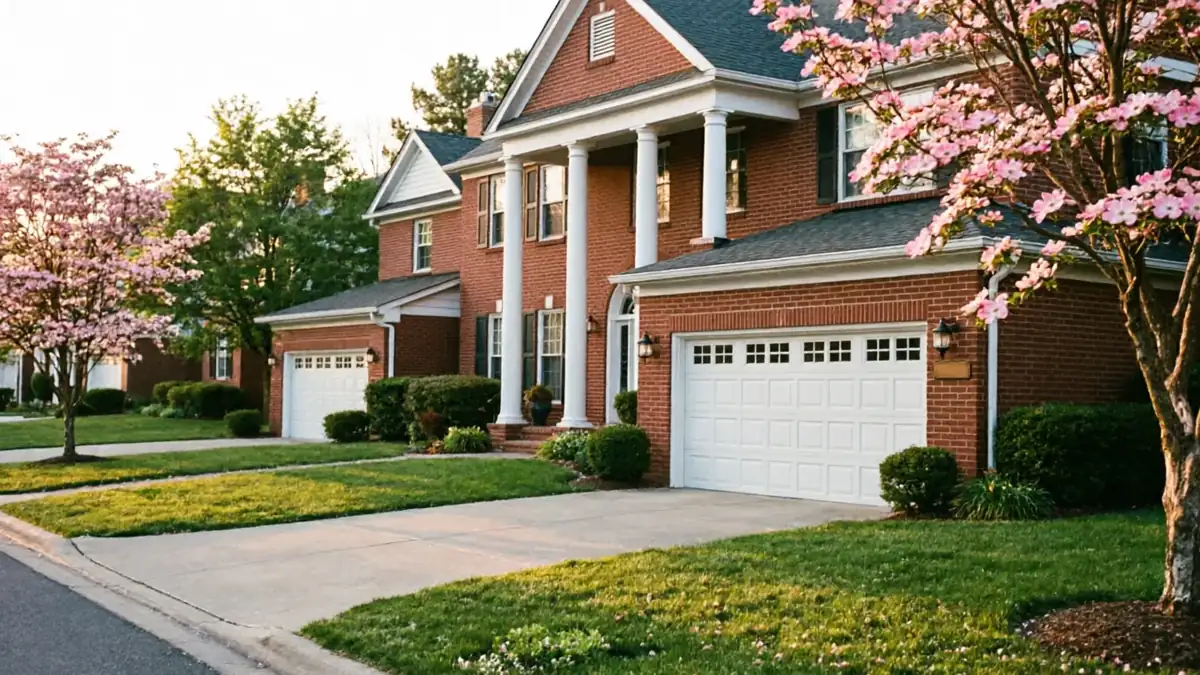
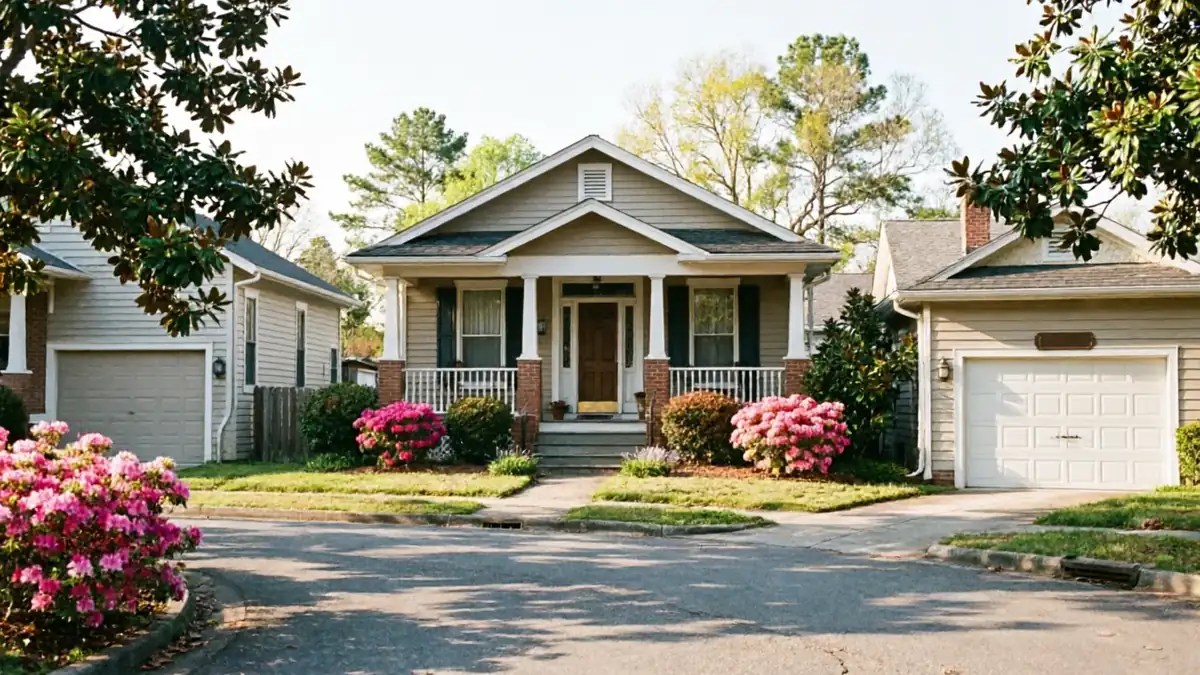
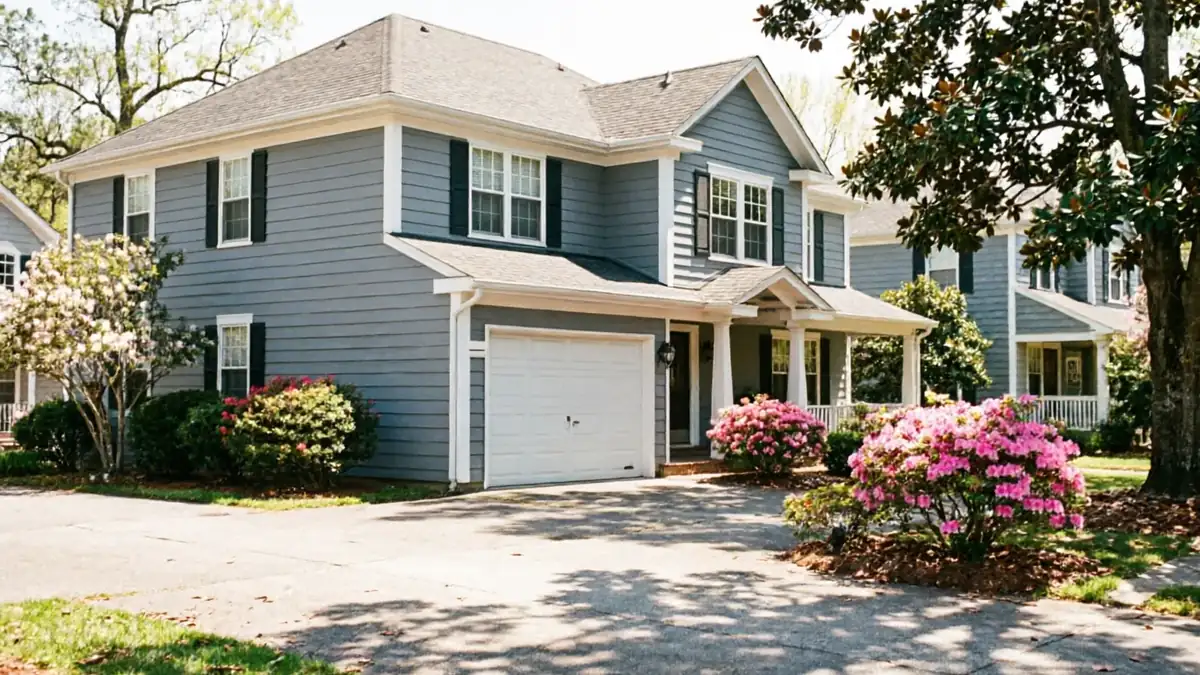
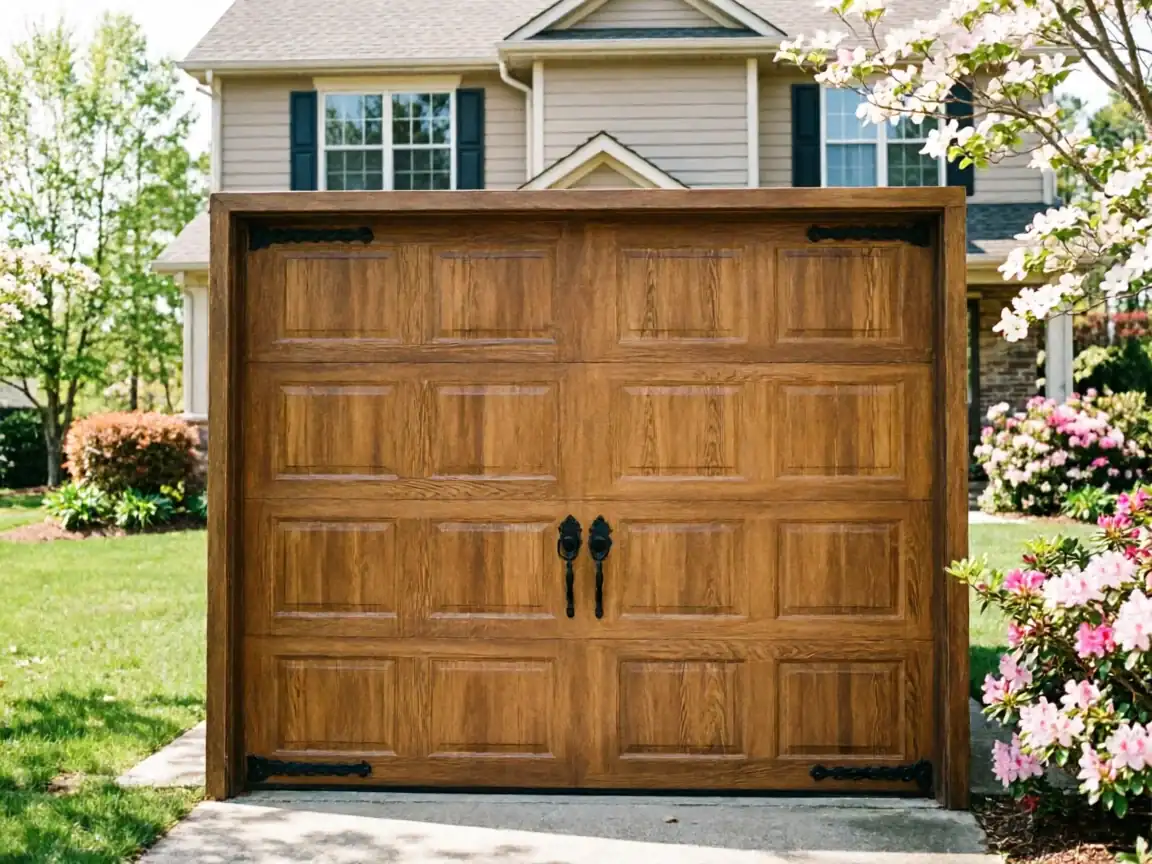
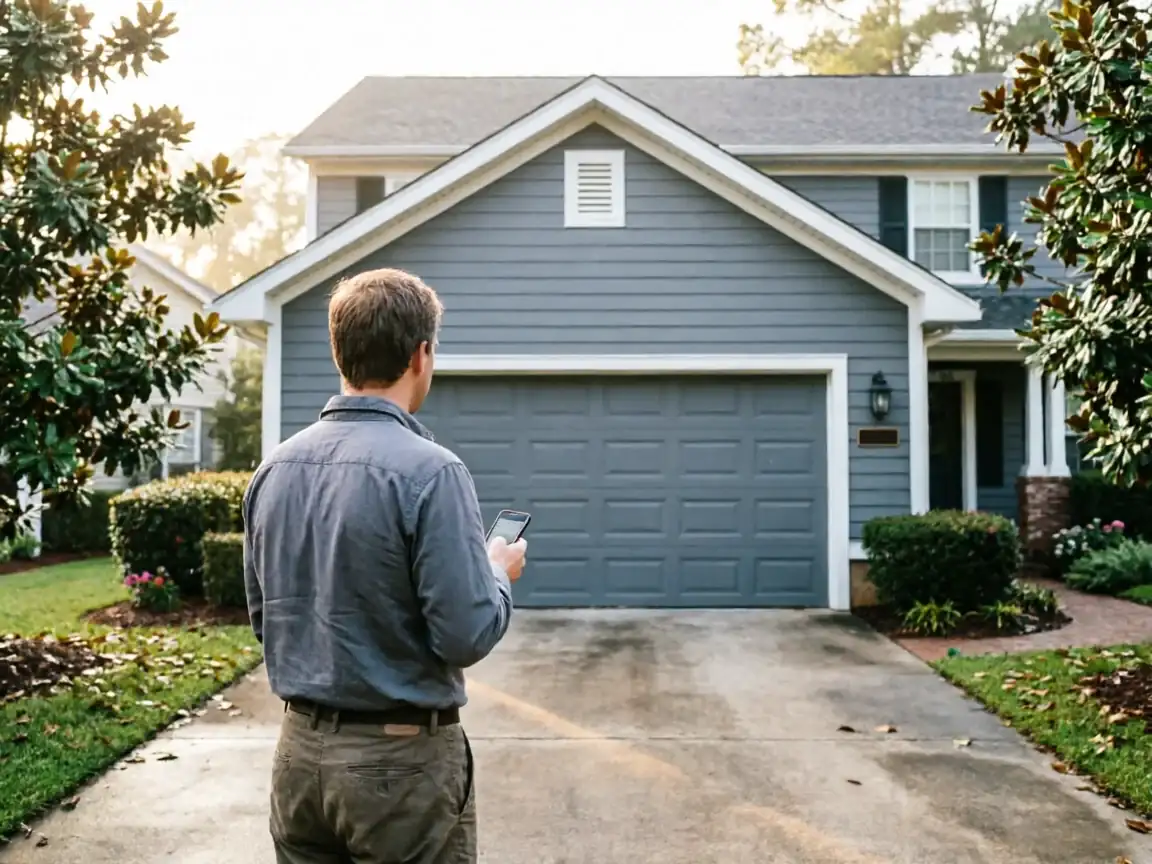
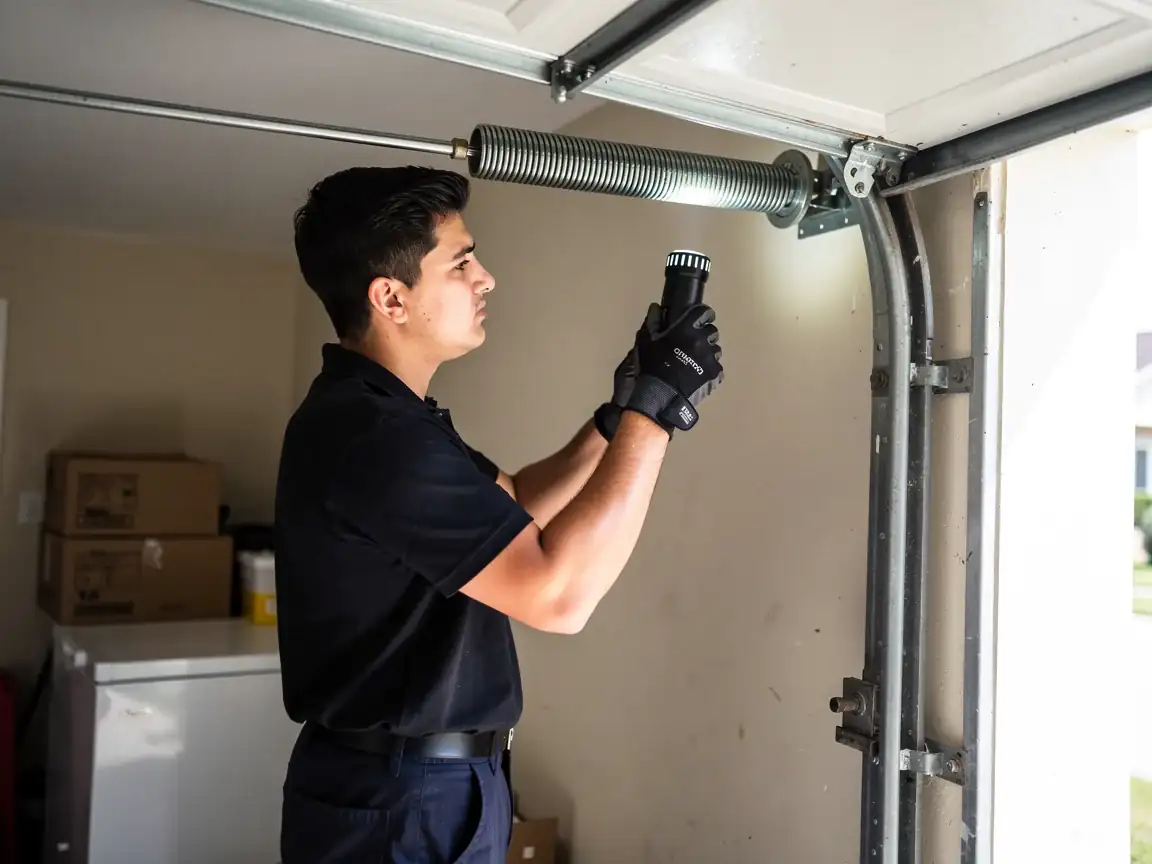
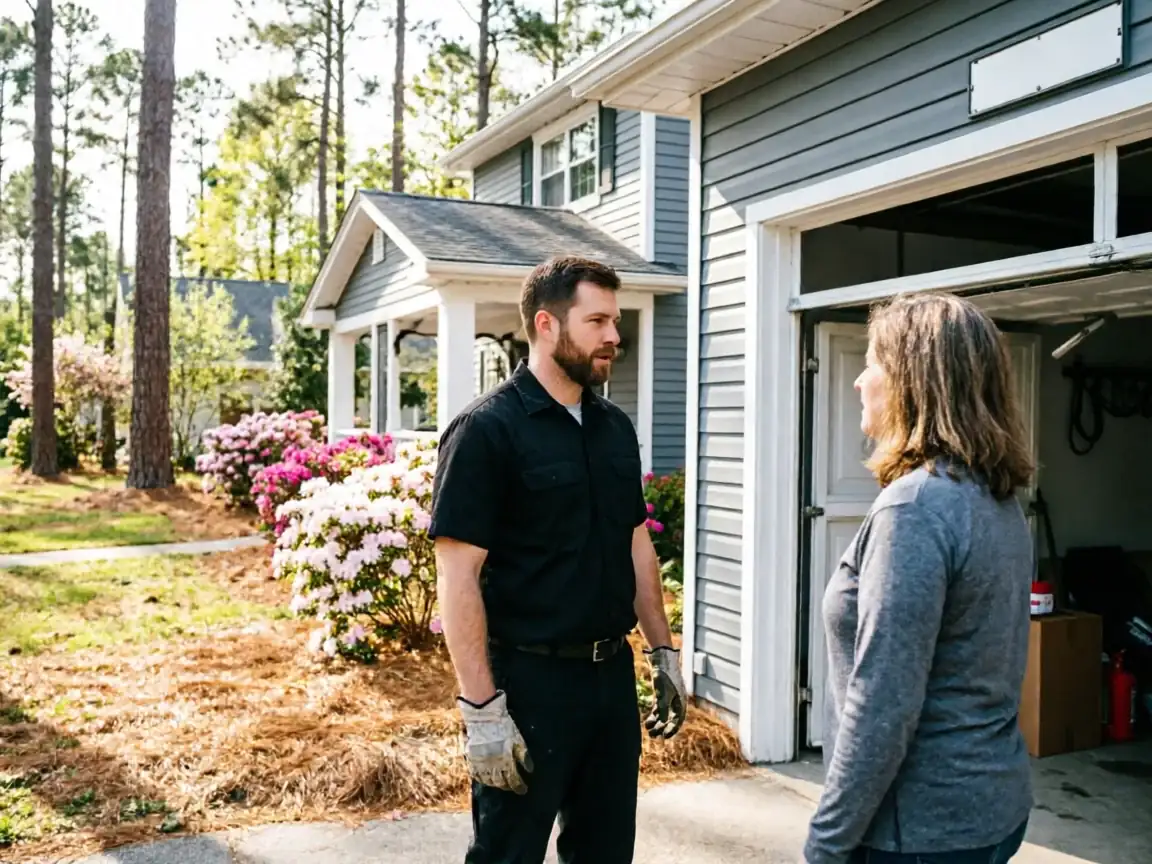
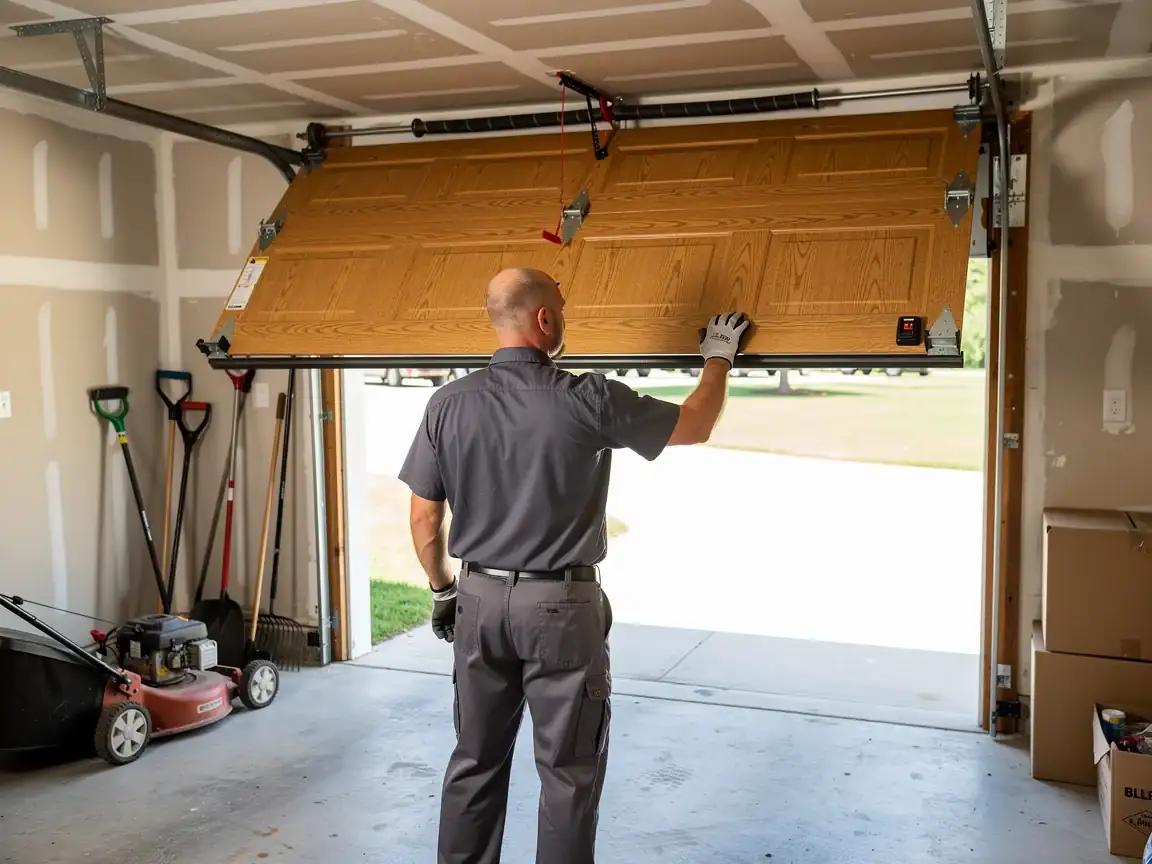
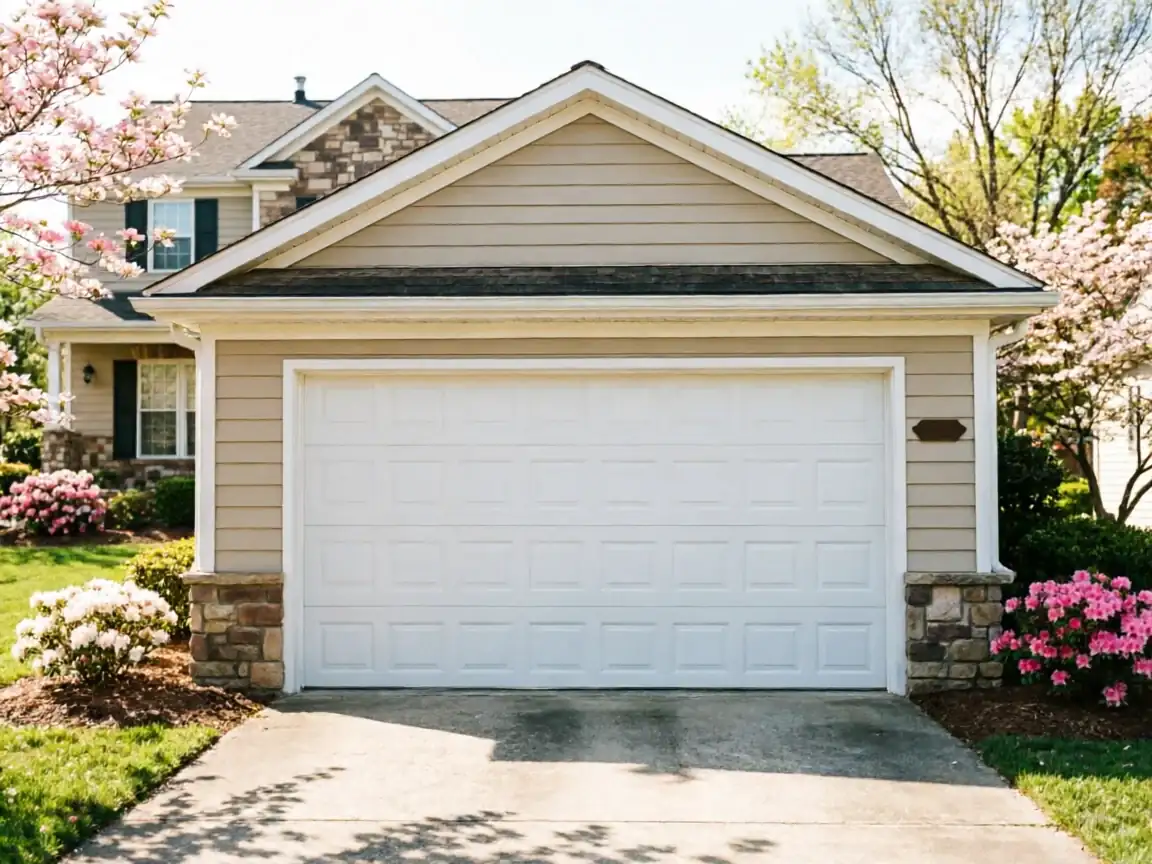
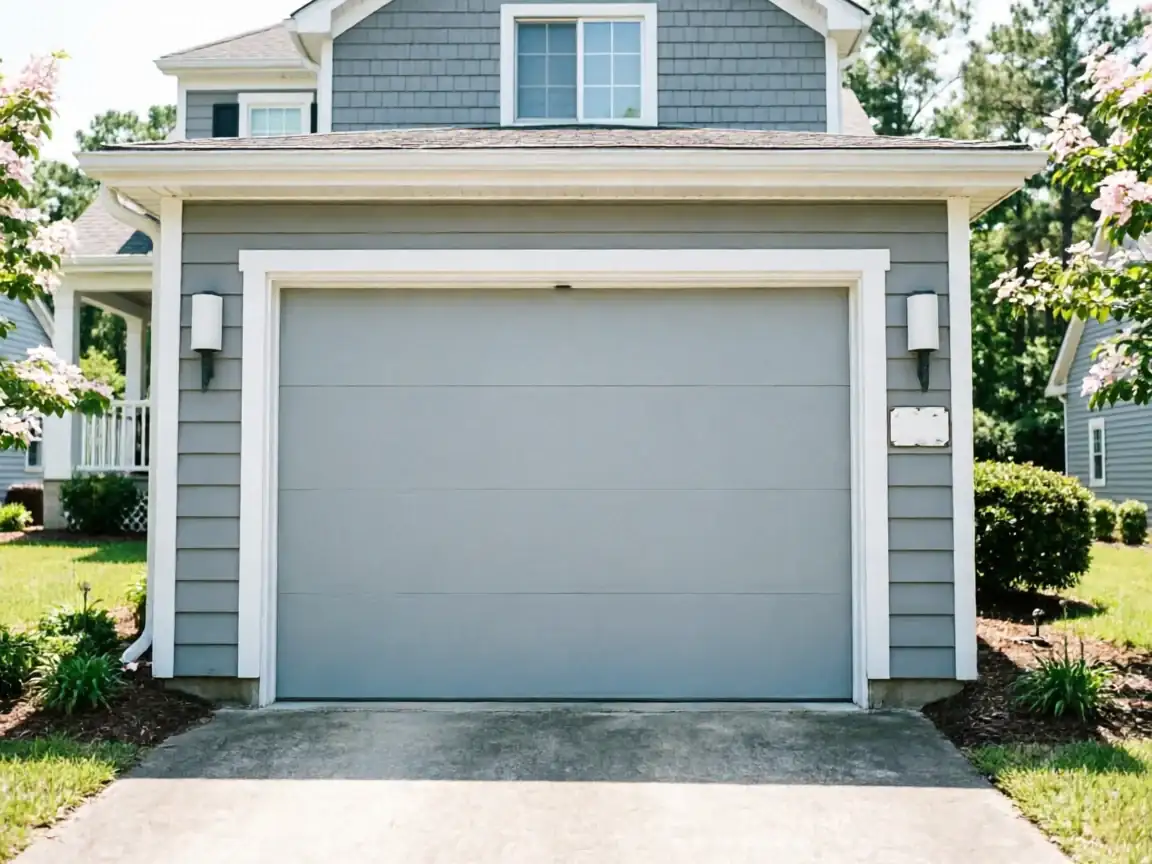
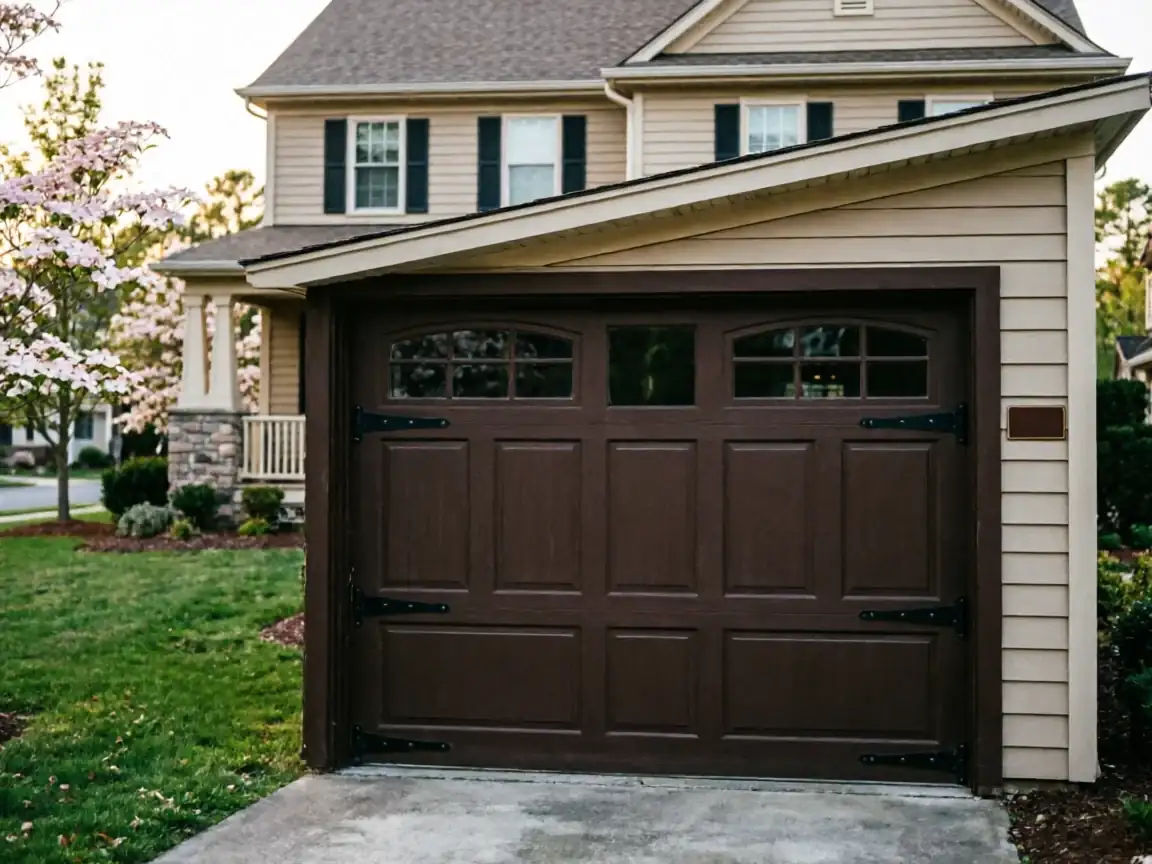
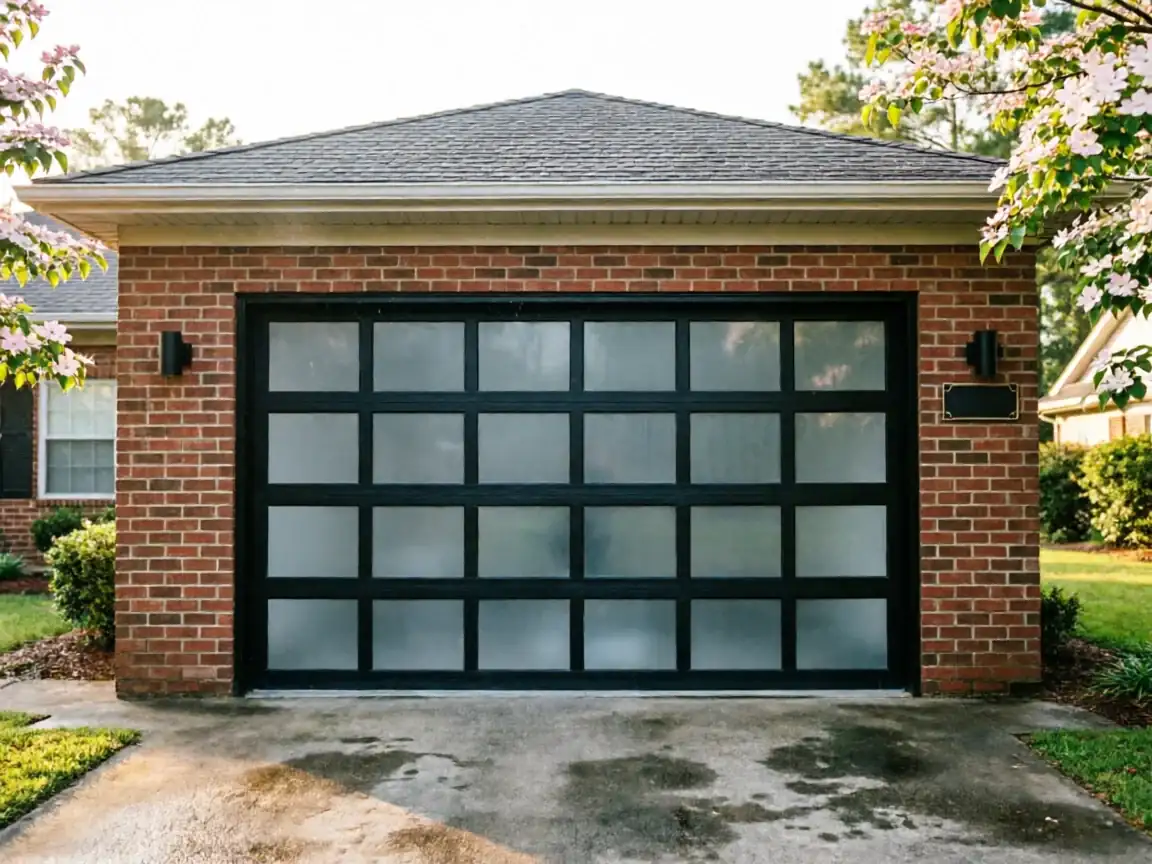
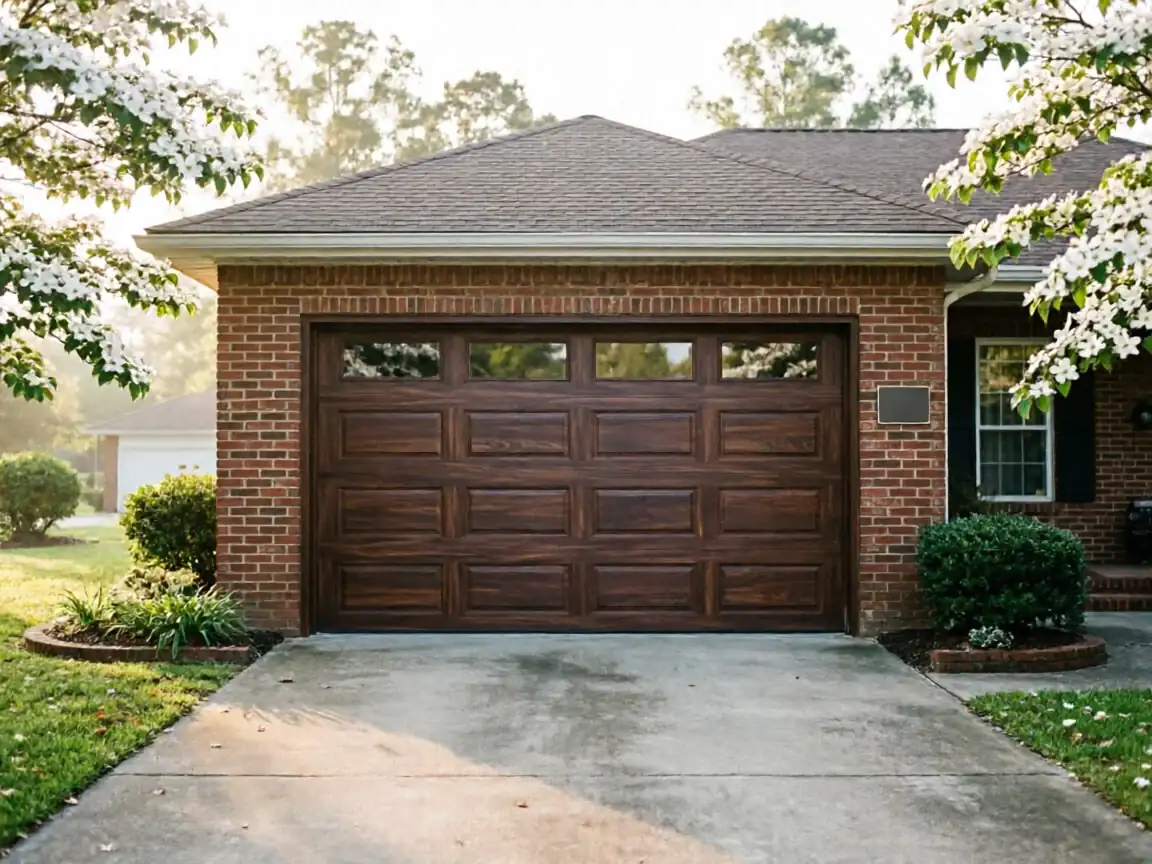
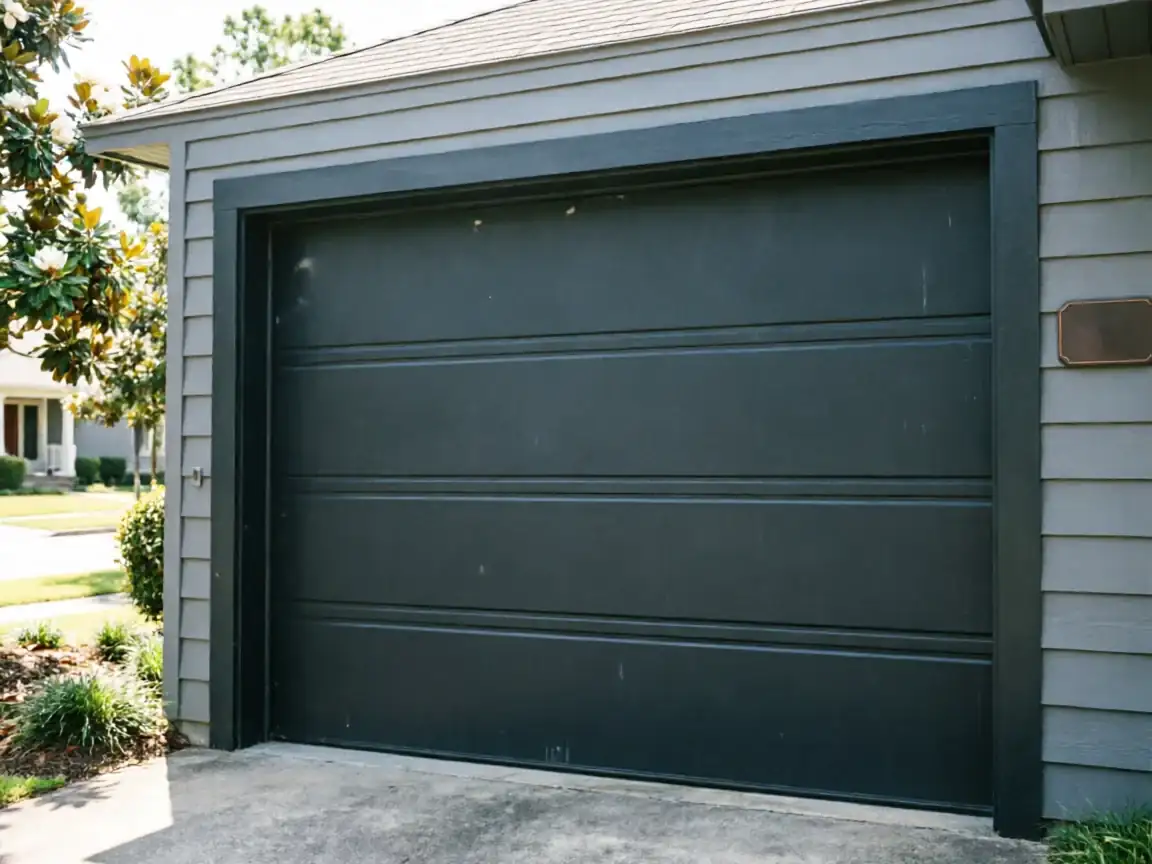
Wolf Trap sits about 11 miles from our shop in Centreville, and the houses here cluster around a median build year of 1981, same era as most of the wider service area we cover. What's different is the household profile: median income here runs around $250,001, well above the $136,173 median across our full coverage area, and that shows up in the doors themselves. We see more custom wood-composite panels, insulated steel doors with higher-end hardware, and openers upgraded ahead of schedule rather than run until failure. The bones are still 1980s construction - torsion springs mounted on a single center shaft, steel tracks sized for the lighter doors builders used back then - but the doors riding on that hardware have often been replaced once or twice already with heavier, better-sealed units. That mismatch is the thing to watch: a modern insulated door hung on an original 1981 torsion spring and bracket setup is carrying more weight than the spring was rated for, and it shows up as a spring that wears out faster than it should, or a bracket that's started to pull loose from the header. With 5,382 households in Wolf Trap, that's not a rare combination - it's close to the norm.
What We Do Not Do
We don't install or service gate operators, and we don't work on commercial rolling steel doors or fire doors - if that's what you've got, we're not the right call. We also won't tell you a repair is the answer when it isn't. If a torsion spring has failed on a door that's original to a 1981 build and the track is pitted from age, patching the spring and leaving the rest is a short-term fix at best. We'll say so rather than sell a repair we don't believe in. One more limit worth naming: some of the heavier insulated doors that have gone into Wolf Trap in recent years use spring sizing and drum combinations that aren't stock items, and getting the exact match can mean a short wait on parts rather than a same-visit fix. We'd rather tell you that up front than promise a timeline we can't keep.
What Was Built Here
Across the broader service area, housing spans 1940 through 2015 with a median around 1981, and most of the stock dates to the 1980s and 90s builder boom that shaped dozens of named neighborhoods out this way. Wolf Trap's own median build year lands right at that 1981 mark too, so the garage hardware base is consistent with what we see across the territory: single torsion spring setups, steel sectional doors, openers from an era before rolling-code security was standard. What sets Wolf Trap apart isn't the age of the housing - it's what's been layered on top of it. Higher household income here has meant more owners replacing original doors with insulated, better-weather-sealed models well before they failed outright. Combined with a cold, severe winter climate across the region, that insulation upgrade matters: a door built for 1981 energy standards doesn't hold heat the way a modern insulated door does, and owners who've made that swap are dealing with a different, heavier door riding on decades-old track and spring hardware.
Old Streets and New Ones
Wolf Trap is one of roughly 49 named areas in our coverage territory, and like its neighbors - Oakton 8 miles off, Merrifield 11 miles, Dunn Loring 12 - its garage stock reflects the same building wave that shaped Northern Virginia's inner suburbs through the 1980s and 90s. The original sections built close to 1981 carry the hardware you'd expect from that decade: single torsion springs, lighter-gauge tracks, openers long overdue for replacement. Where infill or renovation has happened since, you'll find mismatched setups - a newer insulated door on an old spring, or a replaced opener on original track that's slightly out of plumb. Across 109,606 owner-occupied houses in the wider service area, that mix of old and upgraded is the rule rather than the exception. Wolf Trap's higher income level just means the upgrades tend to be more frequent and higher-grade than in some of the older, lower-turnover pockets nearby. We travel out from Centreville for calls here - more at Centreville Garage Door Pros.
How it works
From “it’s stuck” to “it’s fixed”
A quick, honest process - no guesswork and no surprises, start to finish.
Straight answers about garage door repair in Centreville. Still unsure? Ask us directly.
Are garage doors in Wolf Trap different from other areas you serve?
The build era is similar - median around 1981, same as most of our territory. What's different is that Wolf Trap homeowners, with a median income near $250,001, more often have upgraded insulated doors sitting on original 1980s spring and track hardware, which is a specific mismatch worth checking.
Do you have a shop or depot in Wolf Trap?
No. We're based in Centreville and travel out to Wolf Trap, about 11 miles away, for service calls. We don't keep a local depot or stock on-site in the area.
Why would a newer garage door strain an old spring?
If a heavier insulated door replaces a lighter original one but the torsion spring and bracket from 1981-era construction stay in place, the spring is rated for less weight than it's now lifting. That shortens its life and can stress the header bracket over time.
What won't you fix on a garage door?
We don't service gate operators, commercial rolling steel doors, or fire-rated doors. For standard residential sectional doors and openers, we'll tell you plainly when a repair isn't worth it versus replacing worn components.