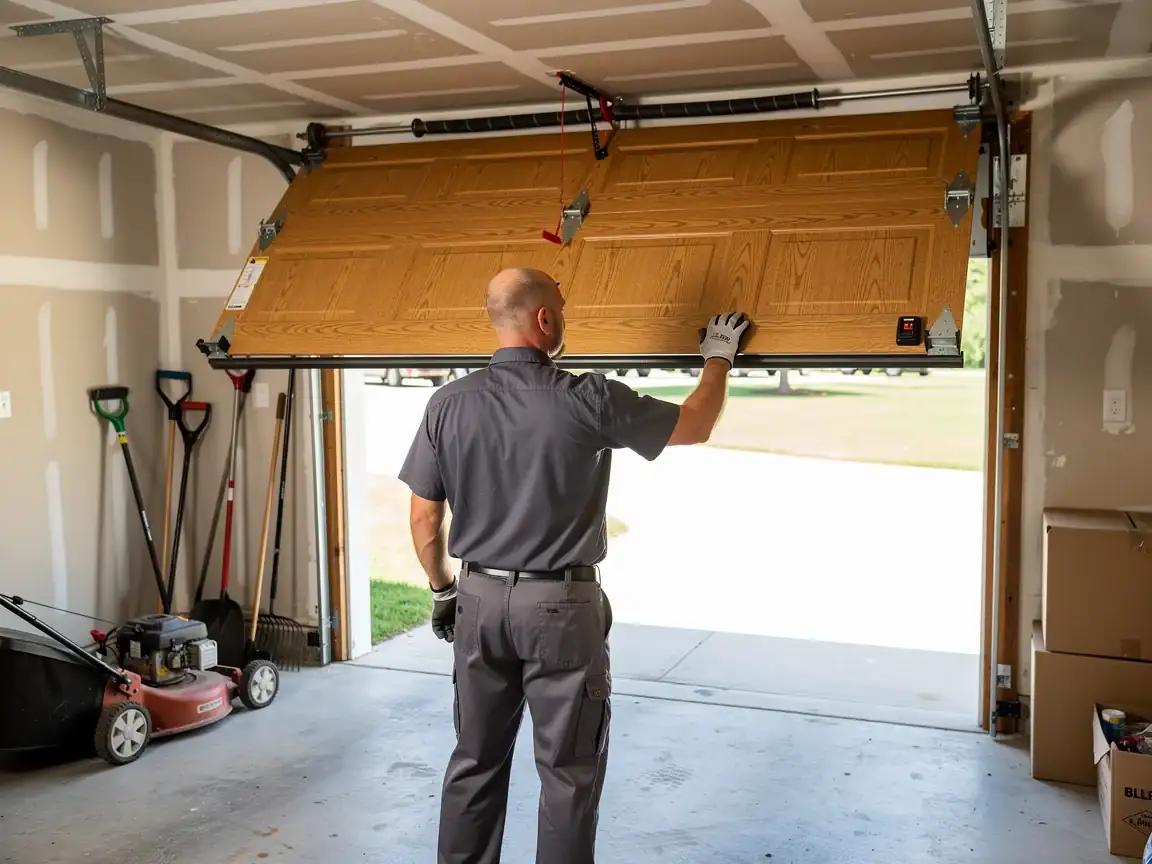
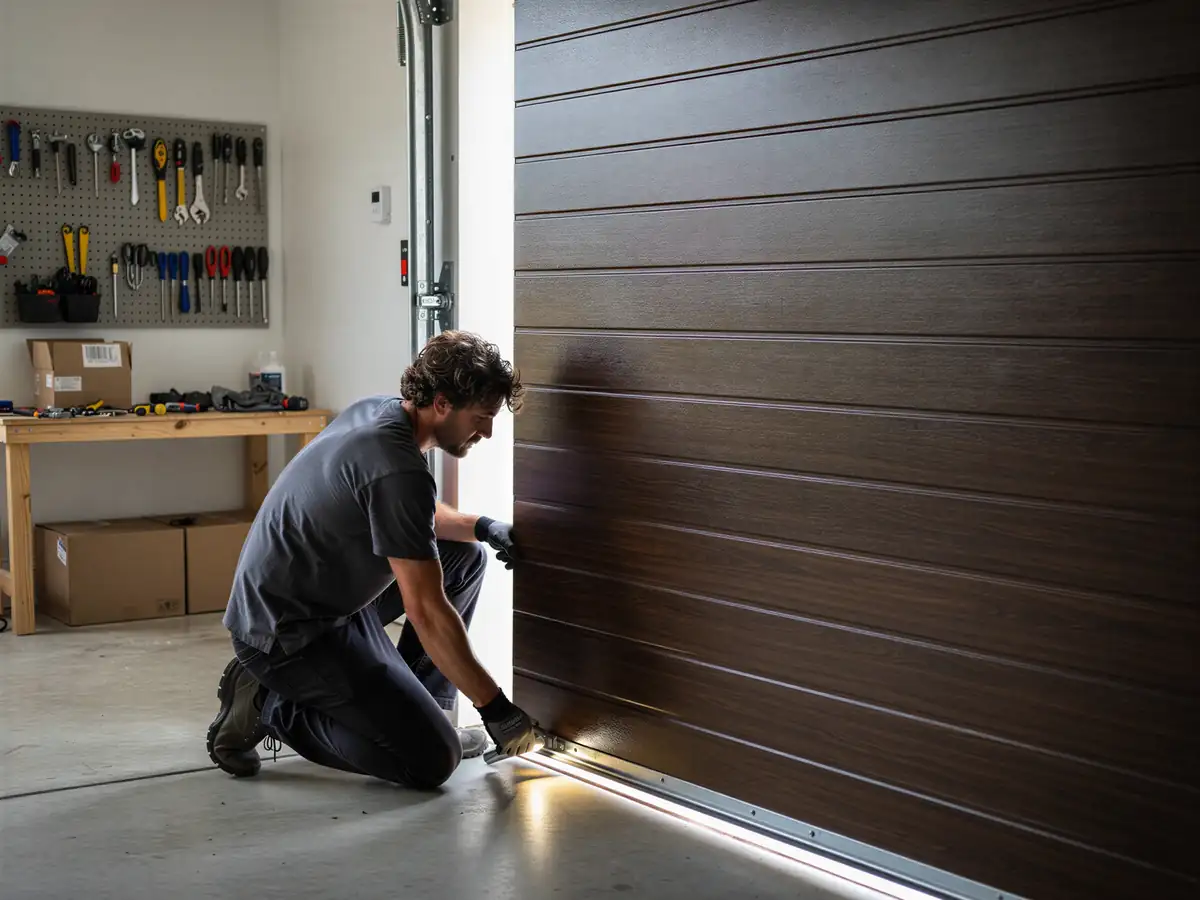
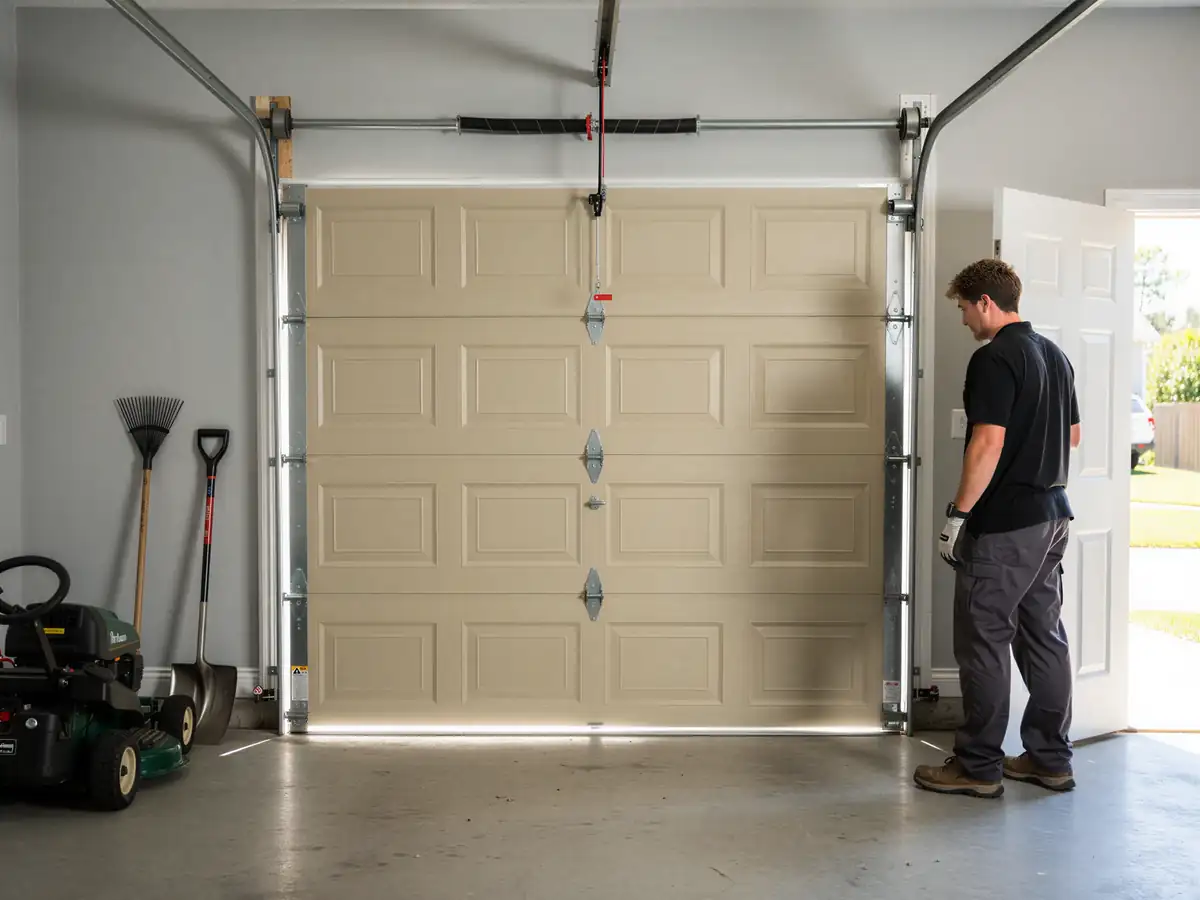
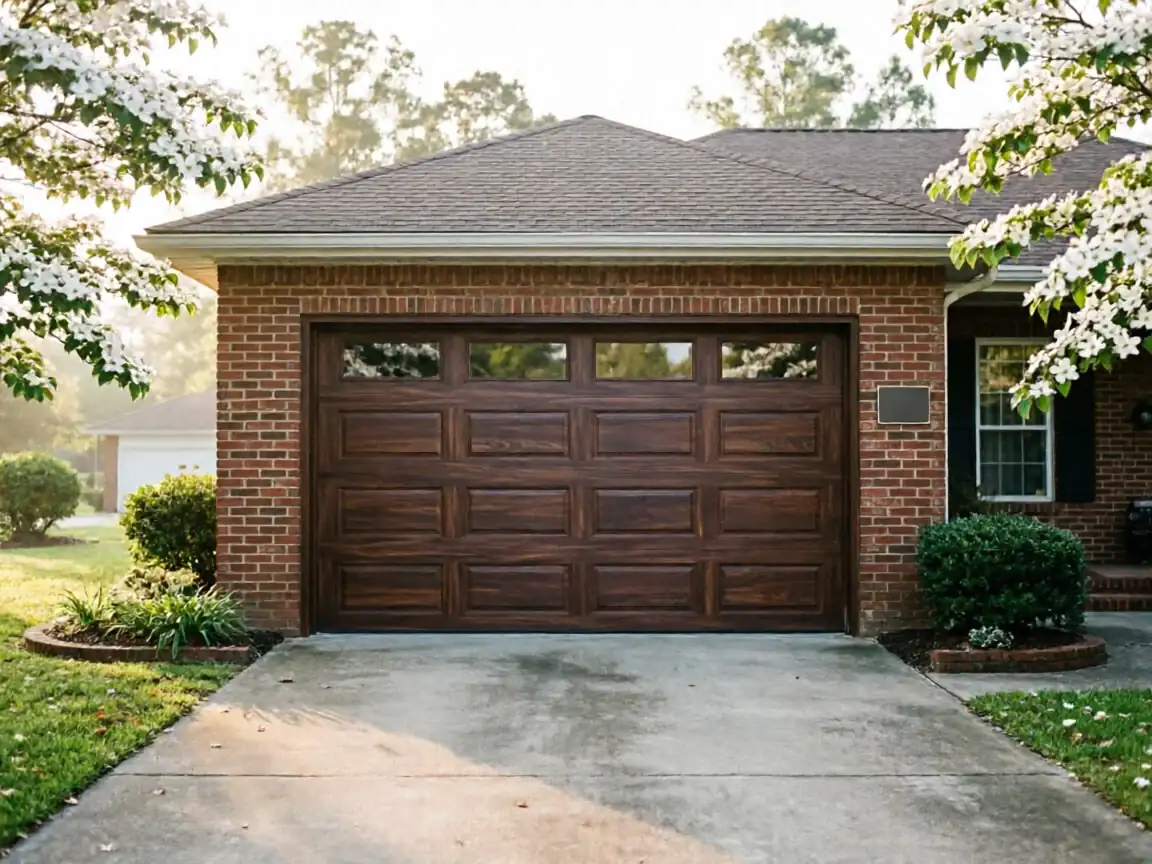
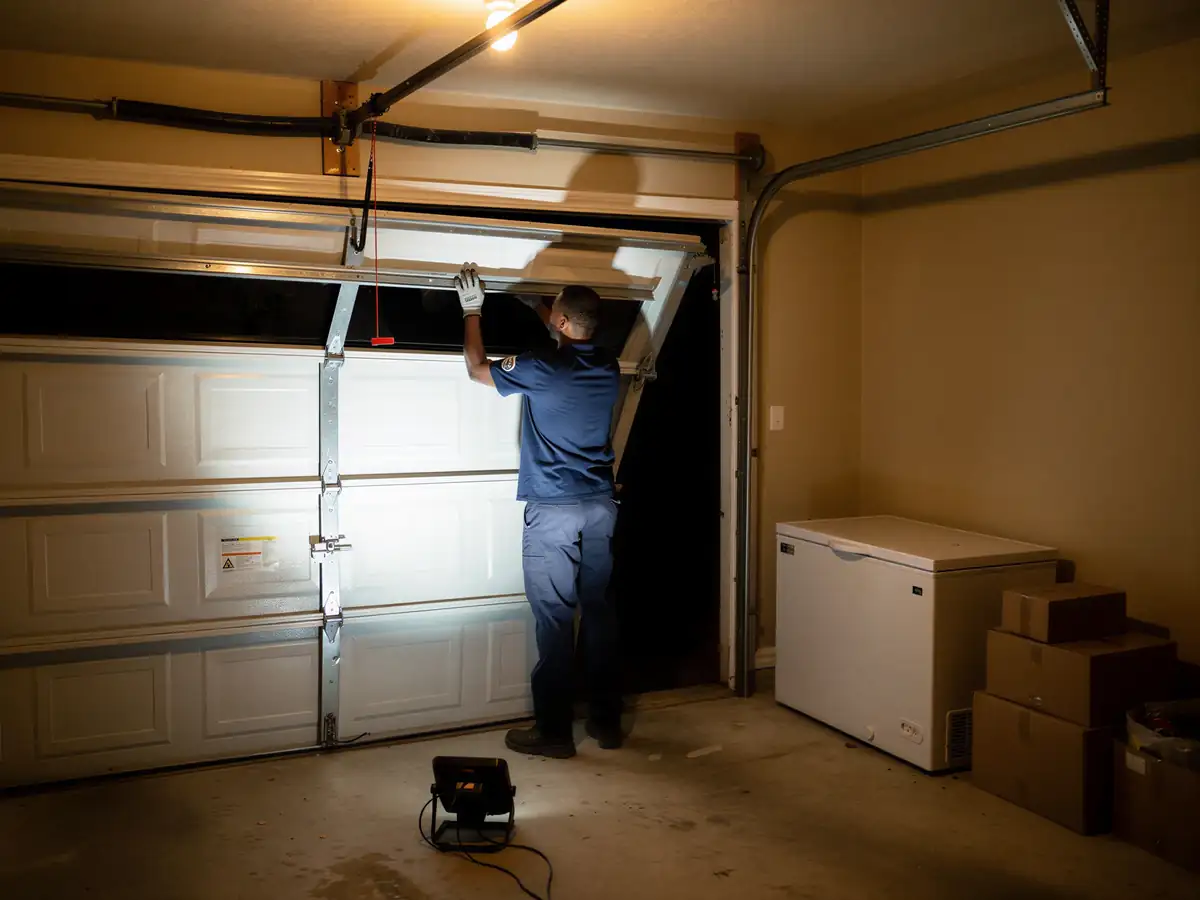
Centreville sits in a cold-severe climate band, which means the ground under your slab and the wood framing around your garage opening both move through a real freeze-thaw cycle every winter. That movement doesn't stop at the foundation. The brackets holding your safety sensors are usually screwed into the same door frame that's expanding and contracting with the temperature swing. A sensor that was dead-on in October can be a half-inch off by January, not because anything broke, but because the wood or the track it's mounted to shifted a fraction. You'll see it as a door that reverses for no reason, or an opener light that blinks and won't close the door at all. It's not usually the sensor unit failing. It's the alignment it depends on, and that alignment is only as stable as the structure it's bolted to - which in this climate is never perfectly stable for long.
The Situation
Housing in this part of Virginia runs from 1940 up through 2015, but the bulk of it - most of the 49 named areas we work across - went up in the 1980s and 90s. That matters for sensor drift specifically because that generation of garage construction used lighter wood jamb framing than either the older pre-1960s builds or the newer post-2000 construction with engineered studs. Lighter framing flexes more with moisture and cold. If your house falls in that main build window, which a lot of Centreville does, your sensor brackets are mounted into material that's had three-plus decades of seasonal flex to work screws loose and nudge the beam off-axis. It's a slow drift, not a sudden failure, which is why most owners don't notice until the door starts refusing to close reliably.
What Local Conditions Do
Cold-severe winters don't just shrink wood, they also bring the grit and road salt that get kicked up into the sensor lenses by tires and wind, especially on garages close to the driveway apron. A thin film of salt haze or frozen condensation on the lens reads to the sensor as an obstruction, and the door won't shut even when the alignment itself is fine. In the shoulder seasons, overnight frost on the lens does the same thing until it burns off midmorning. So you end up with two separate problems that look identical from inside the house: physical misalignment from framing movement, and lens interference from the same cold weather that's doing the moving. Telling them apart matters, because one is a five-minute wipe-down and the other means re-bracketing.
What to Look At First
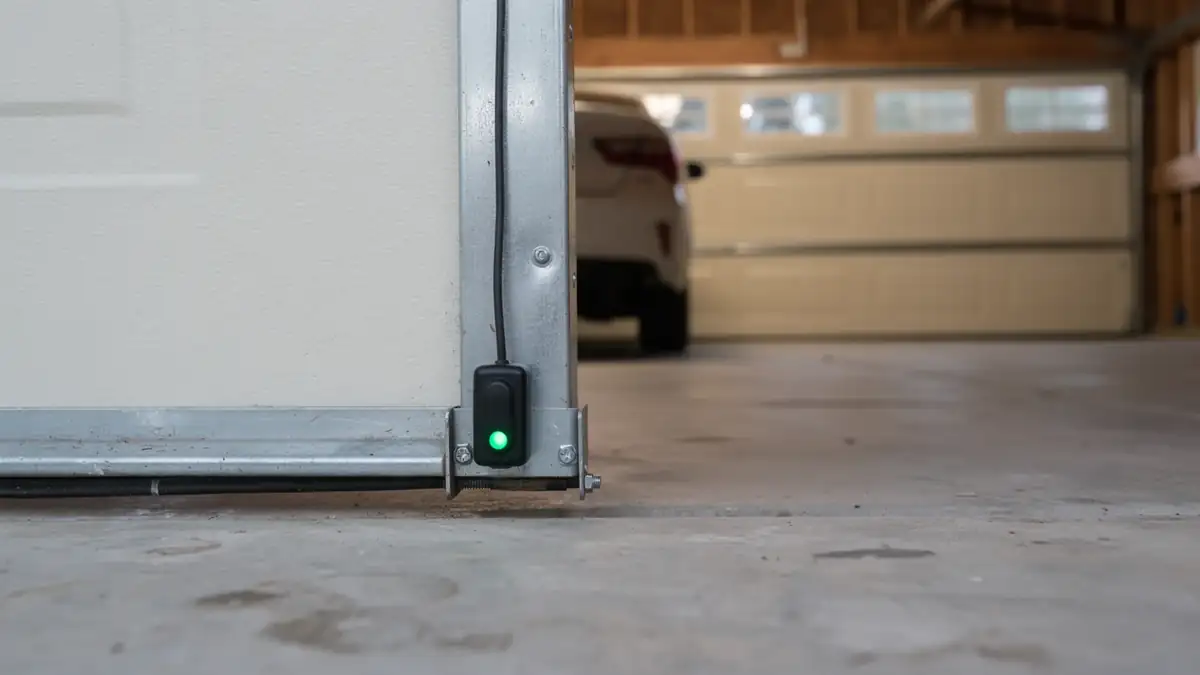
Start with the LED on each sensor - solid usually means aligned, flickering or dark means it isn't, though the exact pattern varies by opener brand and we won't guess at yours over text. Wipe both lenses with a dry cloth before touching anything else; that rules out the cold-weather film issue in under a minute. If the lights still won't hold steady after that, check whether the bracket itself has any play when you nudge it by hand - in 1980s and 90s-era framing that's common because of thirty-plus years of seasonal movement, and a loose bracket needs re-anchoring, not just re-aiming. One honest limit here: if the wood jamb itself has rotted or split from repeated freeze-thaw cycling, re-anchoring the same bracket into the same spot won't hold, and that's a jamb repair job before it's a sensor job.
Straight answers about garage door repair in Centreville. Still unsure? Ask us directly.
Why do my garage door sensors only act up in winter?
Cold-severe winters in this area cause two separate things: the wood framing around older garage openings contracts and shifts slightly, throwing off sensor alignment, and frost or road grit builds up on the lenses themselves. Both show up as the same symptom - a door that won't close - but one is an alignment fix and the other is a cleaning job.
My house was built in the 1980s. Does that matter for this?
It does. Most Centreville-area homes date from the 1980s and 90s building boom, and that generation typically used lighter wood jamb framing than newer construction. After three-plus decades of seasonal flex, screws holding sensor brackets loosen and the beam drifts out of true alignment more often than it does in newer, stiffer framing.
Can I fix sensor drift myself?
Often yes - wiping the lenses and gently re-aiming the brackets by hand solves a lot of cold-weather cases. If the bracket has physical play or the wood behind it is soft or split from repeated freeze-thaw cycles, that's a repair to the frame, not just a sensor adjustment, and worth having looked at in person.