A broken spring job starts with figuring out which kind you have
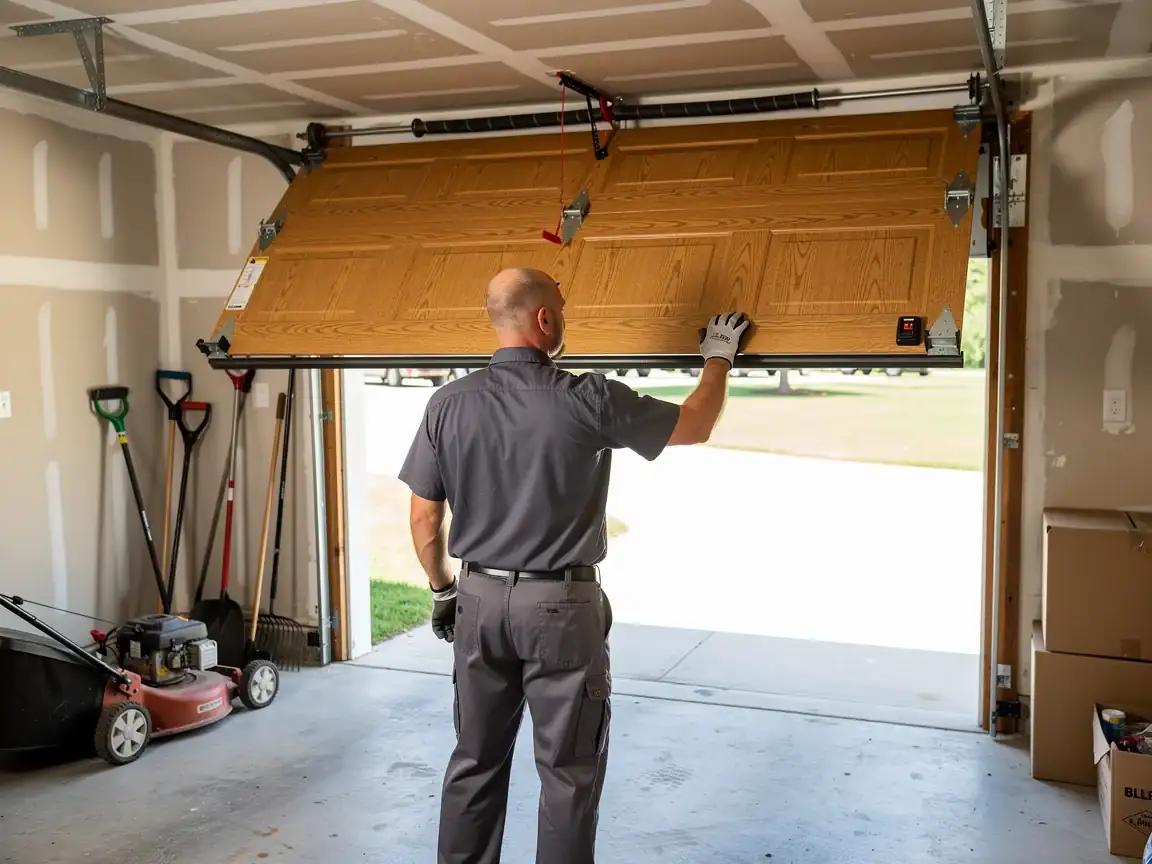
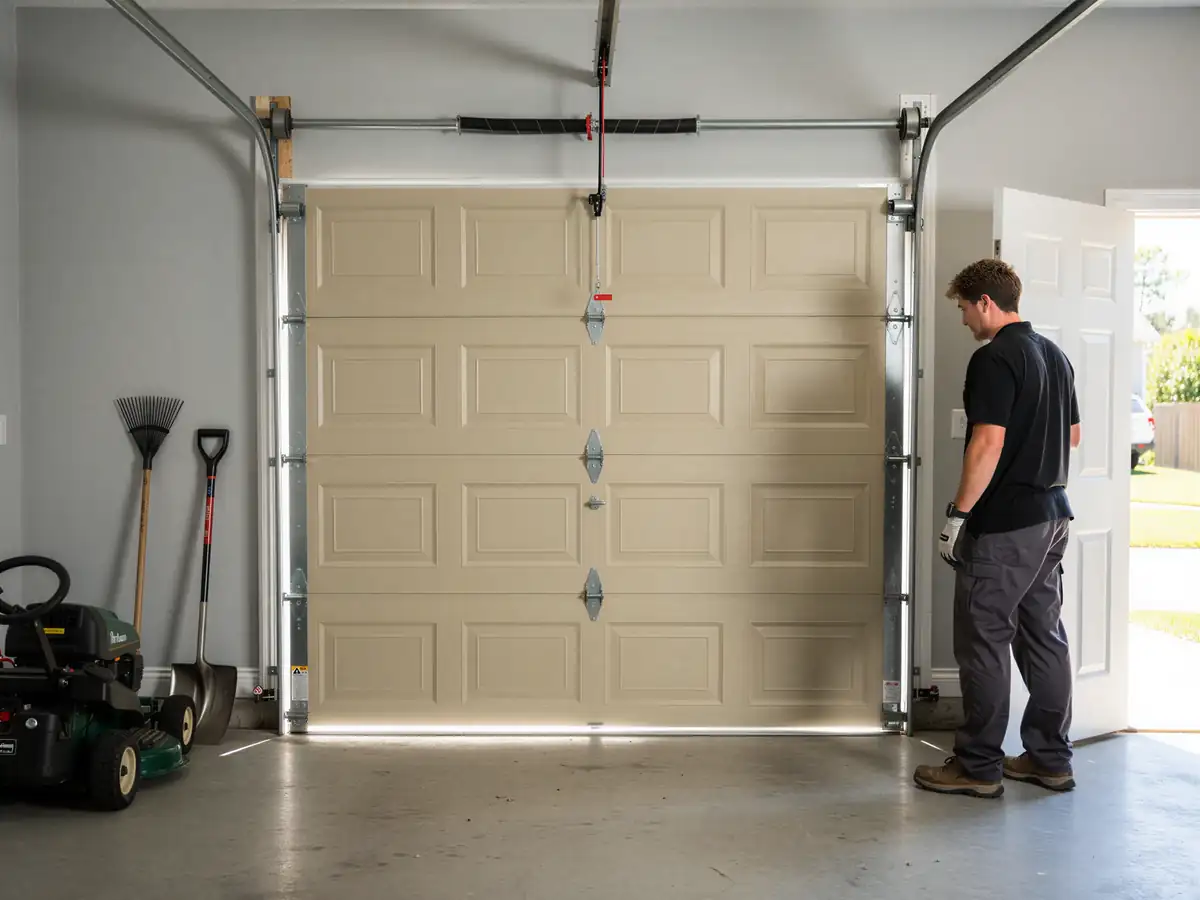
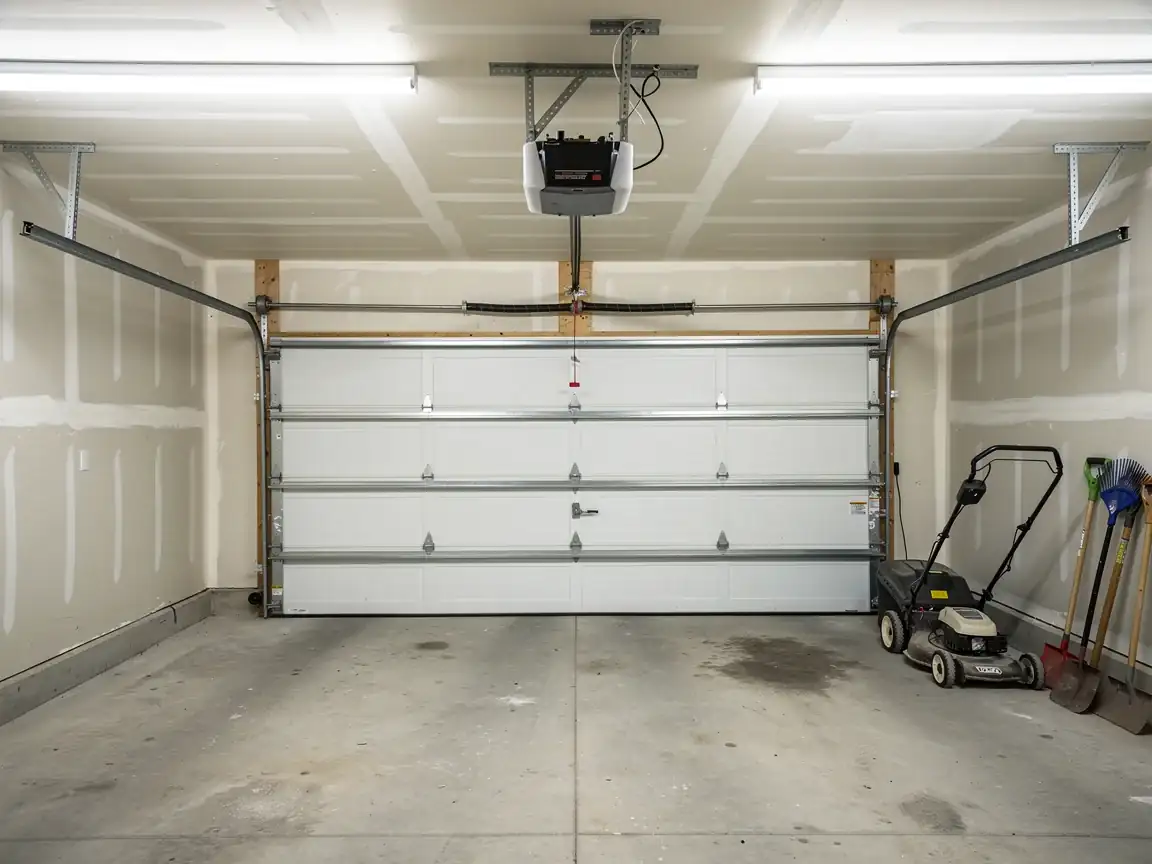
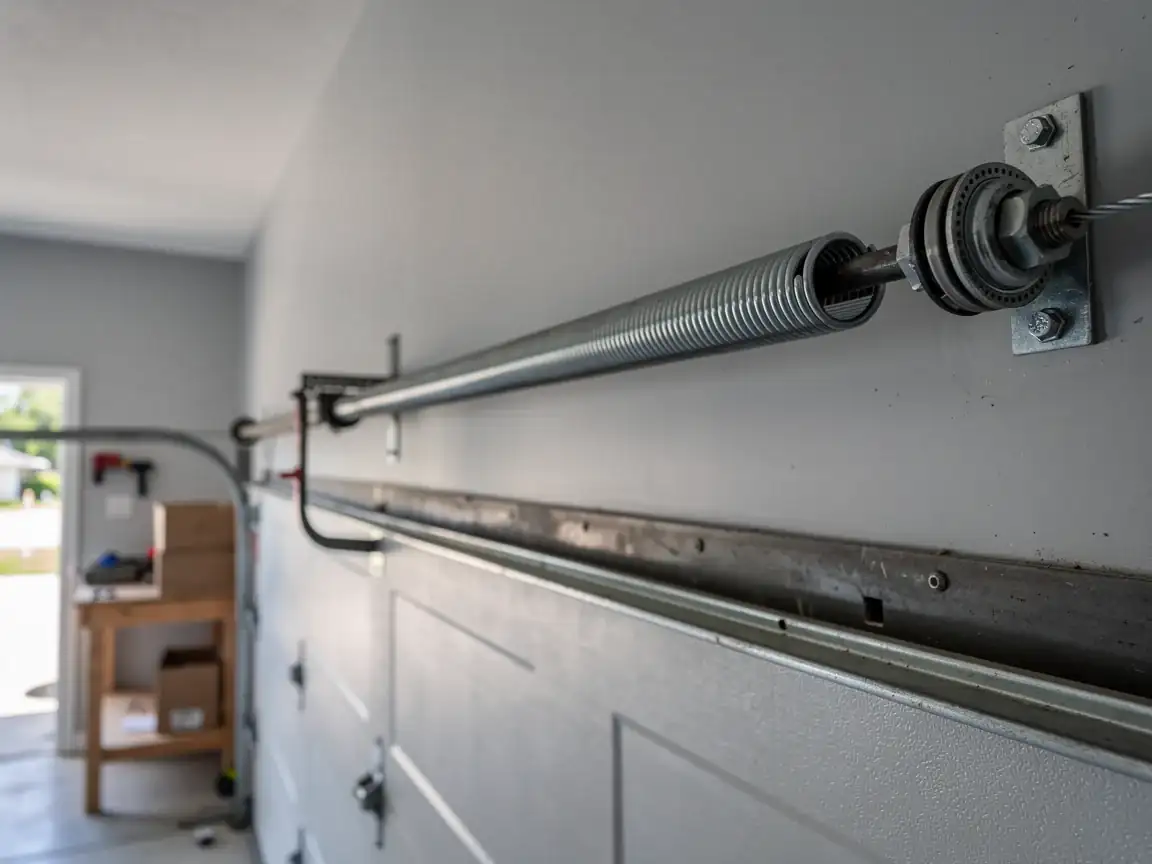
Most houses in this part of Virginia run torsion springs mounted on a shaft above the door, though some older single-car garages still use extension springs along the horizontal tracks. Either way, the door won't lift safely once a spring snaps or loses tension - the opener will strain, the cables can go slack, and the panel can come down hard.
02
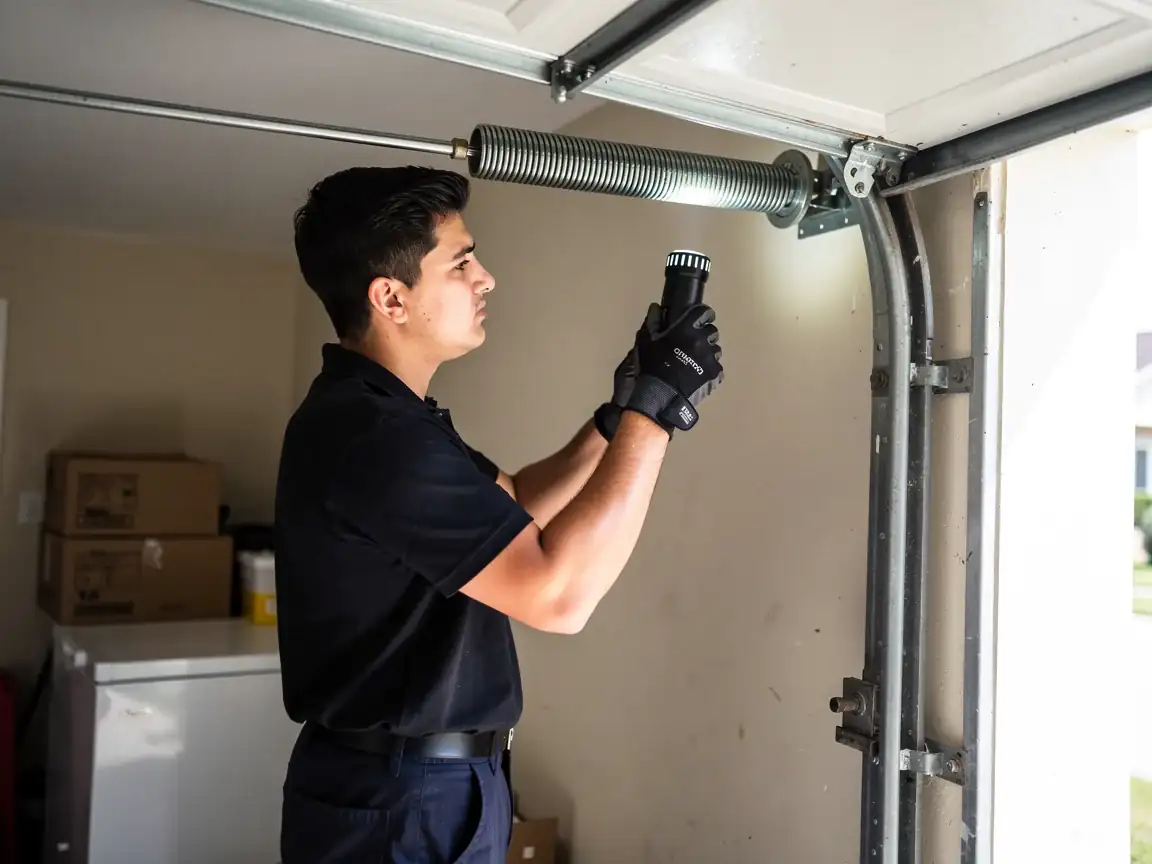
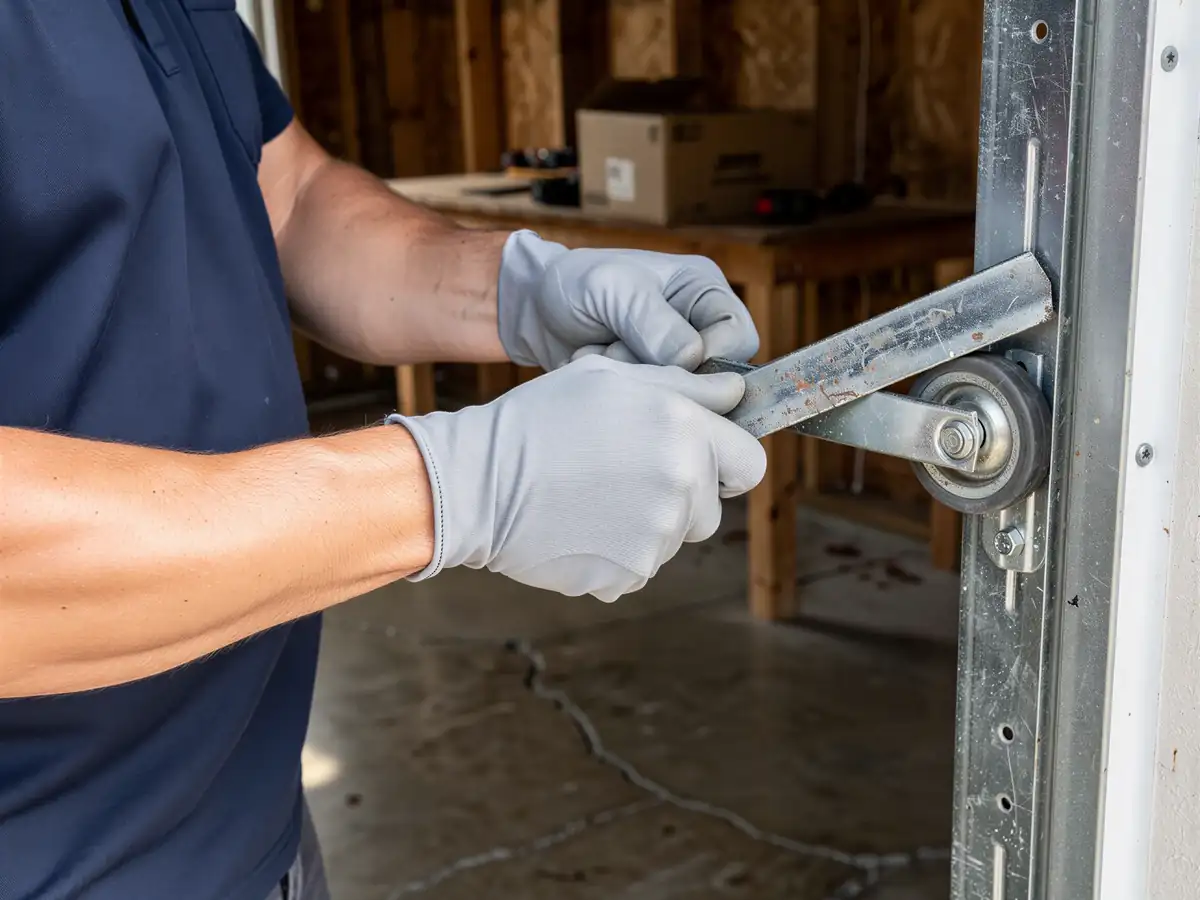
The repair means winding down the old spring under control, measuring the wire gauge, coil diameter, and length against the door's weight
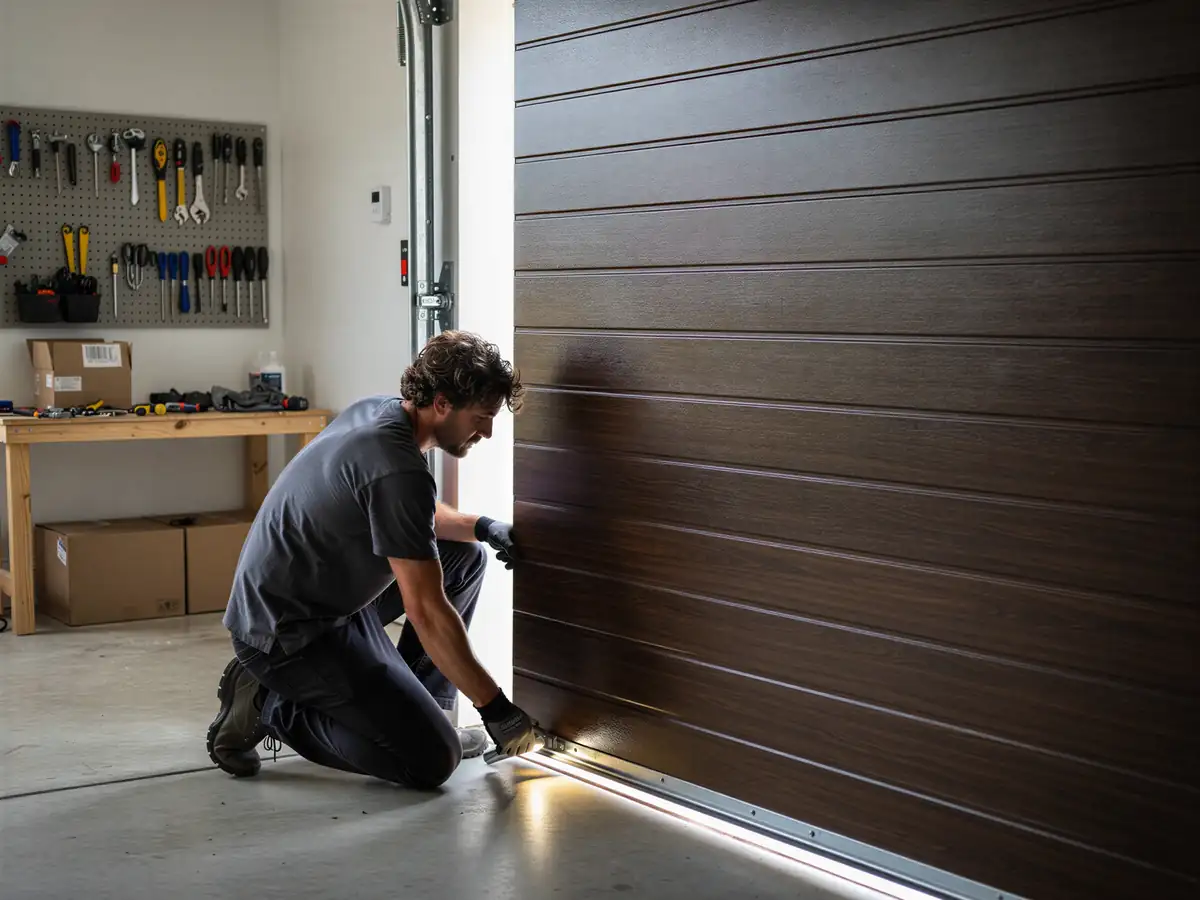
And installing a matched replacement - never just 'close enough.' We check the cables, drums, and bearing plates at the same time, since a spring failure often means a worn cable or bent center bracket is close behind. On torsion setups with two springs, we replace both even if only one broke, because the surviving spring is usually close behind it on fatigue cycles.
03
One honest limit: if your spring size is an odd legacy length from a door that's no longer made
We may need a day to get the exact match rather than force a close substitute onto the drums. We'd rather order the right part than have you back in a week.
How to Book
Call or use the contact page and tell us the door is dead-lifted or won't move - that tells us right away it's likely a spring rather than an opener issue. Have the door's approximate age and whether it's a single or double door on hand; that narrows down spring type before the truck leaves. We serve the Centreville area along with the surrounding communities within roughly a ten to fourteen mile radius, so let us know your general location when you call so we can route the right technician.
We don't quote spring jobs sight unseen beyond a general range, because wire gauge and door weight vary enough between a 1980s builder-grade door and a heavier insulated replacement that a phone estimate isn't reliable. What we can tell you up front is whether your symptoms point to a spring, a cable, or an opener problem, so you're not waiting on a truck for the wrong repair.
Why It Happens Here
Housing stock across this service area was mostly built between 1940 and 2015, with the median home dating to 1981 and the bulk of the stock going up in the 1980s and 90s. That matters for springs specifically: doors installed during that building wave are now 30 to 45 years old, well past the rated cycle count for the original torsion springs even on houses that have had the door itself replaced once already. The spring is often the one component nobody thought to swap.
The climate is the other half of it. This area sits in a cold, severe winter band, and steel spring wire loses some flex in sustained low temperatures - a spring that's been fraying for months is more likely to let go on a cold January morning when the metal is stiff and the door is heavier than usual from ice or built-up grime at the tracks. We see the seasonal spike in spring calls line up with that pattern every year, not as a coincidence but as basic metal fatigue meeting cold.
With roughly 109,606 owner-occupied houses across the service area, a lot of them hit that same 30-plus-year mark around the same time, which is why this is one of the most common calls we get.
What You Are Seeing
01
The clearest sign is a door that won't lift at all
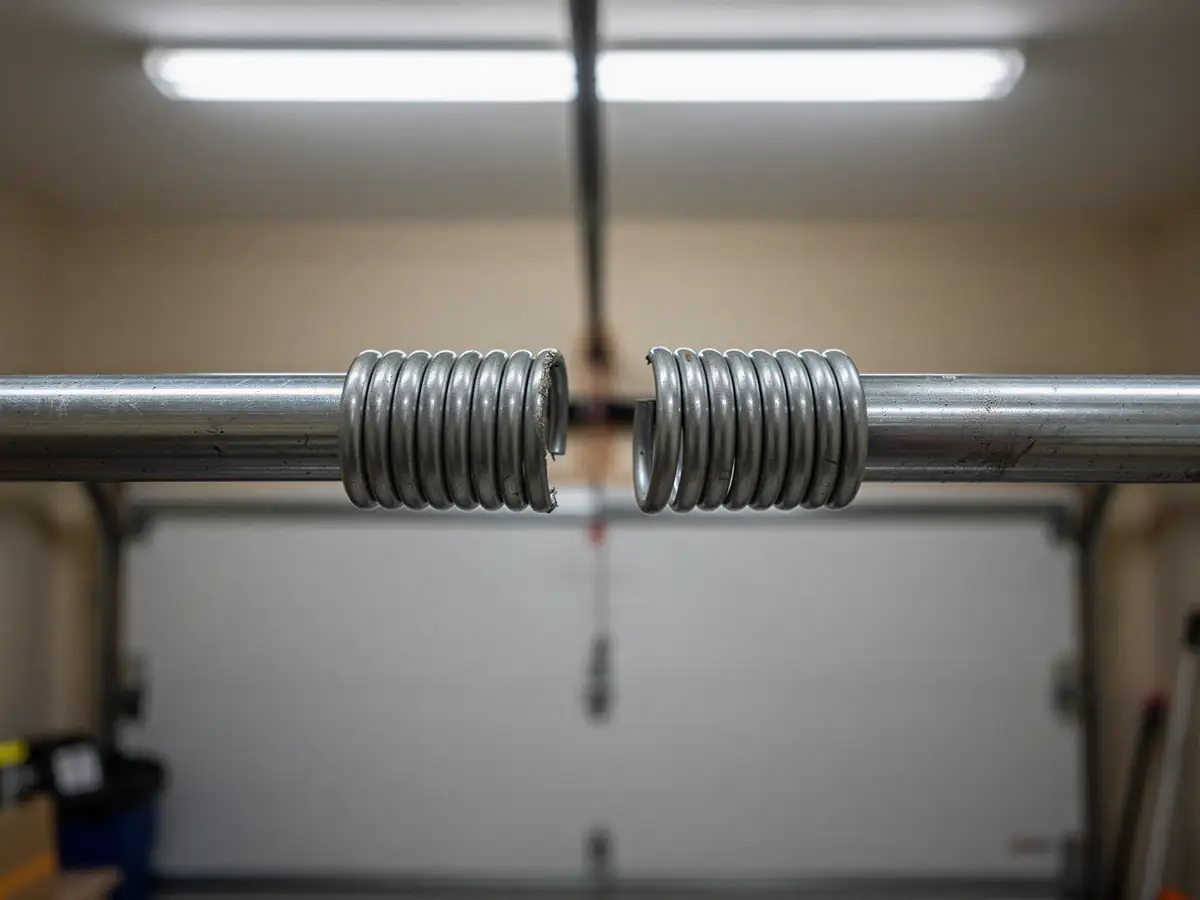
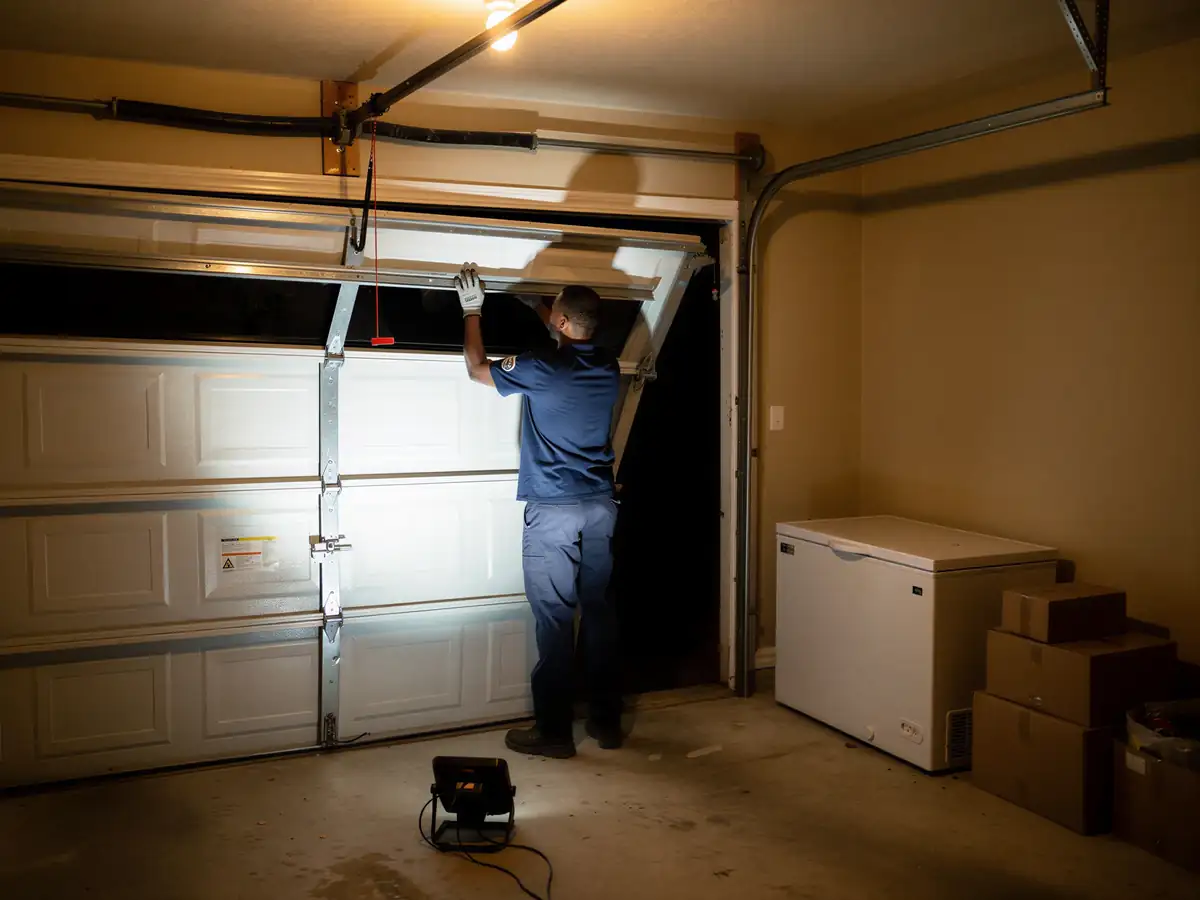
Or lifts a few inches and stops - the opener motor strains and sometimes trips its own safety reversal. Look up at the shaft above the door: if you see a visible gap in the coil or one side of the spring hanging loose, that's your answer. A loud bang from the garage, often mistaken for something falling, is frequently the spring letting go under tension.
02
A door that feels suddenly much heavier to lift by hand
Or an opener that runs but the door barely moves, usually means the spring is still intact but losing tension gradually rather than snapping outright. That's worth a call before it fails completely and takes a cable or the opener's drive gear with it.
03
Don't try to lift the door past a broken spring or disconnect the opener to force it manually
The door can drop fast once the spring's counterbalance is gone, and that's how fingers and vehicles get hurt. Leave the door down and call.
How it works
From “it’s stuck” to “it’s fixed”
A quick, honest process - no guesswork and no surprises, start to finish.
Straight answers about garage door repair in Centreville. Still unsure? Ask us directly.
How do I know if it's the spring and not the opener?
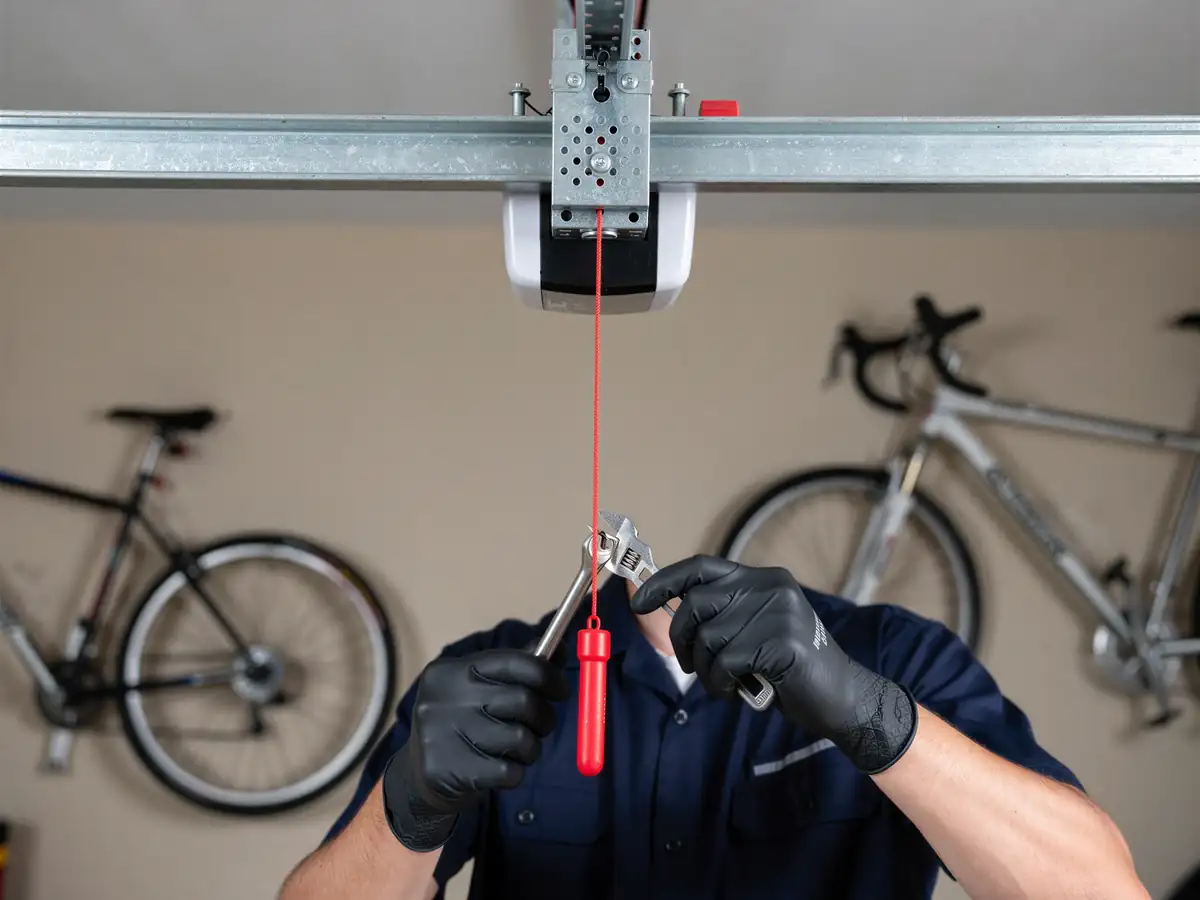
If the opener motor runs but the door doesn't move, or moves only partway and reverses, that points to a spring that's lost tension rather than an opener failure. A dead silent opener with no motor sound at all is more likely electrical. Either way, don't force the door by hand.
Why did my spring break in winter?
This area sits in a cold, severe climate band, and spring steel gets stiffer and more brittle in sustained low temperatures. A spring already weakened by years of cycles is more likely to finally give out on a cold morning than in mild weather, which is why winter spring calls run higher here.
Is my door's spring an unusual size?
Possibly, if your house is on the older end of the area's housing stock, which runs from the 1940s up through 2015 with a lot built in the 1980s and 90s. Older doors sometimes used spring lengths or wire gauges that aren't common stock anymore, which can add a short wait for the exact match.
Do you replace one spring or both on a double door?
On a two-spring torsion setup, we replace both even when only one has broken. They go through the same number of cycles and age together, so the second one is usually close behind on wear even if it hasn't failed yet.