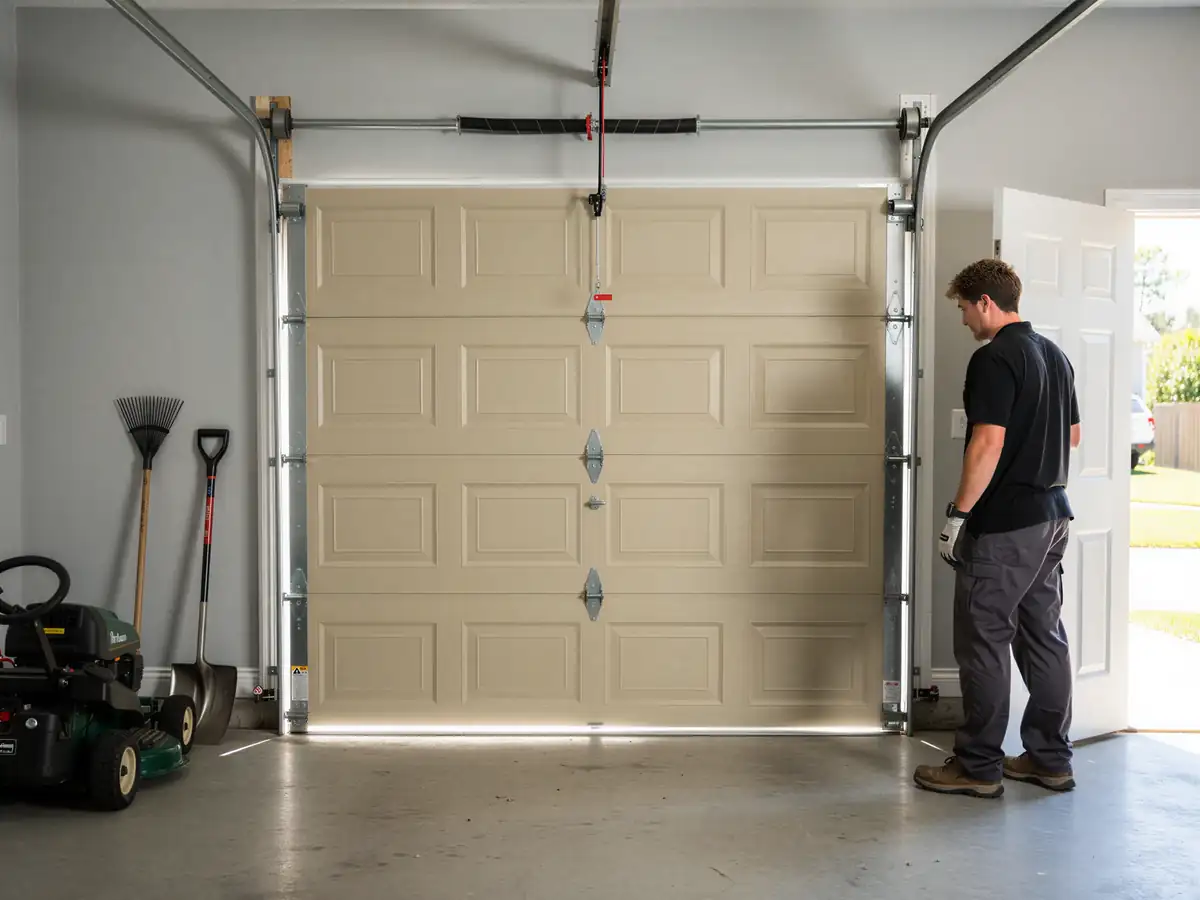
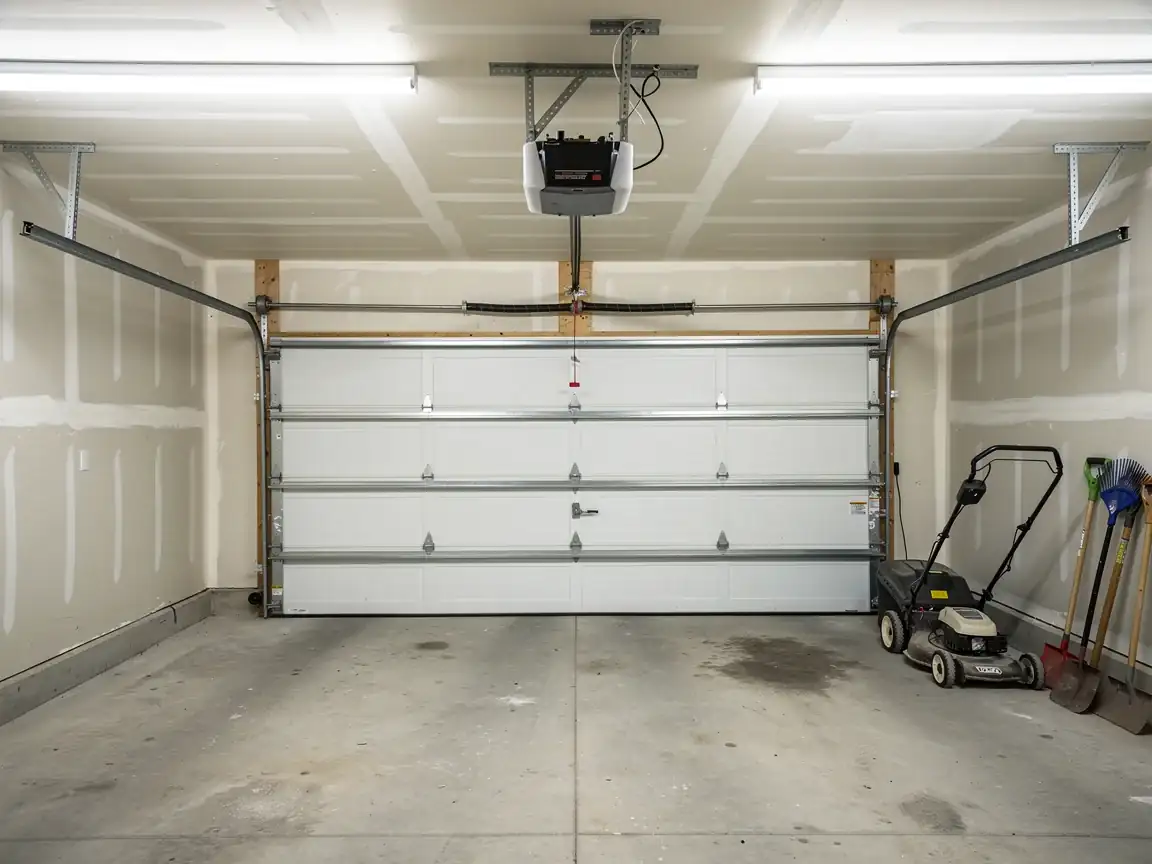
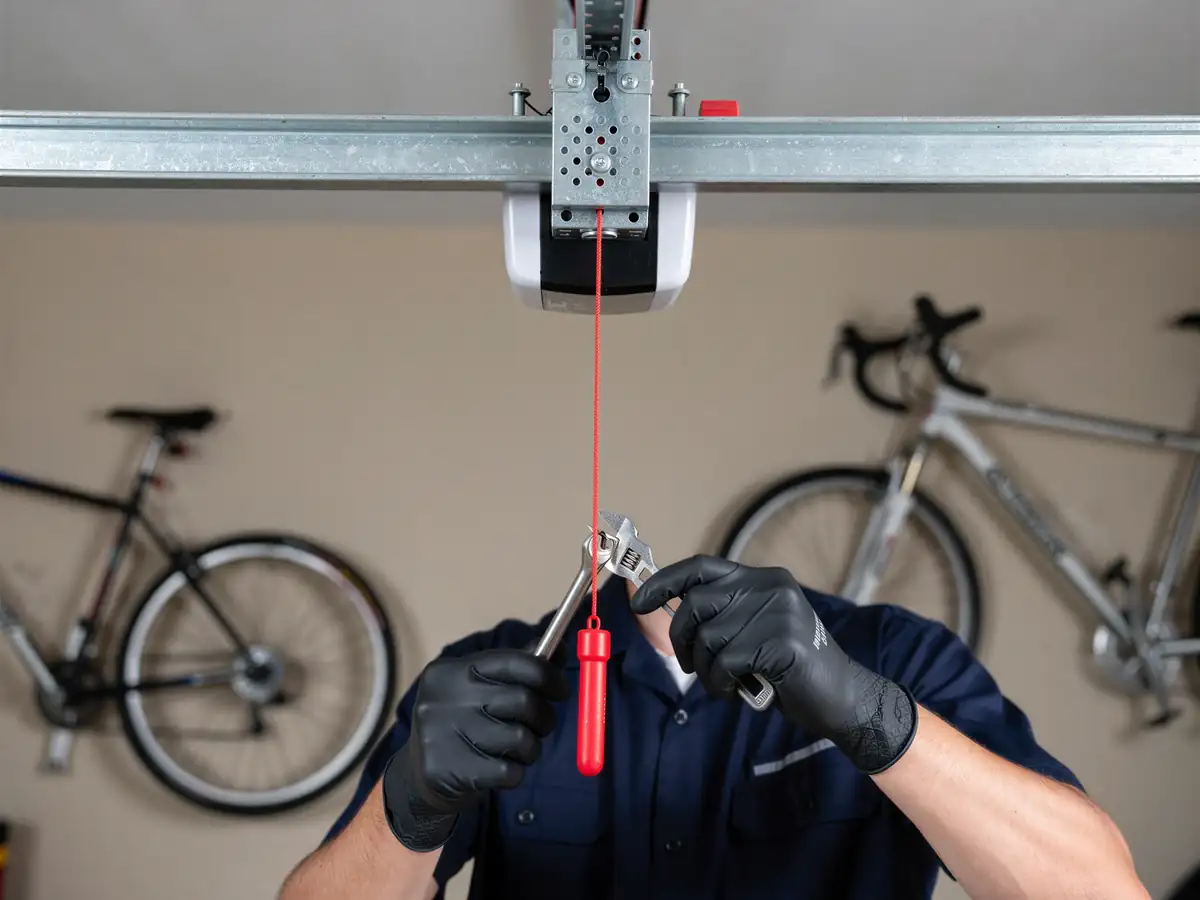
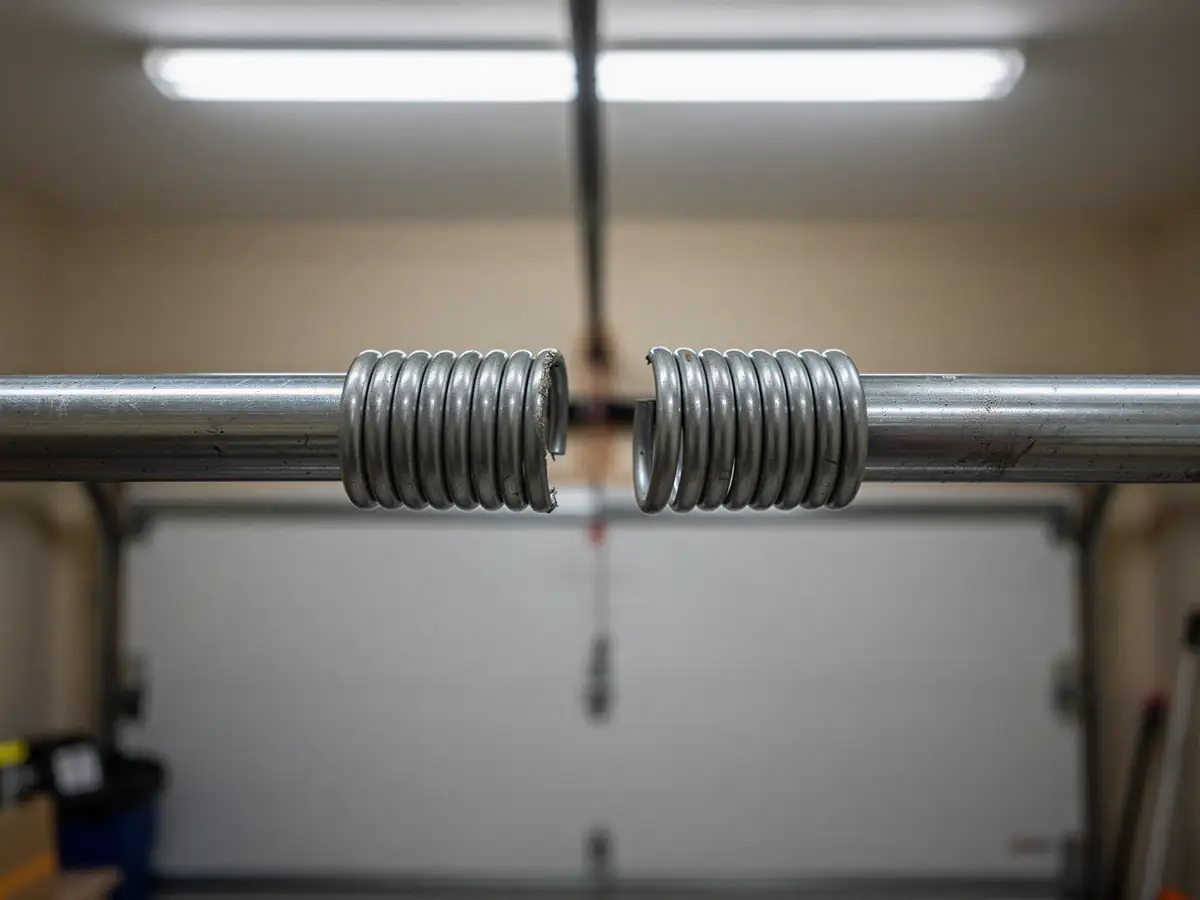
An emergency call almost always comes down to one of three things
A broken spring, a cable off the drum, or an opener that's stopped talking to the door. We show up, find which of the three it is, and fix that one thing instead of selling you a new door when you don't need one.
02
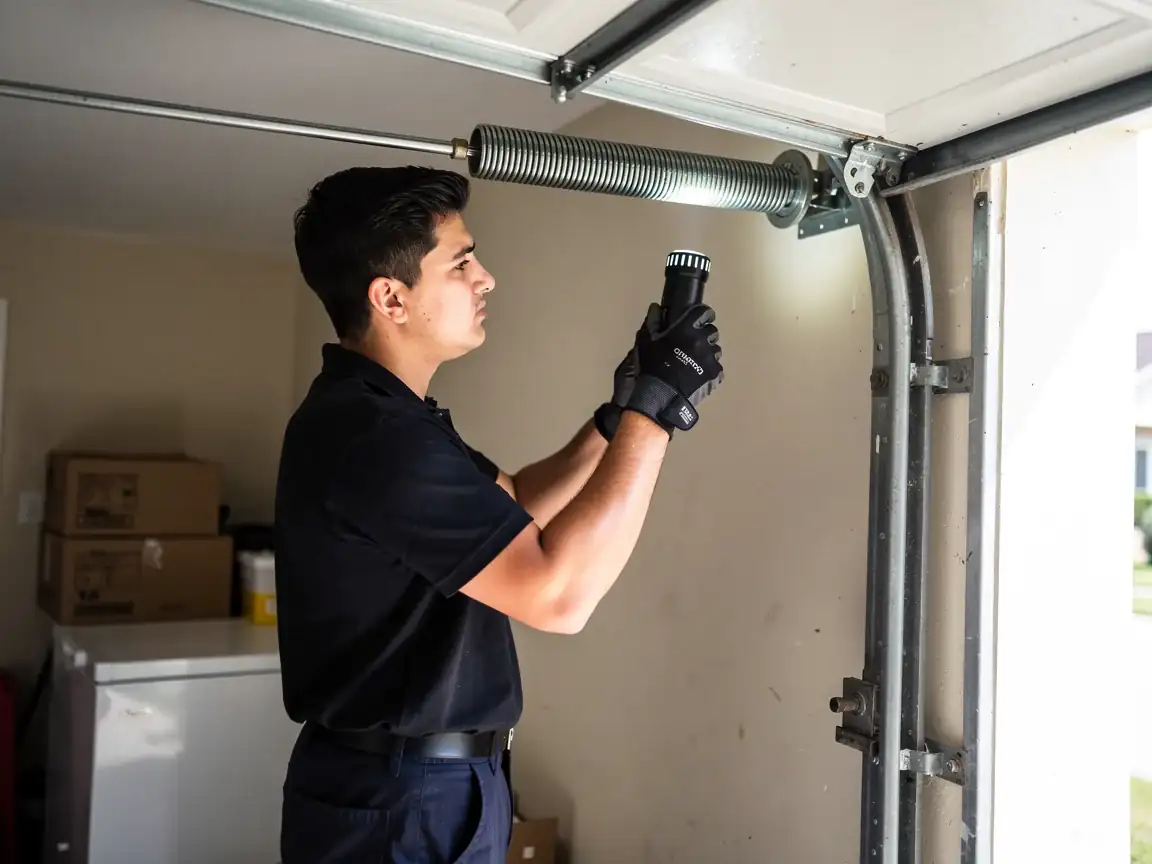
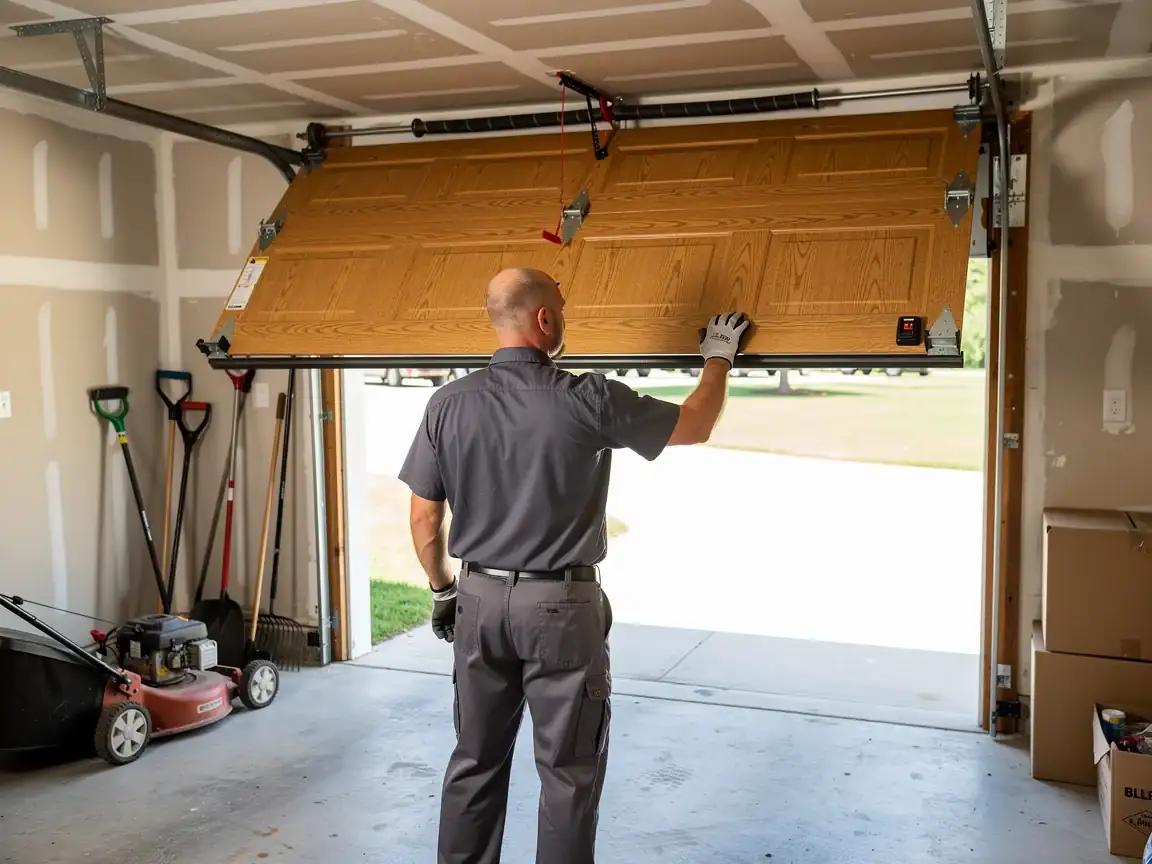
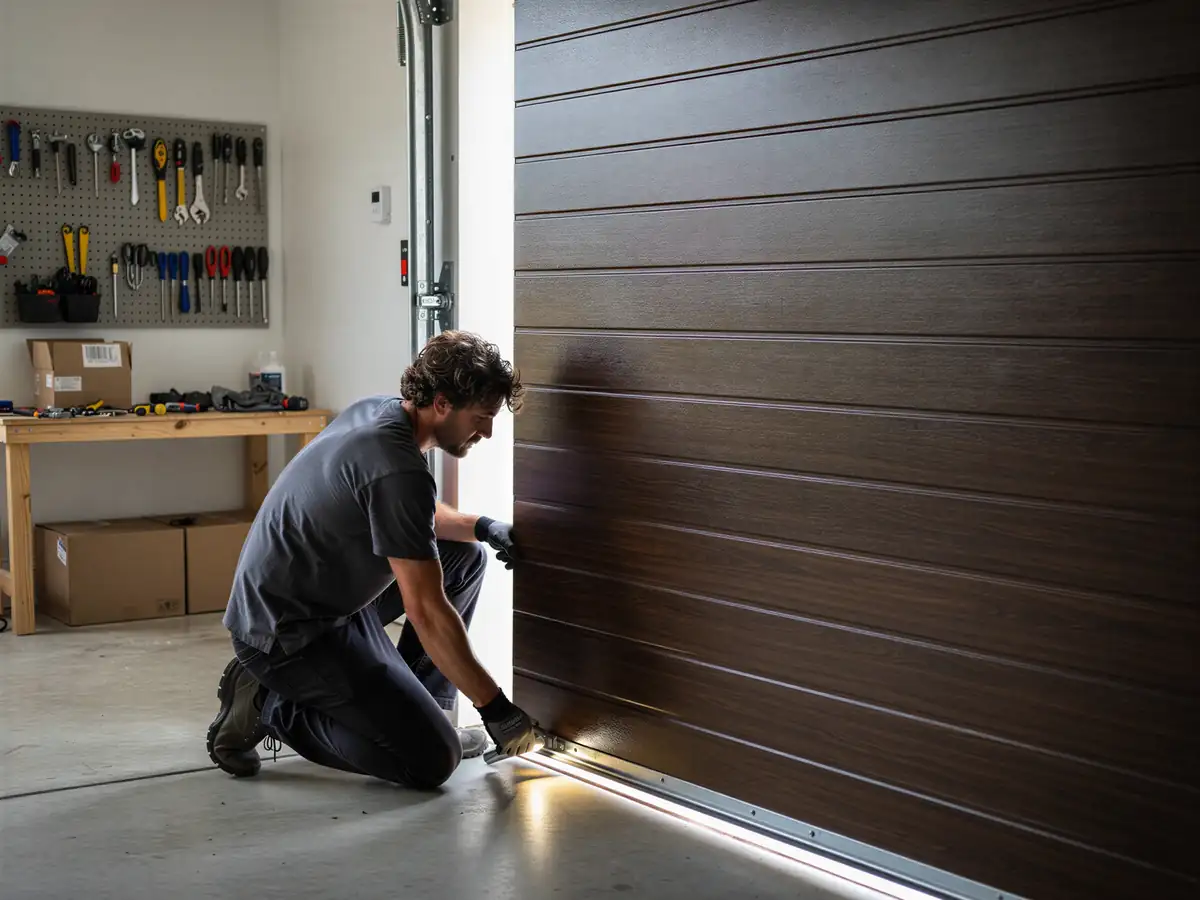
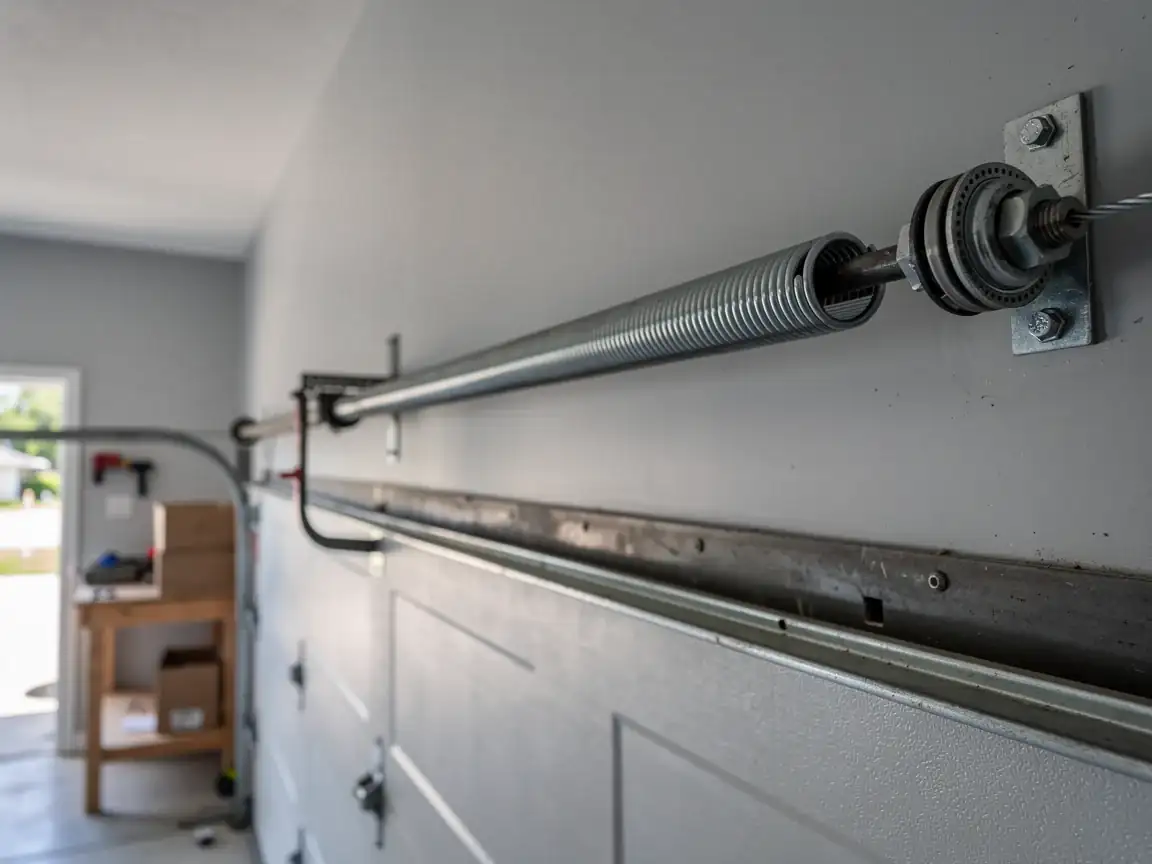
For a snapped torsion spring, that means pulling the old spring off the shaft
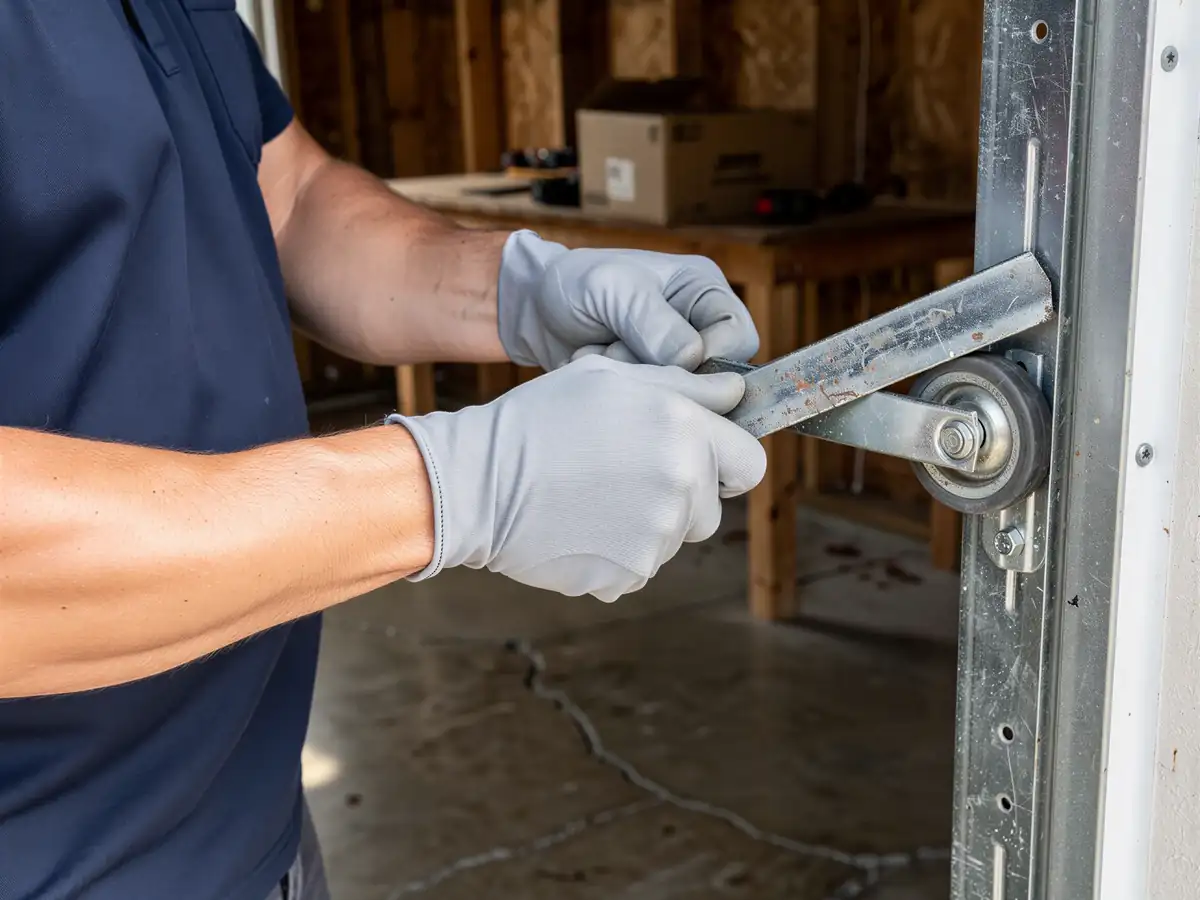
Matching wire size and wind direction to the original, and setting tension by hand - not guessing. For a cable that's jumped the drum, we check the track alignment first, because a bent track will throw the cable again within weeks if you don't fix the root cause. For an opener fault, we check the logic board, the safety sensors, and the drive gear before we tell you it needs replacing.
03
We carry common torsion spring sizes and standard cable on the truck
What we don't carry is every commercial-grade opener board or a part for a door that was custom-built decades ago - those can take a few days to source, and we'll tell you that up front instead of promising same-day on something we can't get same-day.
04
This page is about the repair call itself
If you're looking at a full door replacement instead of a fix, that's a separate conversation with different numbers.
How to Book
Call when the door won't move, won't close, or is making a noise you haven't heard before. Tell us the symptom - door stuck halfway, spring snapped with a bang, opener running but door not lifting - and we'll tell you what to check before we're even on the road, because sometimes it's a disconnected safety sensor and not a repair call at all.
If the door is stuck open, don't force it with the opener; that's how a cable gets stripped on top of a broken spring, turning one repair into two. If it's stuck closed and someone's stuck inside or the car's trapped, say so when you call - that changes how we route the truck.
We work across the Centreville area and the towns around it, from Bull Run and Sudley out past Clifton and Fairfax Station. Have the make of your opener handy if you know it, and clear the driveway so the truck can get close to the door. That's really all the prep required on your end.
Why It Happens Here
Housing in this part of Virginia runs mostly 1980s and '90s construction, with a lot of stock built between 1940 and 2015 and a median year around 1981. Doors and openers installed in that era are past the point where springs and cables fail predictably rather than gracefully - a torsion spring is rated for a number of cycles, and a 1980s install has usually spent every one of them.
The cold is the other half of it. This area sits in a severe cold climate band, and steel contracts in a hard freeze. A spring that's been fraying slowly all year will often let go on the coldest morning of the week, because the metal is stiffer and the door is heavier to lift when it's cold. Extension springs on older setups are worse for this than torsion springs, and a lot of the 1980s-era doors around here were built with the cheaper extension kind.
None of this is unique to one street or one subdivision - it's a function of when the housing stock went up and what winter does to it every single year, across the whole service area from Centreville out past Burke and Annandale.
What You Are Seeing
01
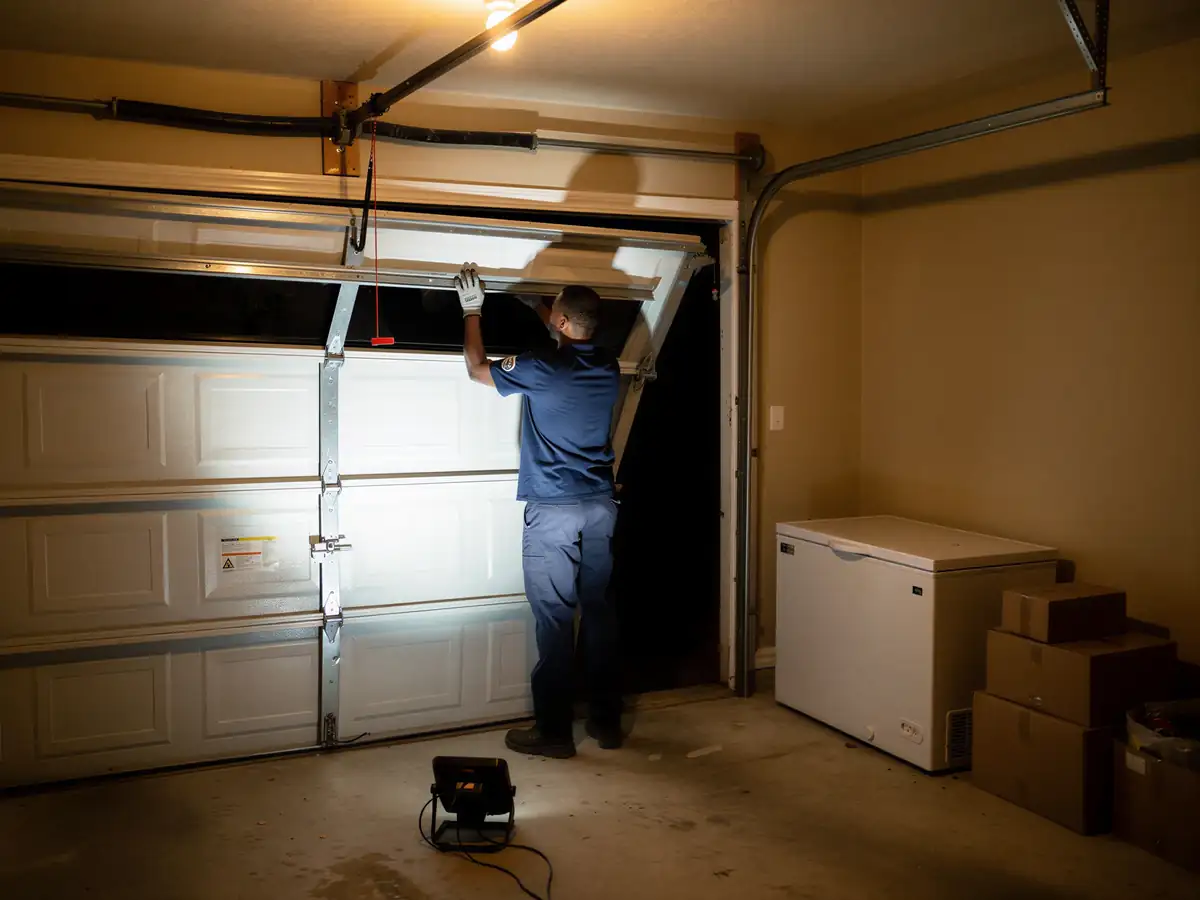
A loud bang followed by a door that won't budge is almost always a broken torsion spring
The door got heavy all at once because the spring that was carrying its weight let go. A door that moves a few inches and stops is often a broken cable or a spring that's lost most of its tension but not all of it.
02
A door that opens fine on the opener but won't respond to the wall button, or vice versa, points to the opener's logic board or a wiring issue rather than the door itself
Grinding or scraping that's new, especially on cold mornings, usually means a roller or track problem that's been building for a while and finally announced itself.
03
If the door reverses right before it closes, check the sensors first
A knocked-out-of-alignment sensor is common and isn't a repair call at all, just a five-minute fix. We'd rather tell you that on the phone than roll a truck for it. If you're not sure which of these you're looking at, describe the sound and when it happens; that's usually enough for us to narrow it down before we arrive.
How it works
From “it’s stuck” to “it’s fixed”
A quick, honest process - no guesswork and no surprises, start to finish.
Straight answers about garage door repair in Centreville. Still unsure? Ask us directly.
Can a broken spring really happen overnight?
Yes. A torsion spring wears down gradually with every open-and-close cycle, and on a cold morning the stiffer metal is more likely to be the thing that finally gives. Most owners don't see it coming because the door worked fine the day before.
Is it safe to open the door manually if the spring is broken?
You can pull the release cord and lift by hand, but a door with a broken spring is much heavier than it looks and can drop suddenly. If you're not confident lifting that weight safely, leave the door down and wait for the repair.
Do you repair openers or just doors?
Both, when the fault is something we can diagnose on site - a bad sensor, a failing logic board, a worn drive gear. Some commercial-grade or older opener models need a part we don't stock, and we'll tell you that before starting work.
Why does this seem to happen more in winter?
Steel springs and tracks contract in a hard freeze, and the door gets heavier to lift at the same time the metal is under more stress. A spring that's already worn down from age is more likely to fail on a cold morning than a mild one.