Panel replacement for Burke homes built around 1979, served by the Centreville truck ten miles out. Steel sectional doors, matching panels, and what the drive means for your job.
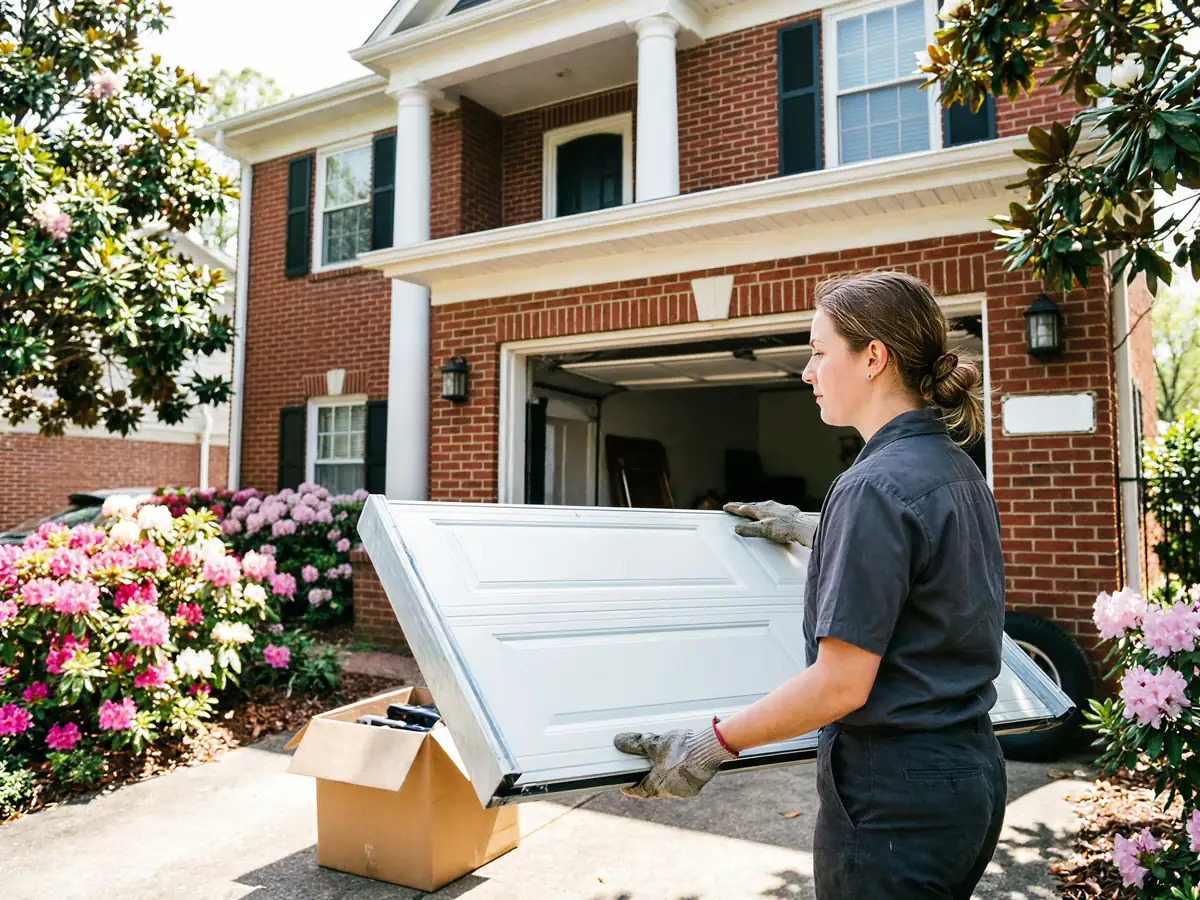
A dented panel on a steel sectional door looks like a cosmetic problem until you notice the section won't sit flush in the track anymore
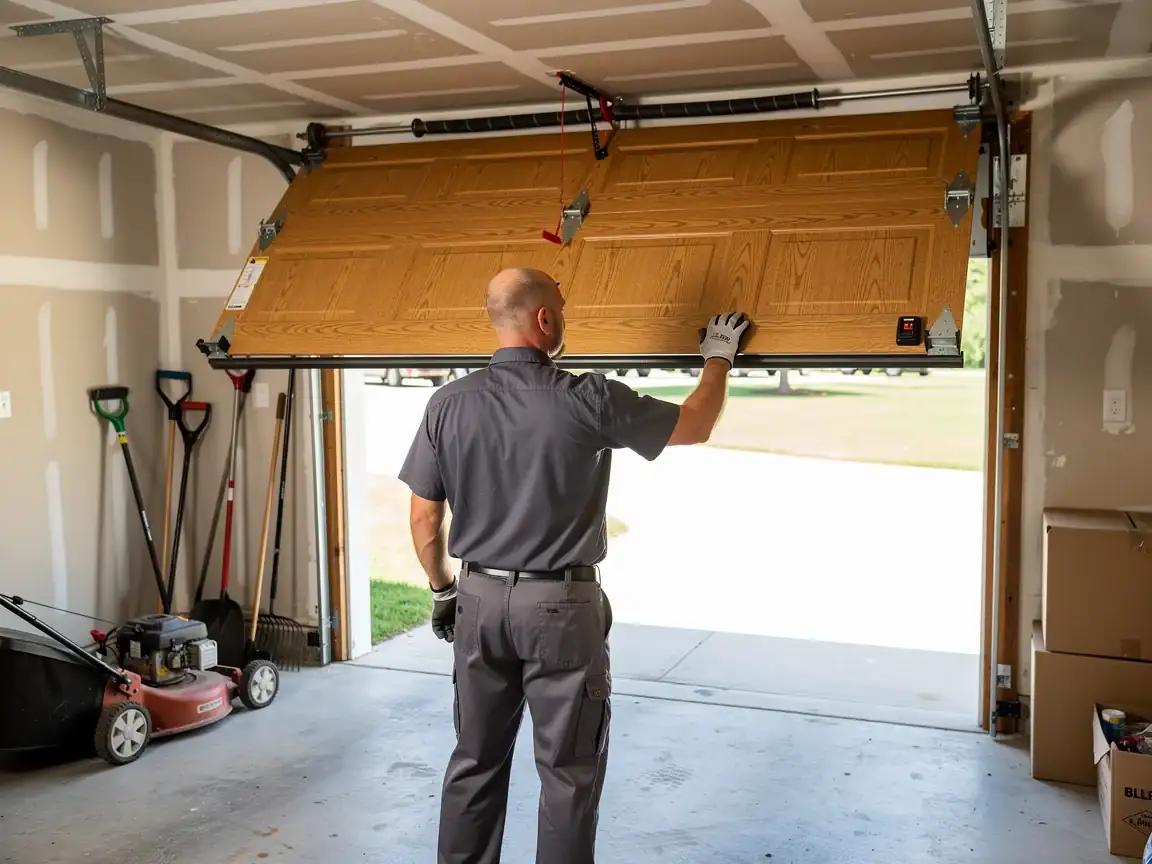
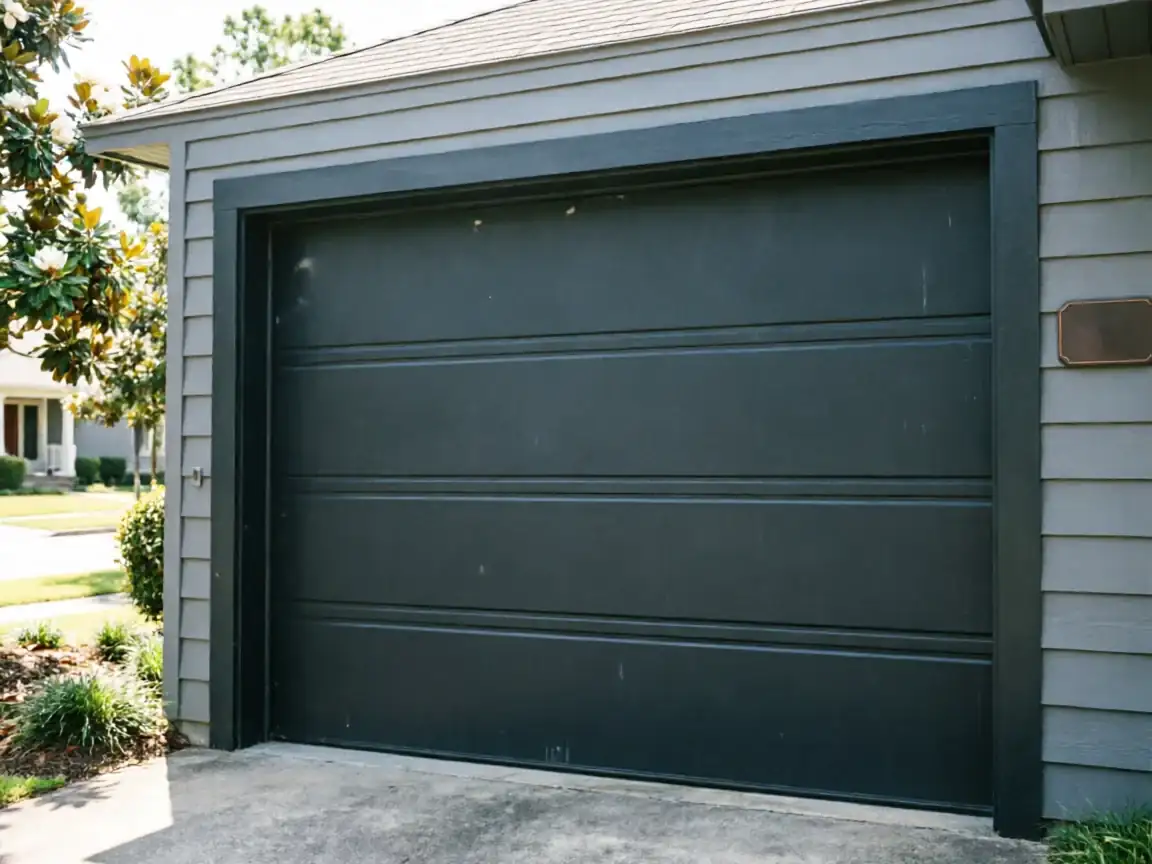
On the doors common in Burke, built mostly around 1979, the panel skins are thinner steel than what goes up today, and a car bumper or a wind-thrown branch can crease a whole section rather than just denting it. Once a panel is bent, the door often still runs, but it's pulling against itself every cycle, which wears the roller and the hinge faster than it should.
02
Rust is the other common failure
Steel panels from that era don't have the galvanized coating standard now, so once the paint chips at a hinge screw or a bottom corner, rust works in from inside the panel where you can't see it until the metal gives. Insulated panels from the same period can also fail at the seam between the steel skin and the foam core - the foam shrinks over decades, and the skin starts to oil-can or bow.
03
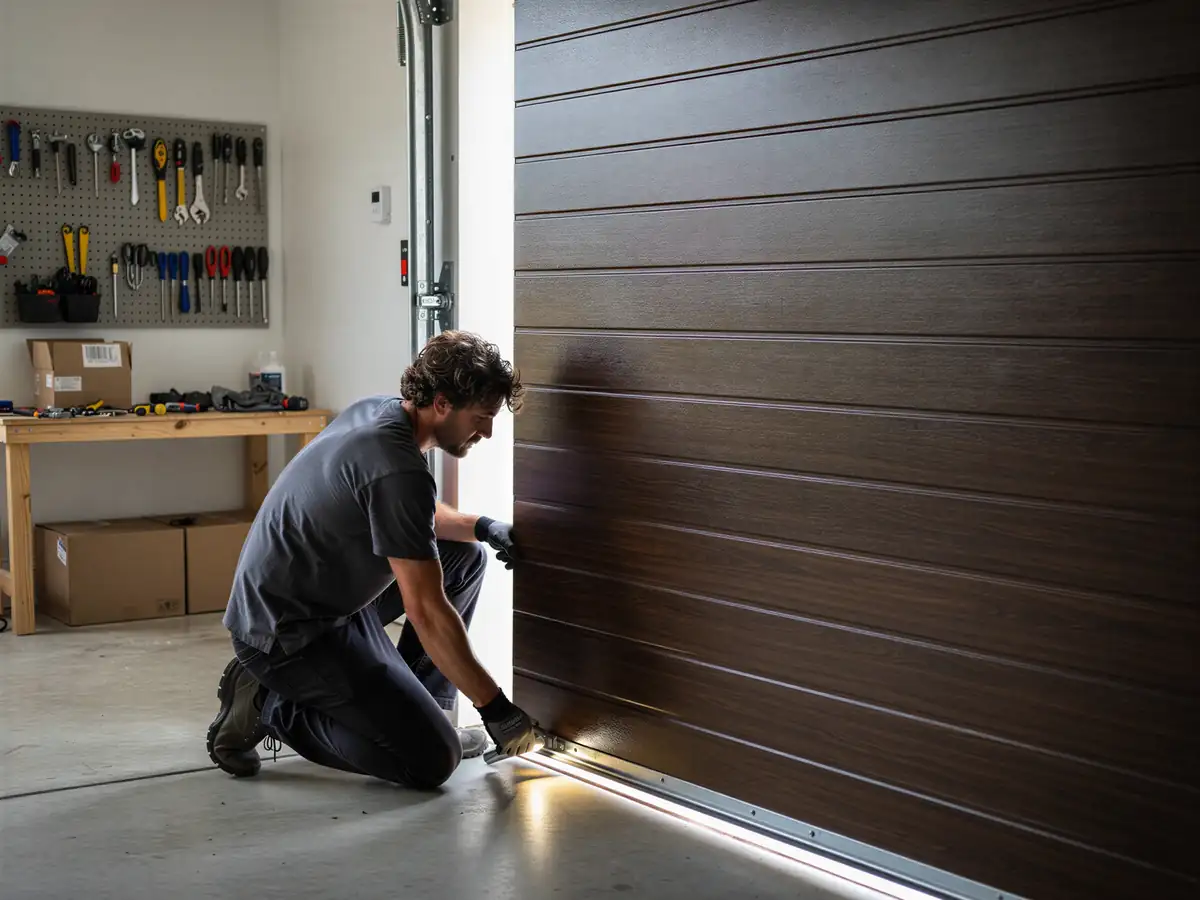
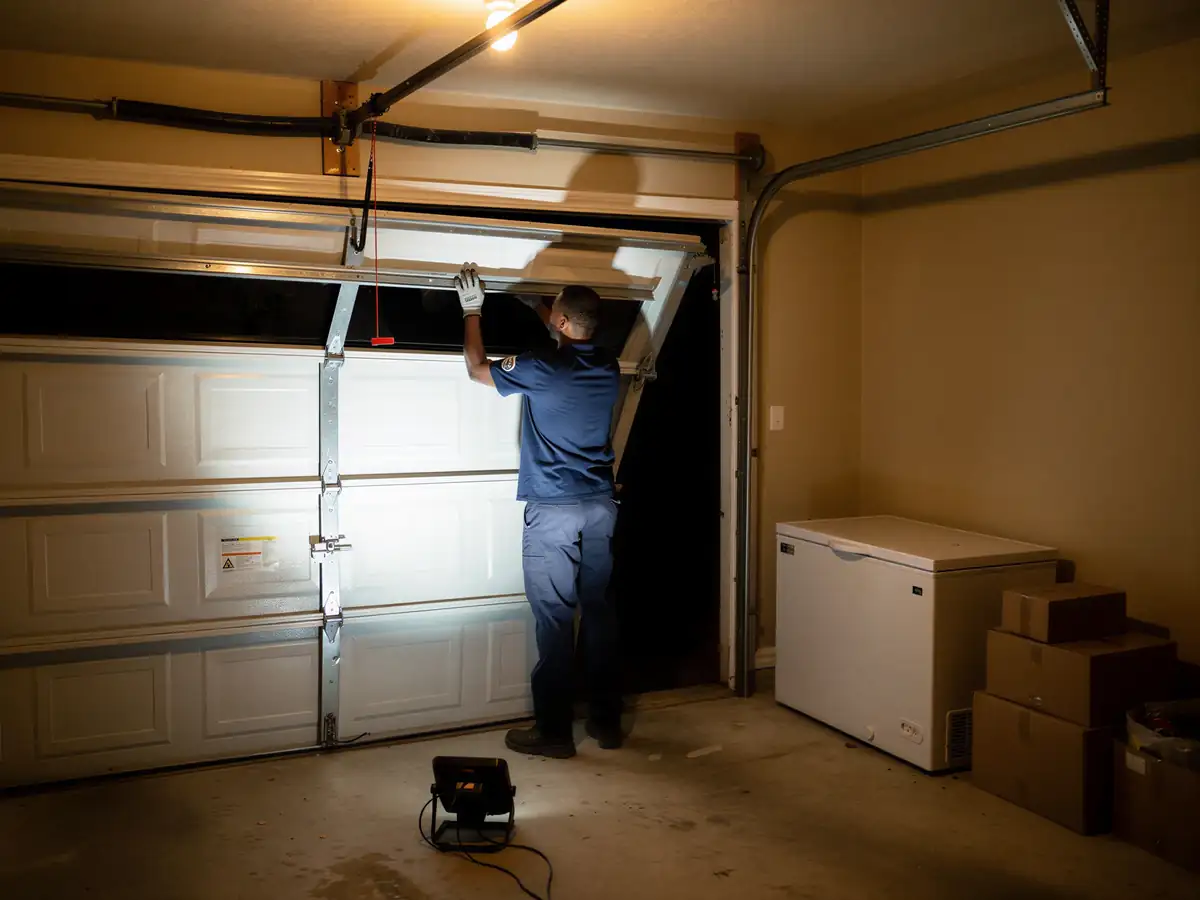
We don't try to straighten a bent steel panel on-site
A creased section stays weak even hammered flat, and it throws the door's balance off on the next spring cycle. Replacement is the honest call there, not a patch.
Why It Happens Here
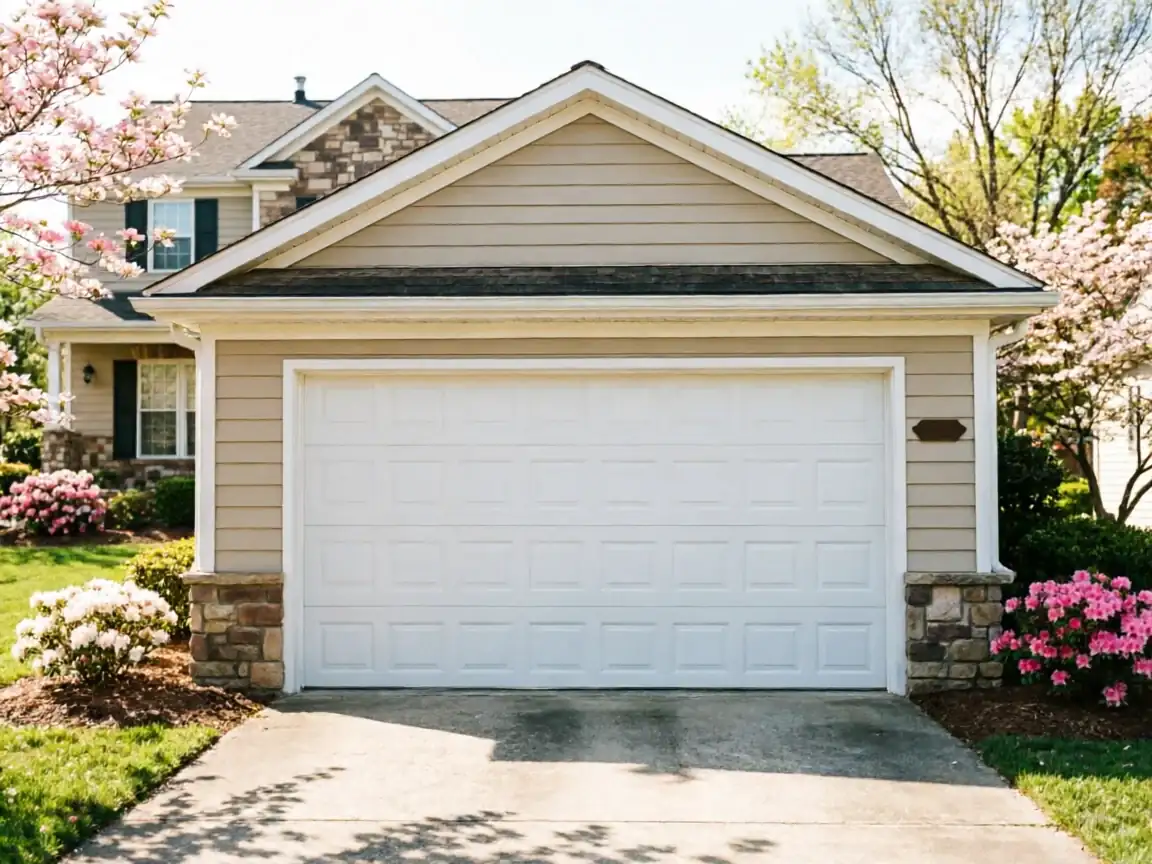
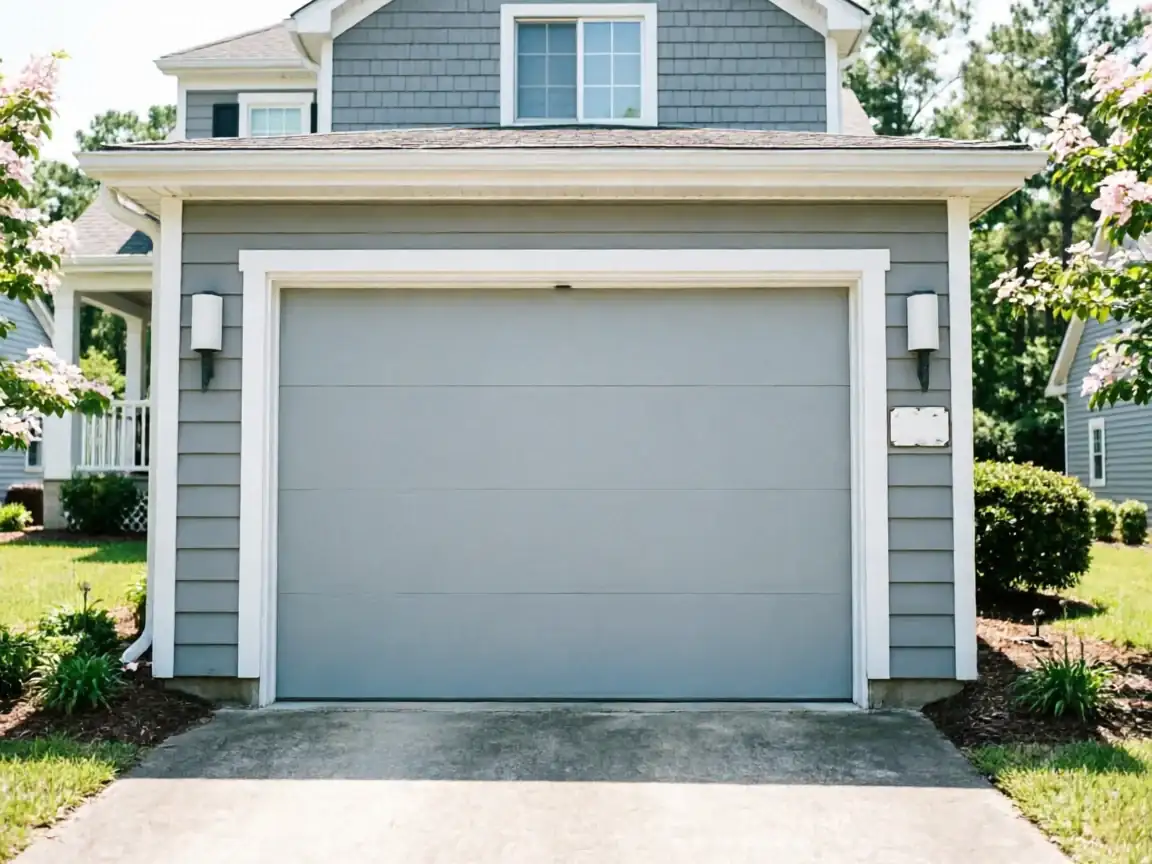
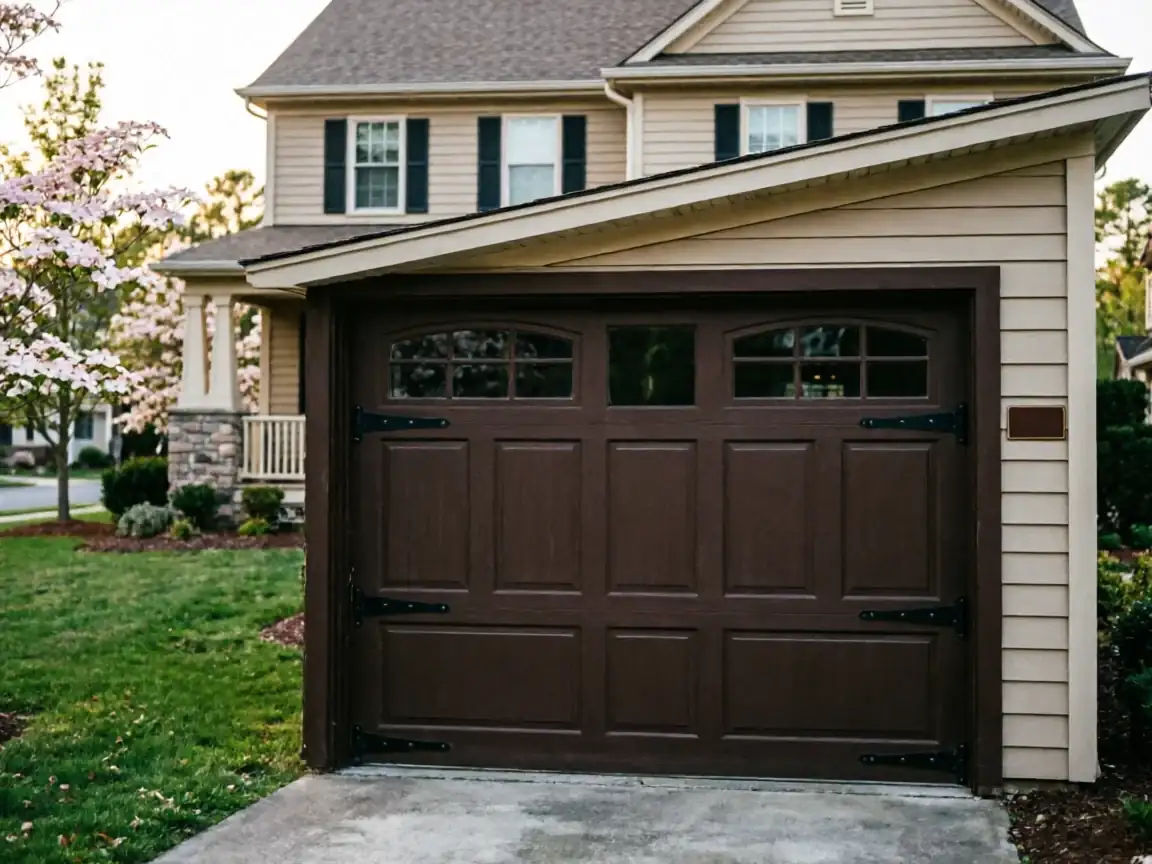
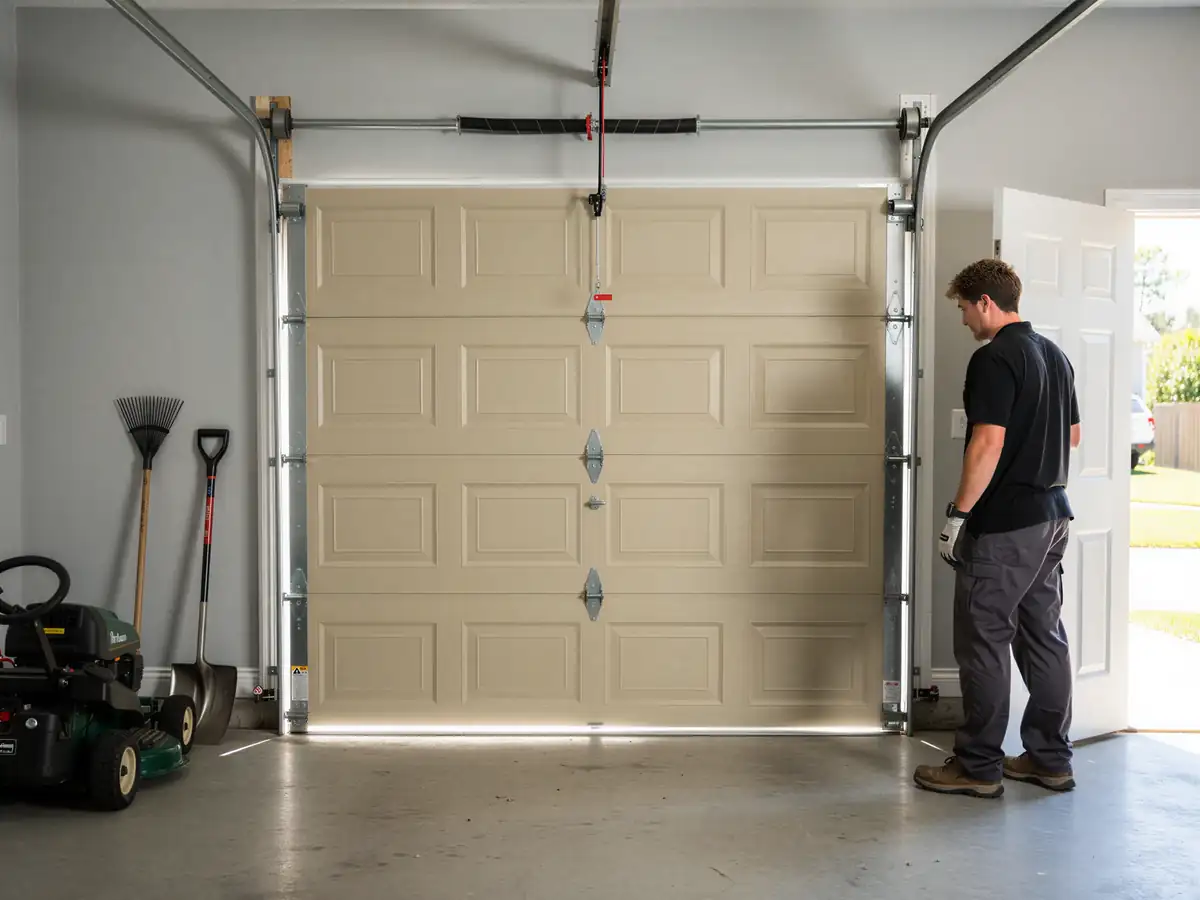
Burke's housing mostly went up around 1979, a touch earlier than the 1981 median for the broader area this company covers. That handful of years matters for panel work: doors from the late 1970s are more likely to be plain steel sectional, sometimes with the narrower panel profile that's no longer a stock size, which means a replacement panel has to be matched rather than grabbed off a shelf.
The region sits in a cold-severe climate band, and that affects panels differently than it affects springs or openers. A steel panel with a hairline crack from an impact doesn't always show the full failure right away - it's the freeze-thaw cycle working into that crack over a winter that splits it open. So a ding that looked minor in October can be a panel that needs replacing by February.
Burke's households also run well ahead of the area median on income, at $179,063 against $136,173 across the full service area - F7 - which tends to mean more owners opt for a matched full-door replacement when panel damage is extensive, rather than living with a mismatched section. Both are reasonable calls; which one makes sense depends on how much of the door is actually damaged.
How to Book
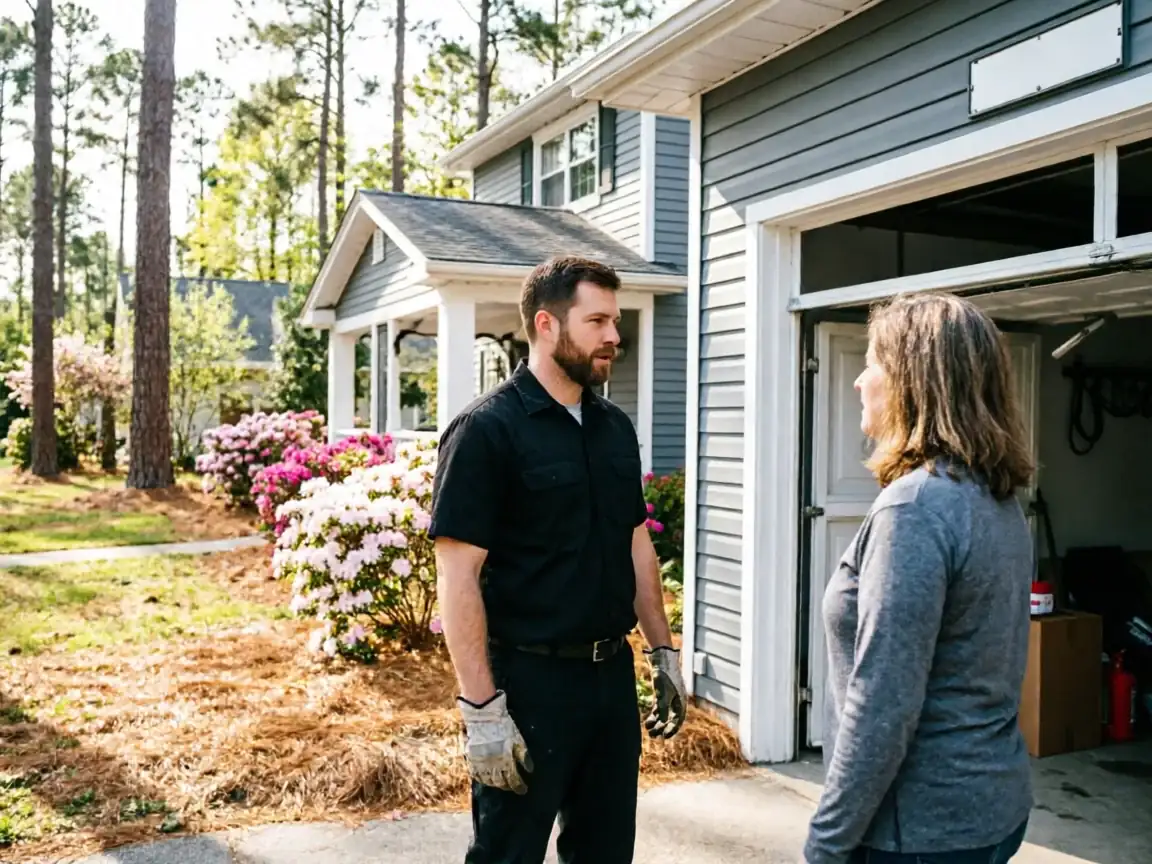
The crew runs out of Centreville, and Burke sits about ten miles out - F10. That's not a same-day guarantee, it's just the honest distance the truck covers to get to you, and it's worth knowing before you call, because it shapes how the job gets scheduled rather than whether it happens.
To book, start on the Burke service page, which covers what this company handles in your area day to day. If you're looking at panel replacement specifically as one option among openers, springs, or full door swaps, the Centreville panel replacement page lays out how that service works across the whole coverage area.
Have the door's measurements and, if you can get them, a couple of photos of the damaged section ready when you call. For a 1979-era steel door, matching the panel profile matters more than matching the color, since older paint has usually faded or chalked anyway.
How Long You Are Without the Door
01
A standard-width panel that's still a common size can often go in on the same visit as the quote
Assuming the truck is carrying stock that matches. Where it slows down is on the older, narrower panel profiles that show up more in Burke's 1979-era housing stock - those sometimes have to be special-ordered, and that's a lead time outside our control, not something we can promise around.
02
If only one panel is damaged and the rest of the door is sound
You're not without a working door at all during that wait - the door still opens and closes, just with a cosmetic flaw, until the replacement panel arrives and gets swapped in. If the damage is structural enough that the door can't safely cycle, that's a different conversation, and we'll tell you straight if the door should come down rather than sit half-broken while a panel is on order. We'd rather say that up front than let you assume a quick fix that isn't coming.
How it works
From “it’s stuck” to “it’s fixed”
A quick, honest process - no guesswork and no surprises, start to finish.
Straight answers about garage door repair in Centreville. Still unsure? Ask us directly.
Can you match the panel on an older steel door in Burke?
Often, yes, but it depends on the panel's profile and width. Doors from around 1979, common in Burke, sometimes used sizes that aren't standard stock today, so the panel may need to be special-ordered rather than installed the same visit. We'll check the measurements before promising a timeline.
Do you carry panels on the truck or order them?
The truck carries common current sizes. For older or narrower profiles typical of Burke's housing stock, we usually need to order the matching panel, which adds lead time we don't control. We'll tell you at the quote stage which situation you're in.
Is it cheaper to replace one panel or the whole door?
If only one section is damaged and the rest of the door is sound, replacing just that panel is usually the lower-cost option. If several panels are rusted or bent, or the door is old enough that a matching panel is hard to source, a full door swap can end up making more sense.
How far out is Burke from your crew?
About ten miles from Centreville, where the crew is based. It doesn't mean we can't get to you, it just means the drive is part of how the job gets scheduled rather than a same-hour arrival.