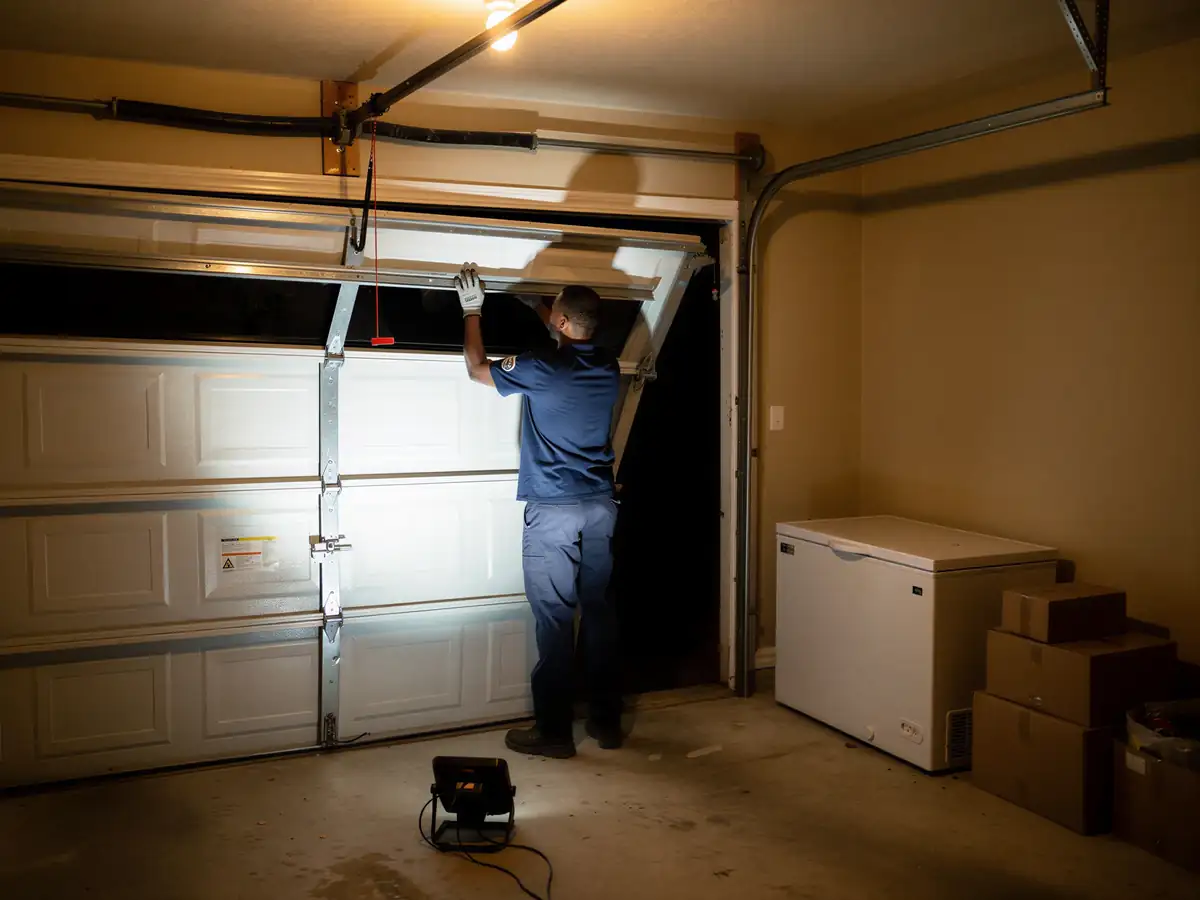
Off-Track Door Repair for Burke's 1970s-Era Garage Doors
Burke homes built around 1979 run steel panel doors on tracks that warp with age. Centreville Garage Door Pros travels 10 miles to reset them off-track and back on course.
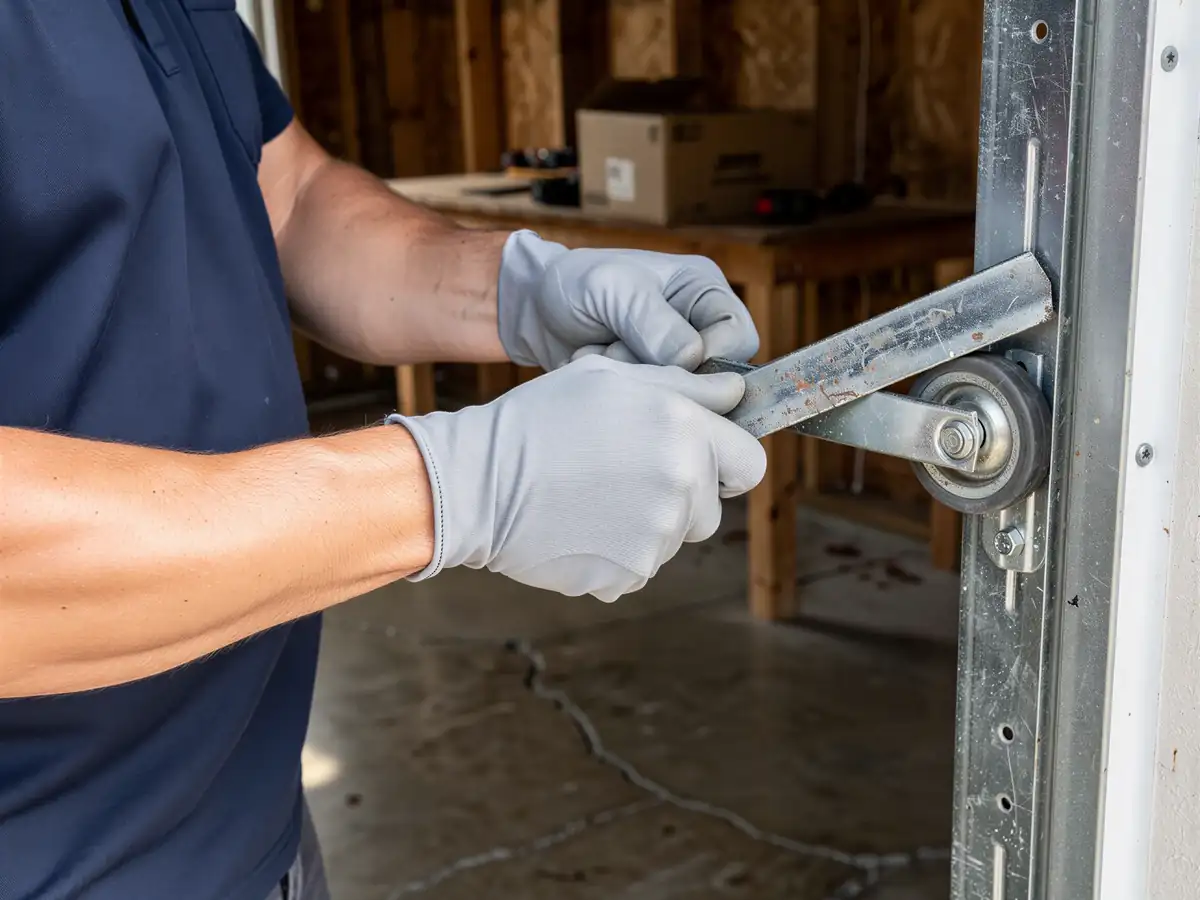
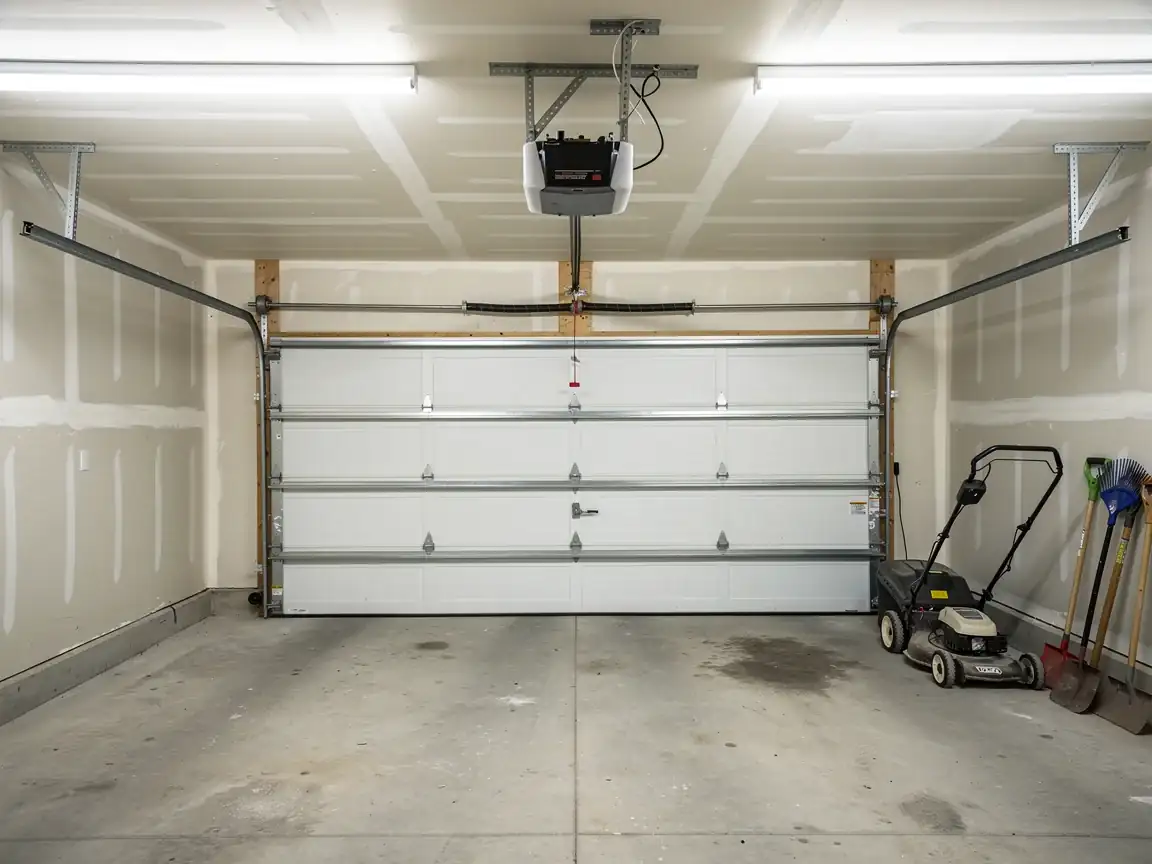
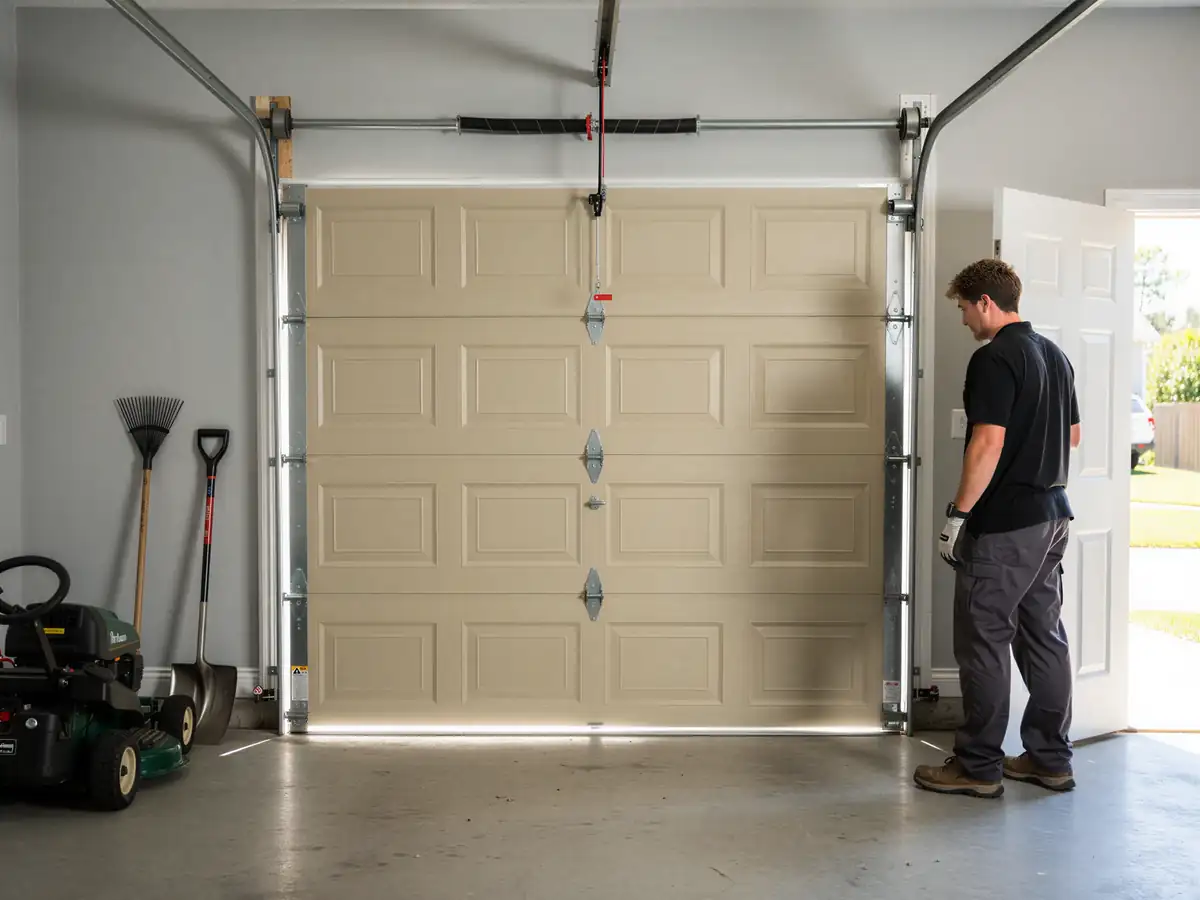
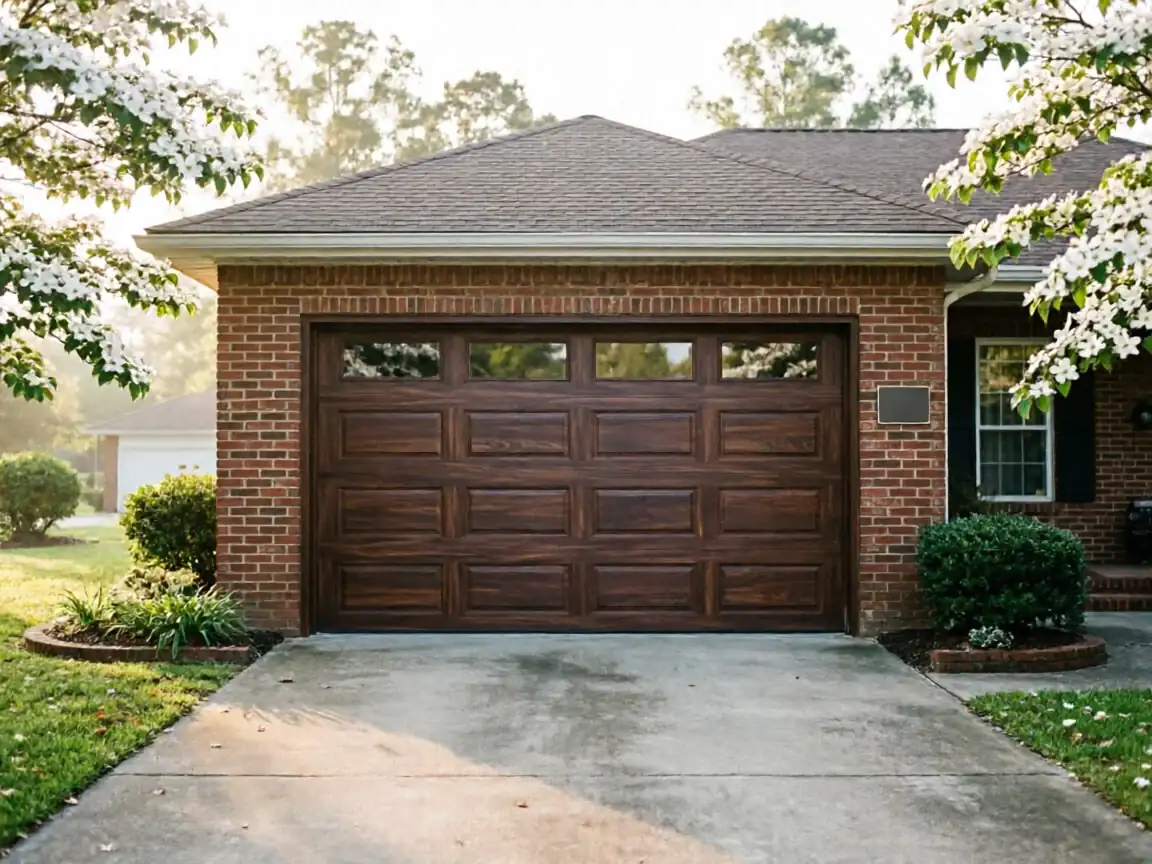
Most garage doors in Burke went up around 1979, which puts them square in the middle of the single-layer steel panel era - a door built from a handful of wide panels, hung on steel tracks bolted straight to the framing, with rollers that were never meant to last the life of the house. On a standard 16-foot double door, those tracks run long, and long steel bends. A bent track doesn't always look bent. Sometimes the door just catches a few inches up, or the bottom panel kicks sideways when the opener pulls on it. Other times a roller has worn its edge round and stopped tracking the rail at all, so the door walks itself off the rail one cycle at a time until it jumps clean out of the channel. We also see hinges that have loosened enough to let a panel flex and pull the whole assembly out of true. None of that is exotic. It's what 45 years of steel, cold, and daily use does to a door that was never built with sealed bearings or adjustable track brackets in the first place.
Why It Happens Here
The cold is the other half of the story. This is a severe cold-winter climate band, and steel contracts in the cold - tracks that were already a hair out of alignment tighten up further and bind against the rollers, which is when a door that's been limping along for months finally jumps the rail on a January morning. Houses from Burke's 1979 vintage also tend to run narrower track-to-jamb clearance than anything built after the 1990s, so there's less room for a track to drift before it starts fighting the door instead of guiding it. We're not guessing at this from a brochure - it's the same pattern across the 1980s-and-90s housing stock that makes up most of this service area, just arriving earlier here because the house itself is older. One honest limit: if the track is bent badly enough, or the jamb bracket has pulled loose from rotted framing, straightening it on site isn't worth your money - replacing that section is.
How to Book
We run out of Centreville, about 10 miles up the road from Burke, so when you call we're scheduling a drive-out, not a walk-over from around the corner. Tell us what the door is doing - jumping the track on one side, grinding, stuck half-open - and we'll bring the right rollers, track stock, and hardware for a door from this era rather than showing up blind. See our Burke coverage area for what else we handle out this way, or go straight to the off-track repair details for Centreville if you want the full breakdown of how the job works before you call.
How Long You Are Without the Door
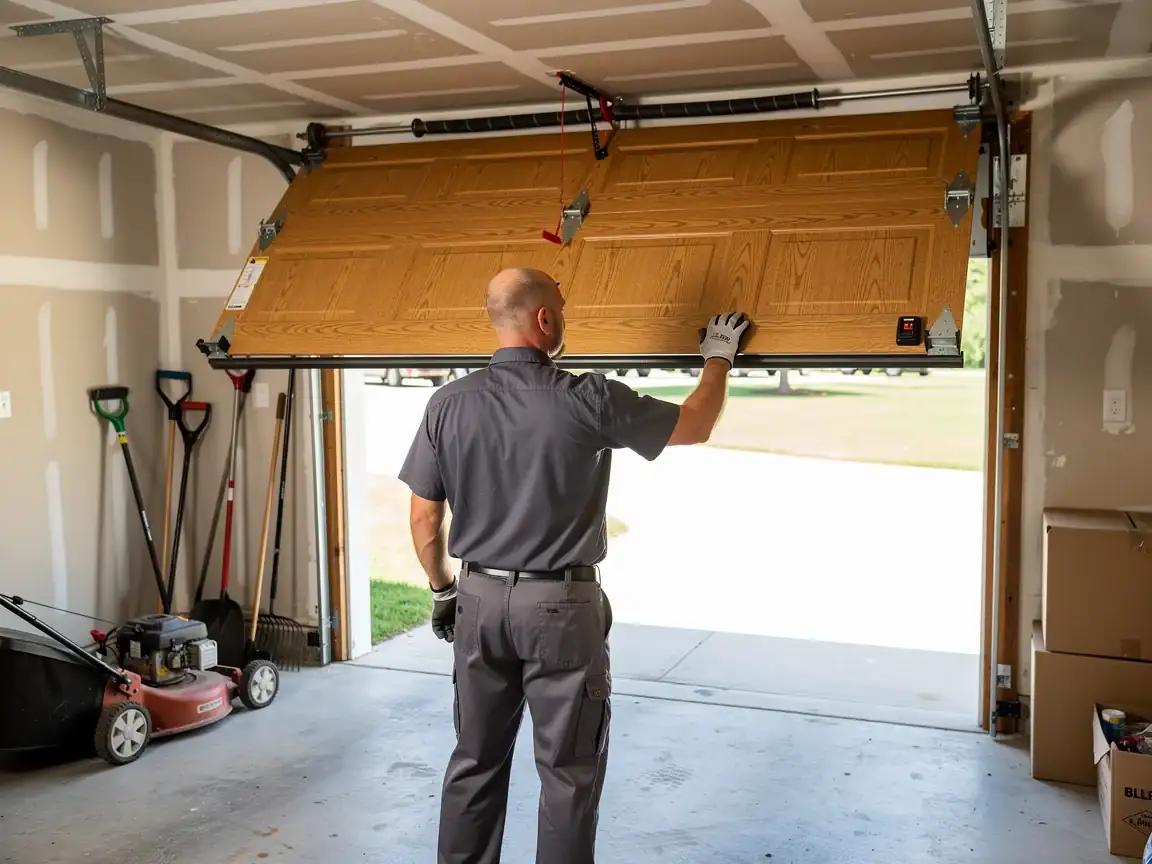
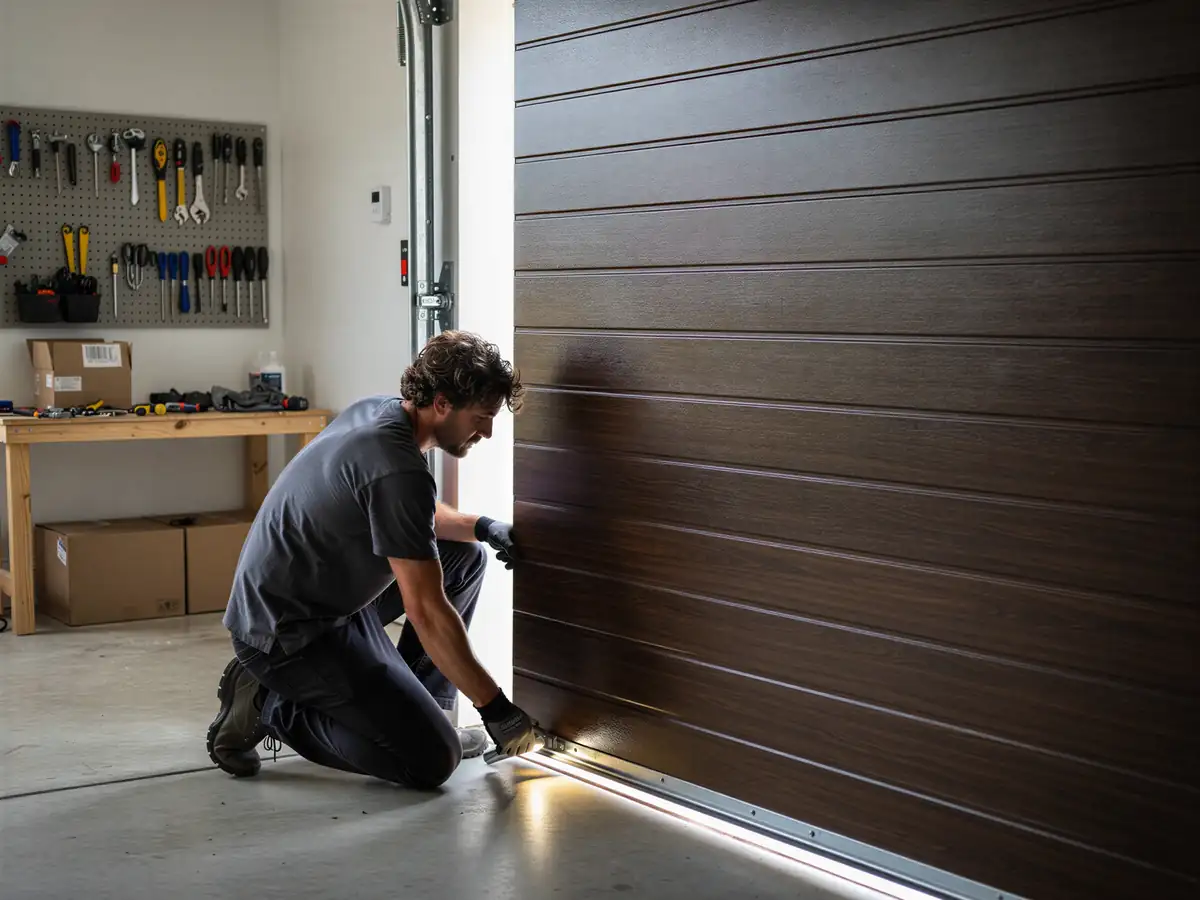
A door that's jumped the track isn't usually a parts problem - it's a realignment and roller-replacement job, and on a single door that's often finished in one visit once we're on site. Double doors with a bent track take longer because the track has to come off the bracket, get straightened or swapped, and go back on true, which means more time with the door open than you'd like in a severe-cold winter. We won't force a bent track back into shape and call it fixed if the steel has work-hardened past where it'll hold - that's a track swap, not a bend-back, and we'll tell you which one you're looking at before we start.
How it works
From “it’s stuck” to “it’s fixed”
A quick, honest process - no guesswork and no surprises, start to finish.
Straight answers about garage door repair in Centreville. Still unsure? Ask us directly.
My garage door came off the track overnight - is that an emergency?
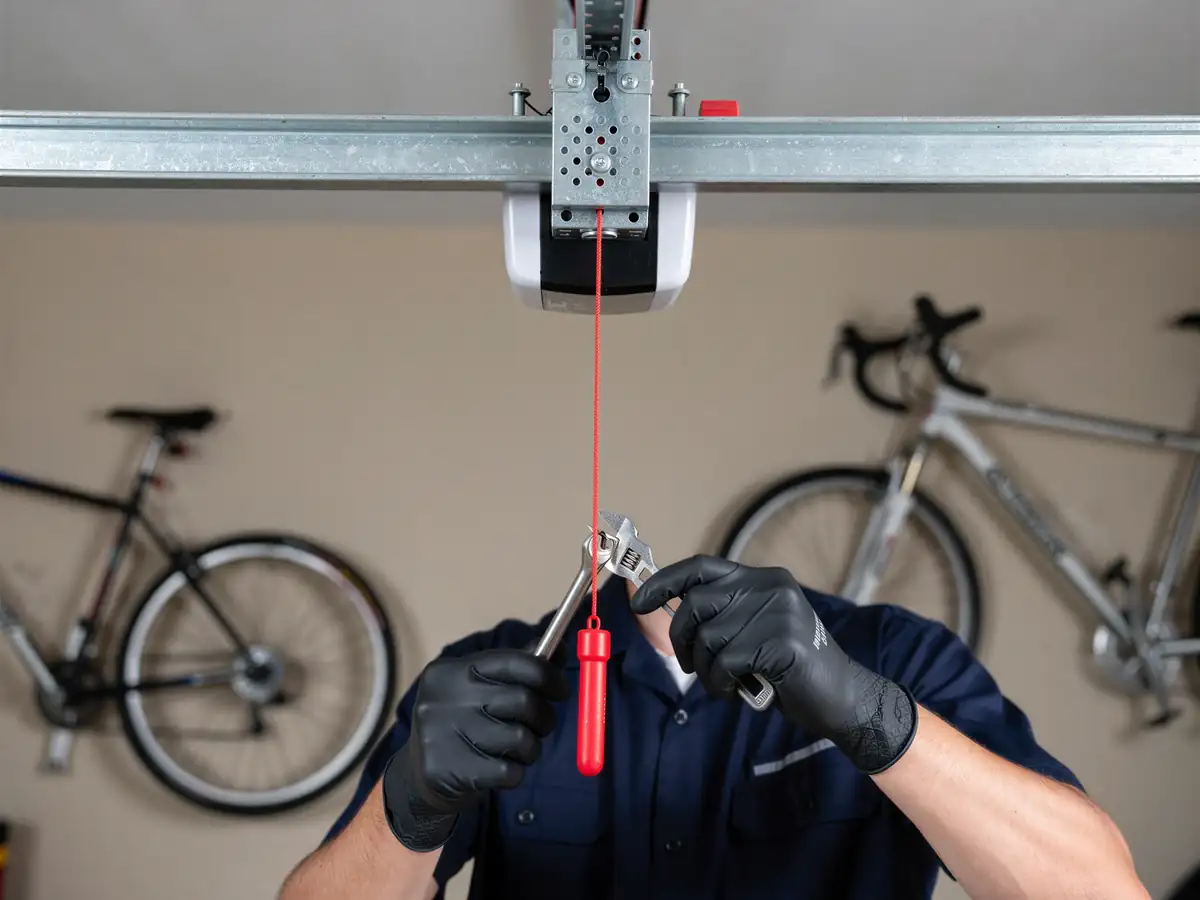
It depends on what's holding it. If the door is sitting crooked but not about to fall, it can usually wait a day or two for a scheduled visit. If a cable has snapped or the door is hanging on one side only, don't force it open or closed - leave it and call, since forcing it can bend the track further or drop the door.
Why does my door keep jumping the track in winter but not summer?
Steel tracks contract slightly in cold weather, and in a severe cold-winter climate like this one, that shrinkage is enough to turn a track that was already a little out of alignment into one that actively binds against the rollers. The door catches, the opener keeps pulling, and eventually a roller jumps the rail.
Is it cheaper to fix the track or replace the whole door?
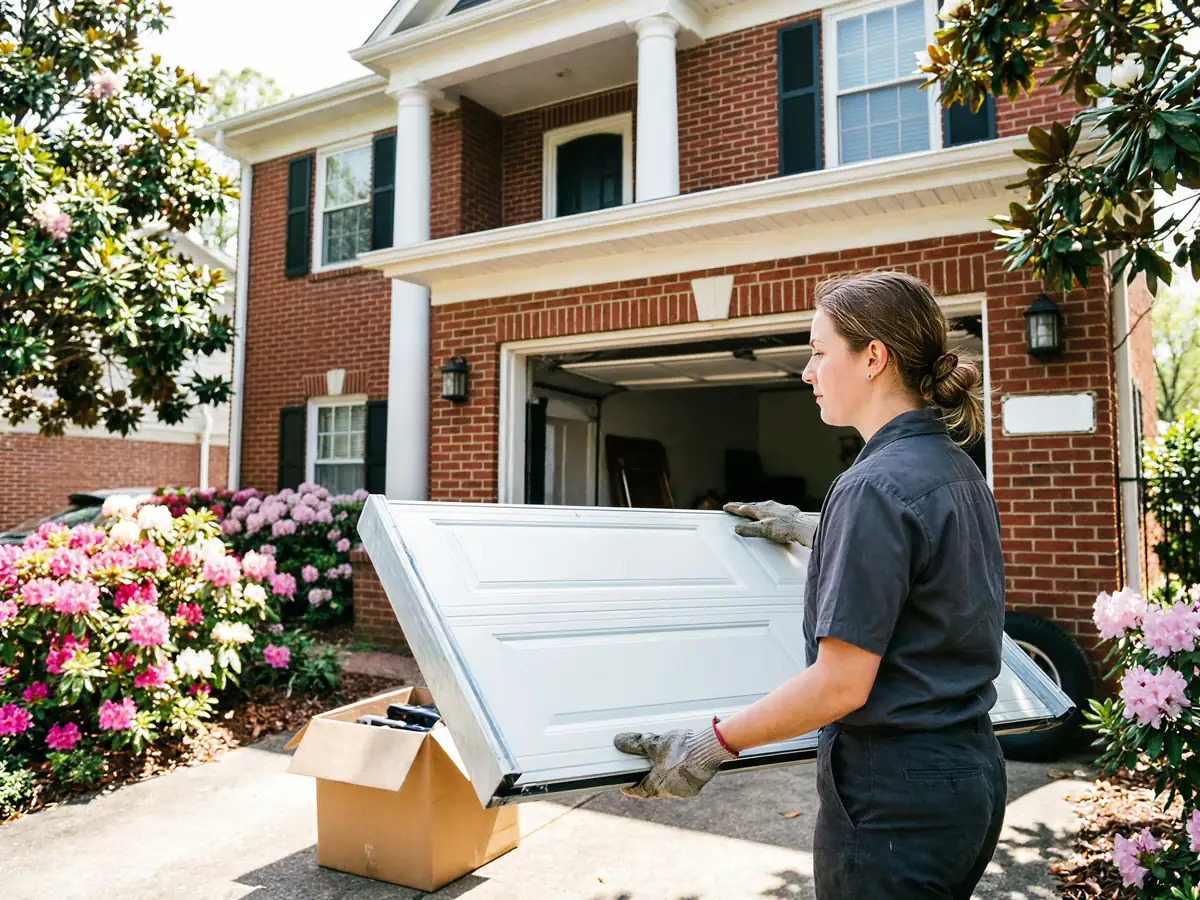
If the track is bent in one spot and the panels are sound, straightening or swapping that section of track is the cheaper fix. If the door itself is from the original 1979 build and the panels are dented, rusted at the bottom, or the hinges are stripped, you're often better putting the money into a new door instead of chasing repairs on an old one.